

The dedicated legal team of Caputo & Mariotti
Ultimate Checklist for Can I Sue for Emotional Distress in Pennsylvania
June 26, 2026
Can You Sue for Emotional Distress in Pennsylvania? Here’s What You Need to Know First
If you’re wondering can I sue for emotional distress in Pennsylvania, the short answer is yes — but the details matter.
Here’s a quick overview of when you can file:
| Situation | Can You Sue? |
|---|---|
| Physical injury caused by someone’s negligence | Yes |
| You were in the “zone of danger” but not physically hurt | Yes |
| You witnessed a traumatic injury to a close relative | Yes |
| Intentional or outrageous conduct caused severe distress | Yes |
| Emotional distress alone with no qualifying circumstances | Generally no |
Pennsylvania law treats emotional distress as a real, compensable injury. Conditions like PTSD, anxiety, depression, insomnia, and flashbacks can all qualify — if you meet the right legal standards. There is no cap on noneconomic damages against private parties in Pennsylvania, meaning a successful claim can result in meaningful compensation.
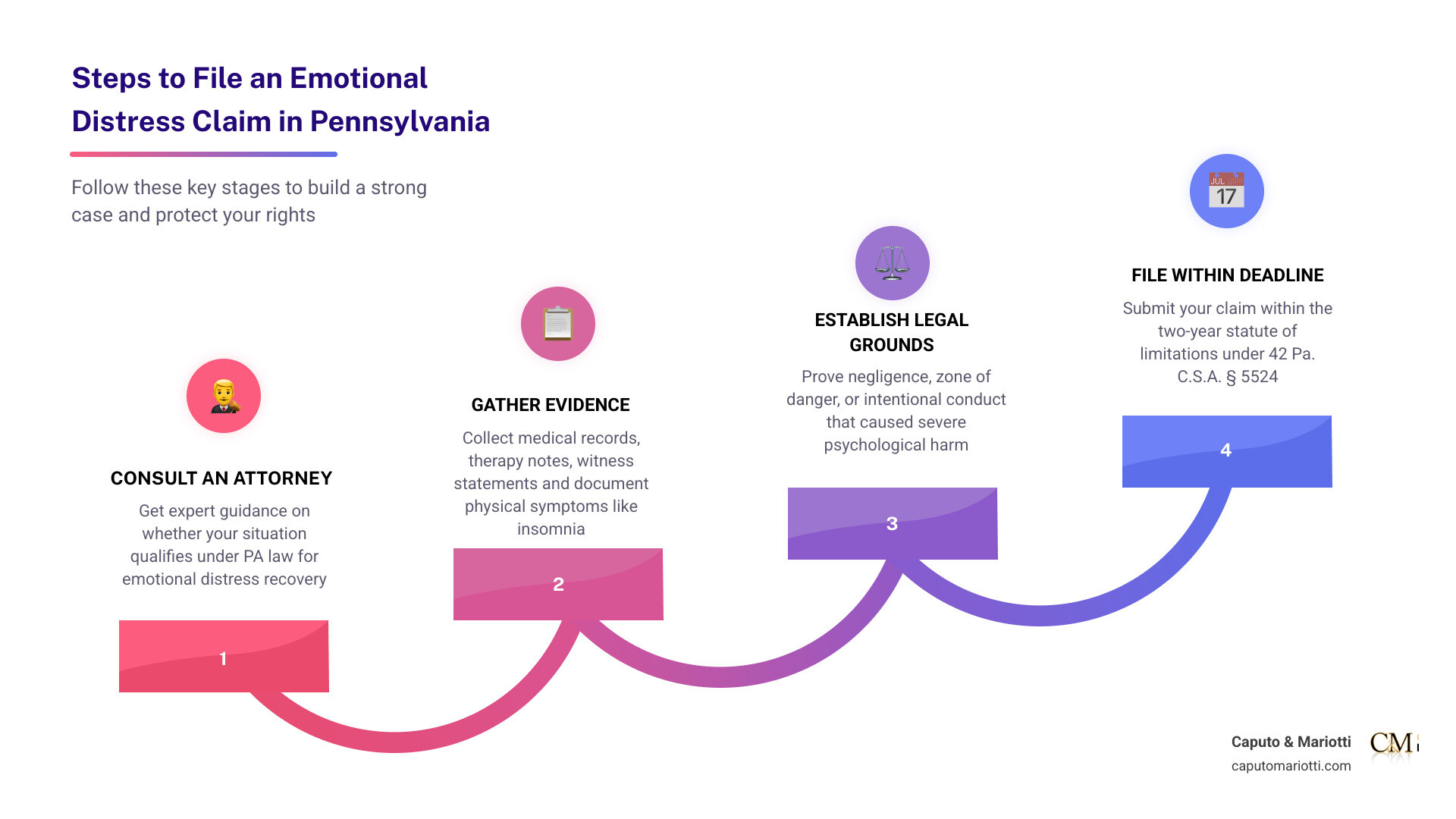
But proving emotional distress in court is not simple. It requires the right type of claim, solid evidence, and filing within Pennsylvania’s two-year statute of limitations under 42 Pa. C.S.A. § 5524.
I’m Chris Caputo, a Pennsylvania personal injury attorney with decades of litigation experience representing accident victims who have suffered serious physical and psychological harm due to someone else’s negligence — including those asking can I sue for emotional distress in Pennsylvania after a traumatic accident. Having handled hundreds of personal injury cases since 2007, I’ll walk you through exactly what Pennsylvania law requires and what steps you can take to protect your rights.
Understanding the Legal Grounds: Can I Sue for Emotional Distress in Pennsylvania?
In the eyes of the law, an injury isn’t always something you can see on an X-ray. When someone acts with negligence—meaning they fail to exercise the level of care that a reasonable person would—they can be held liable for the “non-economic” damages they cause. These are the intangible losses, like mental anguish and psychological trauma, that don’t come with a standard price tag.
At Caputo & Mariotti, we understand that a car crash or a slip and fall in Scranton doesn’t just leave you with medical bills; it can leave you with a paralyzing fear of driving or chronic anxiety. To successfully recover compensatory damages for these feelings, we must establish that the defendant owed you a duty of care, breached that duty, and that this breach directly caused your suffering.
Whether you are in Wilkes-Barre or Moosic, the legal process in personal injury cases starts with identifying which legal theory applies to your situation. In Pennsylvania, these claims generally fall into two categories: Negligent Infliction and Intentional Infliction.

Negligent Infliction of Emotional Distress (NIED)
Negligent Infliction of Emotional Distress (NIED) occurs when someone’s carelessness causes you severe mental suffering. Historically, Pennsylvania followed a strict “impact rule,” meaning you couldn’t sue for distress unless you were physically hit. However, modern personal injury claims in Scranton have evolved.
Today, you can pursue an NIED claim if:
- There was a physical impact (even a minor one).
- You were in the “zone of danger” (more on this below).
- You witnessed a traumatic event involving a close relative.
- There was a breach of a specific contractual or fiduciary duty (such as a doctor-patient relationship).
A key factor in NIED cases is often the “physical manifestation” of your distress. Courts are more likely to grant compensation if your anxiety leads to tangible symptoms like tremors, chronic headaches, or severe insomnia.
Intentional Infliction of Emotional Distress (IIED)
If someone goes beyond mere carelessness and acts with malice or extreme recklessness, you may have a claim for Intentional Infliction of Emotional Distress (IIED). This is a high bar to clear. To win, the conduct must be so “extreme and outrageous” that it goes beyond all possible bounds of decency.
Think of it this way: a rude comment isn’t IIED. However, a pattern of severe, targeted harassment or a truly shocking act of cruelty might be. To understand your rights, you must be able to show that the defendant intended to cause you distress or acted with a total disregard for the high probability that distress would occur.
The “Zone of Danger” and Bystander Rules in PA
One of the most common questions we hear in Lackawanna and Luzerne Counties is: “Can I sue if I wasn’t actually hit?” The answer lies in the Zone of Danger rule.
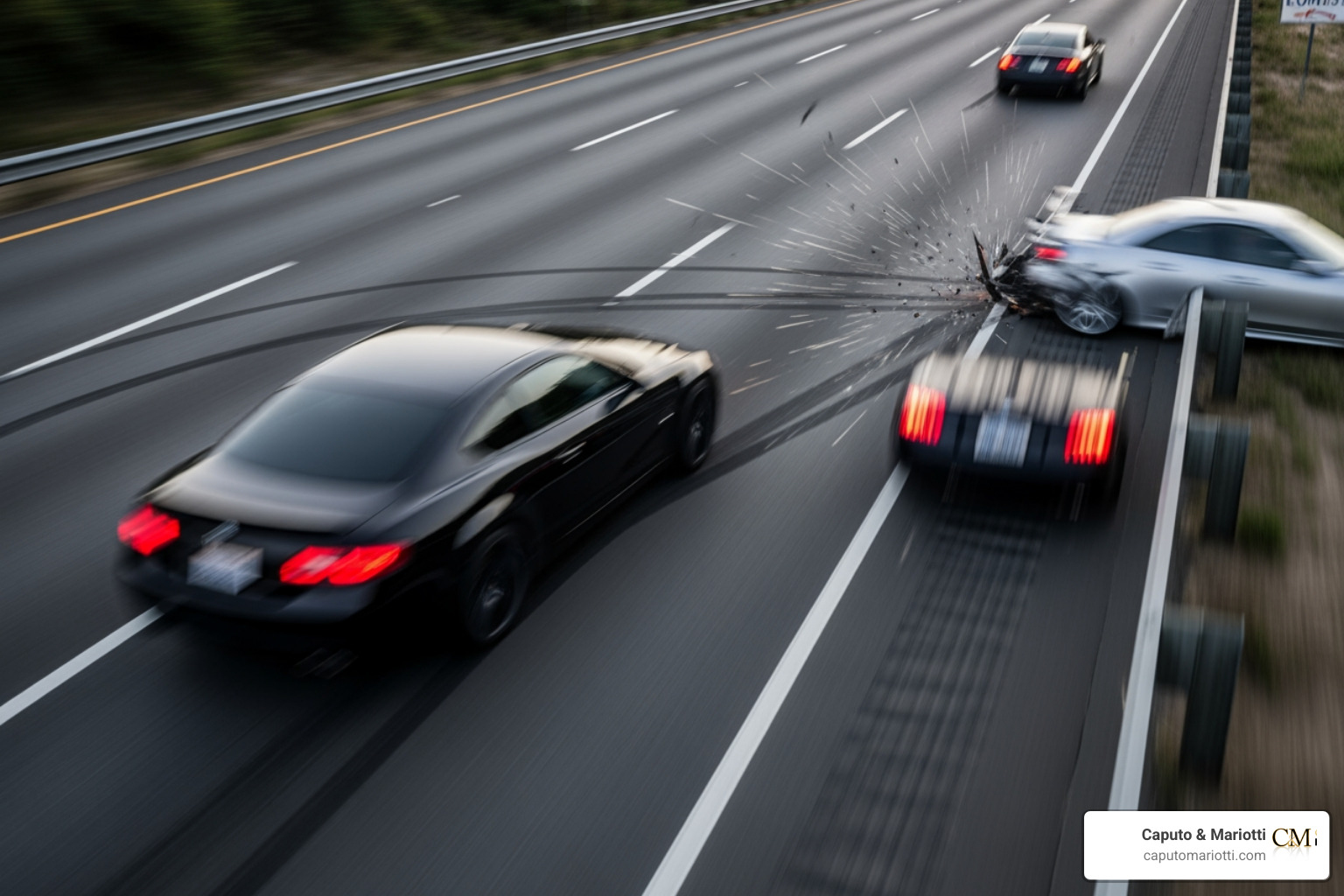
If you were nearly struck by a speeding vehicle in Pittston and the experience left you with debilitating PTSD, you were in the “zone of danger.” This means you were at an immediate risk of physical harm and were frightened by that risk. Pennsylvania law recognizes that the terror of a “near-miss” can be just as damaging as a physical blow.
Similarly, the Bystander Rule allows you to recover damages if you witnessed a traumatic event involving a loved one. For this to apply, you generally must:
- Be located near the scene of the accident.
- Have a “contemporaneous perception” of the event (you saw it happen).
- Be closely related to the victim.
Proving Your Claim for Emotional Distress Pennsylvania
Proving a “broken mind” is harder than proving a broken leg. You can’t just tell a jury you feel sad; you need a mountain of evidence. When we provide trusted legal support in Scranton and Wilkes-Barre, we help our clients gather the necessary documentation.
To strengthen your case, you should have:
- Medical Validation: Records from your primary care doctor documenting physical symptoms like ulcers or heart palpitations.
- Professional Diagnosis: A formal diagnosis of PTSD, clinical depression, or anxiety from a licensed psychiatrist or psychologist.
- Therapy Records: Notes from ongoing counseling sessions that show the depth of your struggle.
- Expert Testimony: We often bring in mental health experts to explain to the court how the trauma has permanently altered your brain chemistry or quality of life.
- Witness Statements: Friends, family, and coworkers can testify about how your personality or behavior changed after the incident.
How Insurance and Employment Affect Your Claim
If your distress stems from a car accident, your ability to sue for can I sue for emotional distress pennsylvania might depend on your insurance policy. Pennsylvania uses a “choice no-fault” system, which means you chose either “Full Tort” or “Limited Tort” when you bought your policy.
| Feature | Limited Tort | Full Tort |
|---|---|---|
| Monthly Cost | Lower premiums | Higher premiums |
| Right to Sue | Restricted for “pain and suffering” | Unrestricted |
| Exceptions | Serious injury (death, permanent impairment) | None needed |
If you have limited tort, you can generally only sue for emotional distress if your physical injuries meet the “serious injury” threshold. If you have full tort, you can pursue these damages regardless of the severity of your physical wounds.
Workplace Injuries and the Role of a Workers’ Compensation Lawyer
What happens if the trauma occurs at work? Maybe you witnessed a horrific industrial accident in Hazleton or were subjected to extreme misconduct by an employer.
In most cases, workplace injuries are handled through the no-fault workers’ compensation system. This means you don’t have to prove your employer was negligent to get benefits, but it also means you generally cannot sue them in court for emotional distress. However, there are exceptions for intentional misconduct or cases where the distress accompanies a physical injury.
If you are struggling with psychological harm after a workplace incident, a workers’ compensation lawyer can help you navigate the complex filing procedures and legal appeals. Our firm assists with every stage of the process:
- Reporting: We ensure you notify your employer within the strict Pennsylvania deadlines to protect your right to benefits.
- Medical Treatment: We help ensure your medical treatment protocols include necessary mental health support and psychiatric care.
- Evidence Gathering: Our team assists in gathering witness statements, safety records, and professional medical evaluations to document the trauma.
- The Filing Process: We manage the formal claim petitions and documentation required to secure your compensation.
Calculating Compensation and Meeting Deadlines
Since there is no “receipt” for emotional pain, how do we decide what it’s worth? In Pennsylvania, there are two common methods:
- The Multiplier Method: We take your total “economic” damages (medical bills and lost wages) and multiply them by a number between 1.5 and 5, depending on the severity of your distress.
- The Per Diem Method: We assign a daily dollar value to your suffering and multiply it by the number of days you are expected to deal with the trauma.
We also look at “loss of consortium” (the impact on your relationship with your spouse) and the overall loss of life’s pleasures. If you can no longer enjoy hobbies or play with your children because of your anxiety, that has significant value.
Statute of Limitations for Emotional Distress Pennsylvania Lawsuits
Time is not on your side. Under 42 Pa. C.S.A. § 5524, you generally have two years from the date of the incident to file a lawsuit. If you miss this window, you lose your right to recover anything.
There are even tighter deadlines if you are suing a government entity (like a city or the state). Under the Pennsylvania Political Subdivision Tort Claims Act, you must provide formal notice of your intent to sue within six months.
The “discovery rule” may provide an exception if your symptoms didn’t appear immediately, but these are legally complex waters. It is always best to consult with us as soon as possible to ensure no deadlines are missed.
Frequently Asked Questions about Emotional Distress Claims
Can I sue for emotional distress without a physical injury?
Yes, under specific circumstances like the “zone of danger” rule, bystander recovery, or cases of intentional, outrageous conduct. However, these cases are more difficult to prove and usually require a professional medical diagnosis.
How much is an emotional distress claim worth in PA?
There is no set amount. It depends on the severity of your symptoms, the impact on your ability to work, and whether you have full or limited tort insurance. Some settlements are for a few thousand dollars, while others involving permanent psychological disability can reach much higher.
What evidence do I need to prove mental anguish?
You need more than just your own testimony. You need medical records, therapy notes, expert witness testimony, and evidence of physical symptoms (like weight loss or insomnia) that link back to the traumatic event.
Conclusion
Asking can I sue for emotional distress in Pennsylvania is the first step toward reclaiming your life after a trauma. Whether you’re in Scranton, Wilkes-Barre, or anywhere in Northeastern Pennsylvania, you shouldn’t have to carry the weight of psychological harm alone.
At Caputo & Mariotti, we bring over 55 years of combined experience to the table. We are a dedicated team with an unwavering commitment to justice for our neighbors in Lackawanna and Luzerne Counties. If you’ve been hurt—physically or emotionally—we are here to provide the trusted legal support you deserve.
Contact us today for a free consultation. We don’t get paid unless you do.