

The dedicated legal team of Caputo & Mariotti
The Ultimate Guide to Documenting Injuries After an Accident in Pennsylvania
September 21, 2026
How to Document Injuries After an Accident in Pennsylvania: Step-by-Step
When an unexpected collision happens on Interstate 81 or a slip and fall occurs in Lackawanna County, knowing how to document injuries after an accident pennsylvania victims experience can make the difference between a fair financial recovery and an uphill battle with an insurance company. Navigating an injury claim requires a systematic approach. Every piece of paper, photo, and doctor’s note forms a foundation that establishes what happened to you and who is responsible.
If you are wondering what to do immediately after an accident in Scranton and when to call a personal injury lawyer, the first crucial phase centers on medical care and documentation.
Medical Evaluation and Avoiding Treatment Gaps
Seeking immediate medical evaluation at an emergency room, urgent care clinic, or primary care provider is essential. Even if adrenaline masks your pain initially, getting evaluated right away ensures an official medical record links your symptoms directly to the incident.
Insurance adjusters scrutinize timelines closely. A delay of even a few days between an accident and your first doctor visit can be weaponized against you. Adjusters often argue that if you were truly hurt, you would have sought help right away, or they might claim your injuries resulted from a completely separate event after the accident.
Continuity of care is just as critical. Following your doctor’s orders, attending physical therapy appointments, taking prescribed medications, and showing up for follow-up examinations demonstrates that you are committed to your recovery. If you must reschedule an appointment due to an emergency, immediately inform your medical provider’s office and ensure they note the reason in your file so it is clear you did not simply abandon treatment.
Understanding these medical requirements is closely tied to how to understand lawsuit eligibility for a car accident in Pennsylvania, as serious medical evidence establishes whether your claim meets necessary legal thresholds.
Comprehensive Medical Records to Gather
To build an unassailable case, we advise collecting detailed documentation from every healthcare provider involved in your treatment:
- Emergency and Physician Notes: Detailed intake notes, physical exam results, diagnostic findings, and doctor summaries.
- Diagnostic Imaging: Formal reports and digital copies of X-rays, CT scans, and MRIs proving structural damage.
- Physical Therapy and Rehabilitation Logs: Progress notes charting range-of-motion scores, strength assessments, and treatment frequency.
- Prescription and Pharmacy Records: Itemized statements showing all prescribed pain management, anti-inflammatory, or muscle relaxant medications.
- Supportive Medical Device Receipts: Official records for neck braces, crutches, slings, wheelchairs, or custom orthotics prescribed by your care team.
For a deeper look into assembling these items, read the role of evidence in personal injury claims: a comprehensive guide.
Visual and Narrative Proof: Photos and Daily Pain Logs
While official clinical charts supply essential scientific proof, visual and daily personal evidence brings the true human impact of your suffering to light. A medical record might simply say “contusion on lower leg,” but a vibrant photograph shows a deep, swollen bruise that makes walking painful.
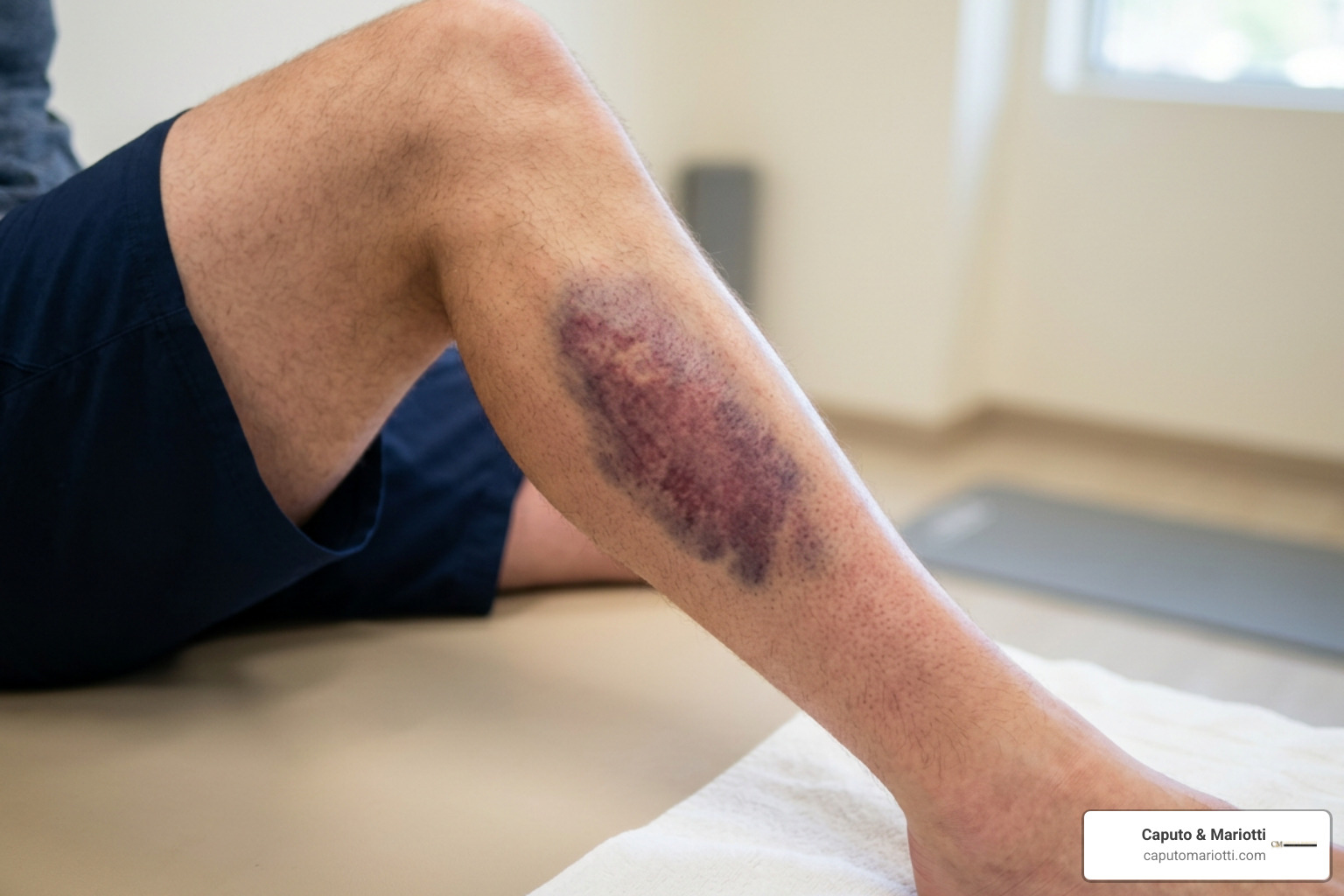
Strengthening your legal claim requires combining practical visual documentation with consistent daily notes.
How to Document Injuries After an Accident in Pennsylvania Using Visual Evidence
Visual evidence of injuries is often more persuasive to insurance adjusters and juries than written medical descriptions alone. When taking visual proof of your physical trauma, follow these practical guidelines:
- Capture Daily Progress: Take photographs daily during the first week following the incident to record how bruising, swelling, and surgical incisions evolve.
- Use Proper Photo Scaling: Place a small ruler or common reference object (like a coin) next to cuts, burns, or bruises to legally establish exact size and scale.
- Optimize Lighting and Backgrounds: Use bright, natural light against clear, neutral backgrounds to avoid shadows or glare that obscure injury details.
- Document Medical Equipment: Take photos showing yourself using prescribed supportive devices, such as braces, cast wraps, walkers, or hospital beds at home.
- Record Long-Term Scarring: If an injury leaves permanent scarring or disfigurement, capture high-resolution photos over several months to show the final state of healing.

Keeping a Personal Injury Journal
A daily personal injury journal bridges the gap between clinical facts and your actual daily reality. Write down daily entries detailing:
- Pain Levels: Rate your daily physical discomfort on a consistent 1 to 10 scale, distinguishing between resting pain and pain caused by movement.
- Physical Limitations: Detail basic daily activities you cannot perform unassisted, such as bathing, lifting groceries, driving, or playing with your children.
- Emotional and Psychological Impact: Record feelings of anxiety, sleep disruptions, nightmares, flashbacks, or depression linked to the trauma.
- Activity Cancellations: Note specific missed family events, social outings, work functions, or vacations.
- Medication Side Effects: Track drowsiness, stomach distress, or cognitive fog caused by prescribed pain medications.
Financial Documentation and Accident Scene Evidence
Physical recovery is only half the battle; the financial strain caused by medical bills and lost wages can overwhelm any household in Northeastern Pennsylvania. Accurately tracking economic losses ensures every dollar spent or lost due to the accident is accounted for.

| Category | Types of Evidence Needed | Key Purpose for Claims |
|---|---|---|
| Economic Damages | Wage stubs, W-2s, tax returns, out-of-pocket receipts, medical bills, mileage logs | Proves direct, quantifiable financial losses resulting from the incident. |
| Non-Economic Damages | Pain journal, psychological evaluations, physical therapy progress reports, scar photos | Proves intangible losses such as pain, suffering, emotional distress, and reduced quality of life. |
How to Document Injuries After an Accident in Pennsylvania for Wage Loss Claims
Proving lost earnings requires clear, objective documentation from both you and your employer. You should assemble:
- Pay Stubs and Tax Documents: Recent pay stubs prior to the accident along with past W-2 or 1099 forms to calculate your baseline income.
- Employer Verification Letter: A formal document signed by your supervisor or HR department confirming your position, rate of pay, average hours worked, and exact dates missed.
- Missed Opportunities: Records proving lost overtime, sales commissions, performance bonuses, or business opportunities missed while recovering.
- Work-Related Injury Procedures: If you were injured on the job, you may need a specialized approach. In Pennsylvania, workplace accidents fall under a specific no-fault system. You must report your injury to your employer within 121 days, seek care from designated healthcare providers during the initial 90 days if a panel list exists, and meticulously maintain medical records and witness accounts. If your employer or insurer denies your claim or fails to pay full benefits, you must initiate formal filing procedures by submitting a Claim Petition to the Pennsylvania Bureau of Workers’ Compensation. If a claim remains contested, legal appeals before a Workers’ Compensation Judge become necessary, making the guidance of an experienced workers’ compensation lawyer essential.
Preserving Critical Scene Evidence
The scene of an accident changes quickly, as road crews clear debris or weather alters physical evidence. Preserving immediate physical evidence supports your version of how the incident occurred:
- Accident Scene Photos: Capture vehicle positions, skid marks, road conditions, weather, traffic signs, or property hazards.
- Witness Contact Details: Obtain names, phone numbers, addresses, and short written or recorded statements from eye witnesses.
- Official Police Report: Request the formal police crash report number from investigating officers at the scene. If the Pennsylvania State Police investigated your crash, their official website explains how to request a copy of a crash report.
- Physical Property: Keep damaged clothing, torn shoes, cracked helmets, or broken personal belongings in an unwashed, unaltered state.
For actionable guidance on handling post-accident tasks, consult our resource on helpful advice for car accident victims.
Countering Insurance Tactics with Thorough Documentation
Insurance adjusters are trained to minimize payout amounts. They analyze claims looking for weaknesses, ambiguities, or gaps in your timeline to reduce settlement values or issue outright denials.
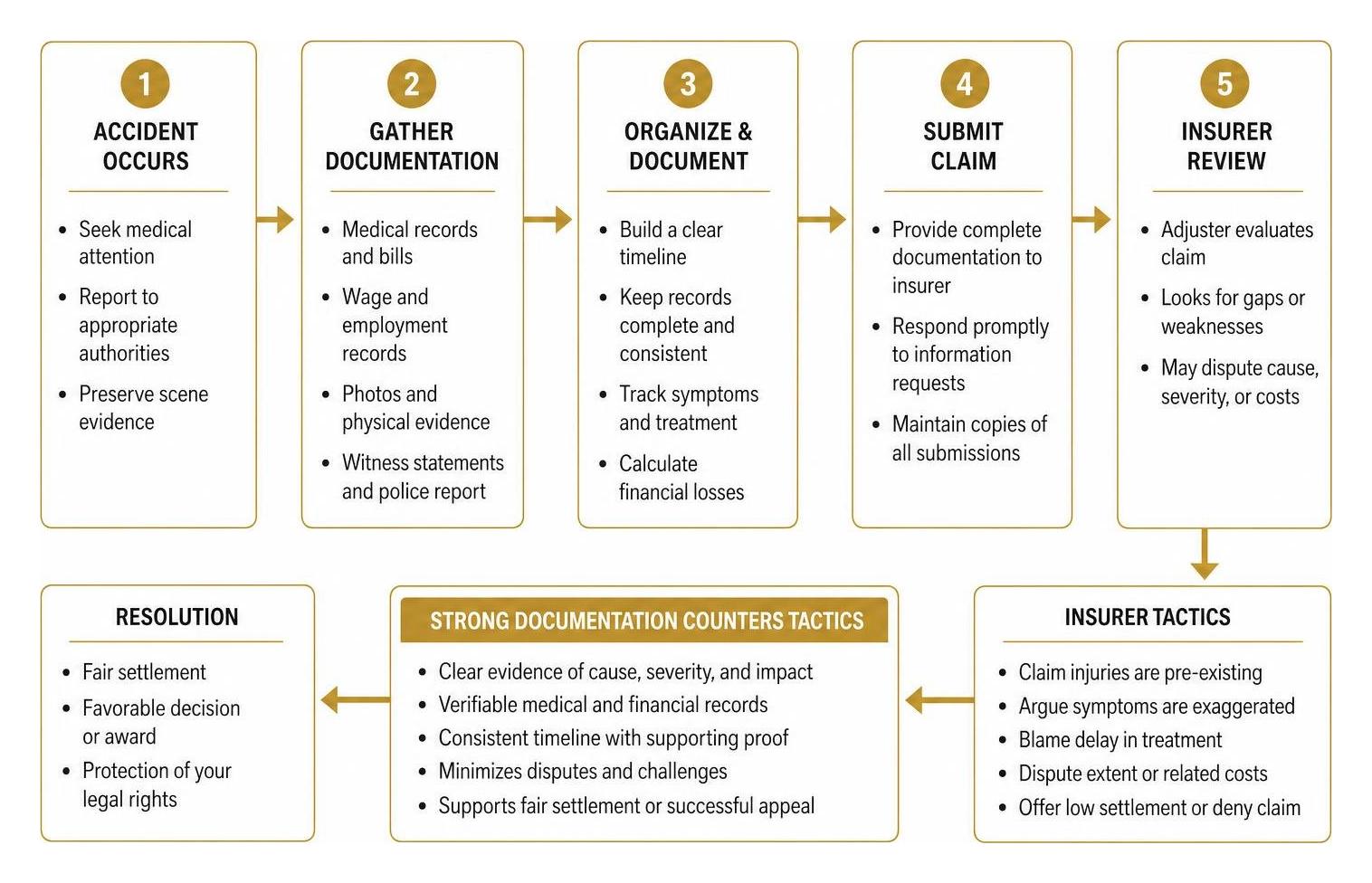
Common tactics used by insurance adjusters include asserting that your injuries were pre-existing, claiming you exaggerated your symptoms, or arguing that a delay in medical evaluation means the accident was not the true cause of your pain.
By systematically compiling medical files, visual proof, pain journals, and economic records, you strip away the adjuster’s ability to speculate. Clear evidence leaves little room for dispute regarding the cause, severity, and financial cost of your injuries. To learn more about calculating total case values, read our detailed article on understanding compensation in personal injury cases: a deep dive into damages.
Protecting Your Legal Rights
In Pennsylvania personal injury law, the legal burden rests on you, the injured party, to prove liability and demonstrate the full extent of your loss. Thorough documentation forms the bedrock of a compelling legal strategy.
When you retain legal counsel, your attorney uses this organized evidence to negotiate from a position of strength, countering lowball offers and preparing your case for trial if the insurer refuses to act fairly. If you live in Lackawanna County or Luzerne County, partnering with a local personal injury lawyer in Scranton: your trusted advocate after an accident ensures your rights are guarded every step of the way.
Frequently Asked Questions About Injury Documentation in PA
Why is immediate medical treatment critical after an accident in Pennsylvania?
Seeking medical care right away establishes a clear, immediate link between the accident and your physical injuries. It prevents insurance adjusters from claiming that your symptoms stemmed from a pre-existing condition or an unrelated event that happened after the accident.
How do gaps in medical treatment hurt a Pennsylvania injury claim?
A gap in treatment occurs when you fail to see a doctor for an extended period during your recovery or miss scheduled physical therapy sessions. Adjusters view these gaps as evidence that your injuries have fully healed or were never serious in the first place, using them as justification to undervalue or deny your claim.
What should be included in a personal injury pain journal?
Your journal should record daily pain ratings on a 1-10 scale, specific physical limitations (like trouble lifting, sleeping, or walking), emotional impacts, missed personal or family events, prescription side effects, and any assistance required from family members for routine tasks.
Conclusion
Systematically documenting your injuries after an accident in Northeastern Pennsylvania is one of the most powerful actions you can take to protect your health and financial future. From securing prompt medical evaluations and capturing scaled photos to maintaining a consistent pain log and gathering wage loss records, detailed proof leaves no room for insurance companies to undermine your story.
At Caputo & Mariotti, our team brings over 55 years of combined legal experience representing injured individuals and families throughout Scranton, Wilkes-Barre, Moosic, Hazleton, Pittston, and surrounding communities. We understand the physical, emotional, and financial burdens an unexpected injury brings, and we are committed to helping you recover full compensation.
If you or a loved one has been hurt in an accident, don’t face the insurance companies alone. Contact our experienced legal team today to Schedule a Free Consultation and let us evaluate your claim.