

The dedicated legal team of Caputo & Mariotti
Anesthesia Lawsuits Your Guide to Understanding Error and Awareness Cases
March 19, 2026
The Reality of Waking Up During Surgery
An anesthesia awareness lawsuit is a legal claim for medical negligence after a patient regains consciousness during surgery. While under general anesthesia, the patient is often paralyzed, unable to alert anyone, and may experience extreme pain and psychological trauma. These cases hinge on proving a healthcare provider breached their duty of care through errors like inadequate dosing, equipment failure, or poor monitoring.
Key Facts About Anesthesia Awareness Lawsuits:
- What It Is: A legal claim based on regaining consciousness during surgery due to anesthesia failure
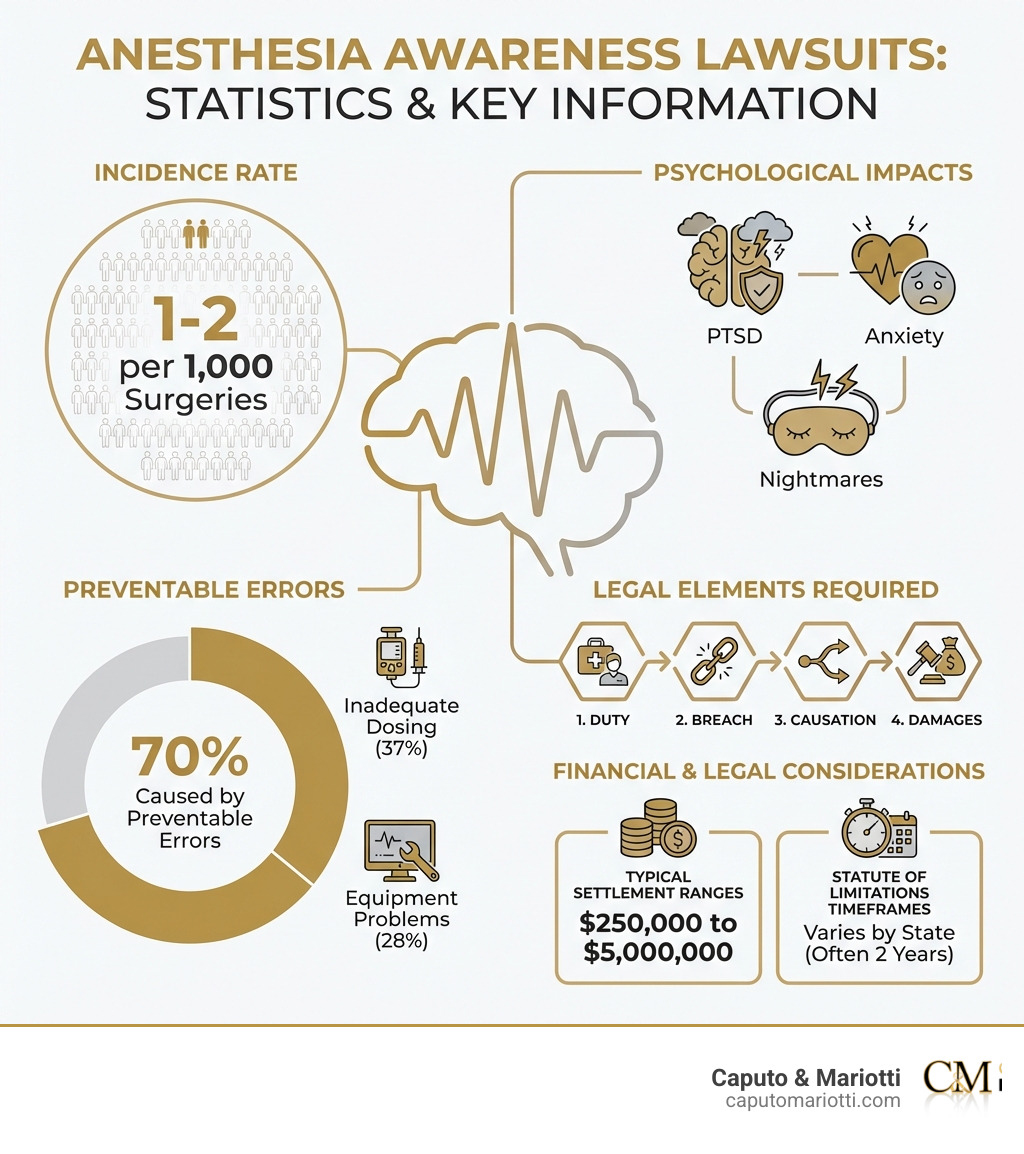
- Incidence Rate: Occurs in approximately 1-2 out of every 1,000 general anesthesia cases
- Common Causes: Human error (inadequate dosage, equipment malfunction, monitoring failures)
- Legal Basis: Medical malpractice when negligence caused the awareness
- Damages: Compensation for PTSD, anxiety, lost wages, and ongoing therapy costs
- Time Limits: Must file within Pennsylvania’s statute of limitations (typically 2 years)
- Success Factors: Medical records, expert testimony, and proof of psychological harm
Imagine being paralyzed on an operating table, fully conscious, feeling every cut and hearing every conversation—but unable to move or scream. One patient described it this way: “Someone was inside me, ripping, ripping me apart. It was excruciating. It was burning and burning and burning.”
This nightmare, known as anesthesia awareness, occurs when anesthesia fails, leaving you conscious but paralyzed by other drugs. The psychological aftermath is often devastating, with many victims developing severe PTSD, panic attacks, and a lasting fear of medical procedures.
While rare, up to 70% of anesthesia awareness cases result from preventable errors, including inadequate dosing or equipment failures. When such negligence causes this trauma, victims have the right to file a medical malpractice lawsuit for compensation.
This guide explains anesthesia awareness, when it becomes medical malpractice, and what you need for a lawsuit. Understanding your options is the first step toward justice.
The attorneys at Caputo & Mariotti dedicate their careers to representing victims of medical negligence in Northeastern Pennsylvania. With decades of experience in complex litigation, including anesthesia awareness lawsuit cases, our firm understands the devastating impact of these events and has secured millions for clients harmed by preventable medical errors.
What is Anesthesia Awareness and How Does it Happen?

Anesthesia awareness, or intraoperative awareness, is when a patient becomes conscious during a procedure under general anesthesia. Unlike regional or local anesthesia where consciousness is expected, general anesthesia should induce complete unconsciousness, painlessness, and unawareness.
The experience ranges from vague memories (implicit recall) to full, detailed recall of events, pain, and conversations (explicit recall). Patients may hear staff, feel the surgery, and realize they are paralyzed—a terrifying and traumatic sensation of being “awake, aware, and powerless.”
Anesthesia awareness is a rare but real complication, occurring in about 1 to 2 of every 1,000 general anesthesia cases. While a small percentage, the impact on those who experience it is immense. The American Association of Nurse Anesthetists (AANA) explains that patients may remember surgical events and suffer psychological harm, especially if the memory involved pain. Learn more here: What is Anesthesia Awareness?.
Common Causes of Anesthesia Awareness
Anesthesia awareness often stems from a breakdown in the anesthesia process. The causes fall into several categories:
- Human Error: Anesthesia providers may administer an inadequate dose, fail to check equipment, or not respond to changes in the patient’s vitals.
- Inadequate Dosage: The anesthetic dose may be too low due to miscalculation, patient resistance, or a deliberate choice to use lighter anesthesia in high-risk patients.
- Equipment Malfunction: Faulty vaporizers, pumps, or monitors can prevent effective drug delivery. This accounts for about 28% of awareness cases.
- Patient-Specific Factors: Risk is higher for patients with a history of substance use, severe anxiety, or certain medical conditions. Critically ill patients may receive lighter anesthesia, increasing risk.
- High-Risk Surgeries: Emergency, trauma, cardiac, and C-section surgeries carry higher risk, as anesthetic doses may be intentionally lowered for patient stability.
The ASA Closed Claims Project finds light anesthesia (37%) and delivery problems (28%) are major causes, though the cause is unknown in about a third of cases. More details are available here: ASA research on causes.
The Physical and Psychological Aftermath
The physical pain of awareness can be excruciating. Even without pain, the psychological trauma of being conscious and helpless is profound and long-lasting, shattering a patient’s sense of safety.
Common psychological and physical damages include:
- Post-Traumatic Stress Disorder (PTSD): A severe and common outcome, with symptoms like flashbacks, nightmares, and severe anxiety. Over 40% of awareness patients suffer long-term psychological harm like PTSD.
- Anxiety and Panic Attacks: Many develop generalized anxiety, phobias of medical settings, and panic attacks.
- Nightmares and Flashbacks: Traumatic memories intrude on daily life as vivid nightmares and flashbacks.
- Fear of Future Medical Procedures: An intense fear of future medical treatments is a common result.
- Chronic Pain: Recalled surgical pain can sometimes manifest as a chronic pain condition.
- Sleep Disturbances: Insomnia and night terrors are common as the mind processes the trauma.
CBS News reports that over 40% of awareness patients suffer long-term psychological harm like PTSD and anxiety. Read more here: Psychological harm from awareness episodes. If you have these symptoms after surgery, it’s important to understand if medical malpractice occurred.
When Awareness Constitutes Medical Malpractice
Anesthesia awareness is a known surgical risk, but it doesn’t automatically equal medical malpractice. However, when awareness results from the negligence of an anesthesia provider, it can be the basis for a medical malpractice claim.
Medical malpractice occurs when a healthcare professional deviates from the accepted “standard of care,” causing patient injury. For anesthesia providers, this standard includes proper patient evaluation, correct anesthesia selection and dosage, equipment checks, continuous patient monitoring, and responding to signs of awareness. An anesthesia awareness lawsuit must prove a breach of this standard caused the patient to regain consciousness.
Actions that may be considered negligence include:
- Administering an insufficient anesthetic dose without medical justification.
- Failing to properly check anesthesia equipment (e.g., vaporizers, connection lines).
- Neglecting to adequately monitor vital signs or anesthesia depth monitors (like a BIS monitor).
- Failing to respond promptly to signs of a patient becoming conscious.
- Improper anesthesia management during critical surgical phases.
- Communication failures within the surgical team.
The ASA Closed Claims Project links awareness to light anesthesia (37%) and delivery problems (28%), with many cases involving substandard care. For example, 94% of “awake paralysis” claims involved substandard care. Understanding these issues is key to a lawsuit.
Distinguishing Awareness Claims from Other Anesthesia Errors
An anesthesia awareness lawsuit is distinct from other anesthesia-related malpractice claims, which can cause different types of harm, such as:
- Intubation Injuries: Damage to teeth, vocal cords, or the trachea during breathing tube placement.
- Nerve Damage from Positioning: Injury from improper patient positioning or prolonged pressure on nerves.
- Wrong Medication Errors: Giving the wrong drug or combination, leading to allergic reactions, cardiac arrest, or brain damage.
- Dosage Overdoses: Too much anesthesia can cause brain damage, coma, or death. An underdose can cause awareness.
- Failure to Get Informed Consent: Failing to inform a patient of the risks and benefits of anesthesia before a known risk occurs.
Awareness claims are unique because the primary injury is psychological trauma from being conscious during surgery, unlike other errors that cause physical harm. The core of an anesthesia awareness lawsuit is this profound emotional trauma.
Building Your Anesthesia Awareness Lawsuit

A successful anesthesia awareness lawsuit requires proving medical negligence. It’s not enough to state you woke up; you must demonstrate that the provider’s actions fell below the standard of care and directly caused your injury.
To prove medical negligence, we must establish four legal elements:
- Duty: The healthcare provider owed you a professional duty of care.
- Breach: The provider breached this duty by failing to meet the accepted standard of care (e.g., through improper dosing or monitoring).
- Causation: This breach directly caused your anesthesia awareness and subsequent injuries.
- Damages: You suffered actual harm, such as psychological trauma or physical pain, as a result.
As the NCBI explains, an injured patient must prove these four elements. You can review them here: The Four Legal Elements of Negligence.
A key challenge in these cases is that patients, often paralyzed during the event, may struggle to articulate what happened. However, the resulting emotional distress is undeniable, and our firm is skilled at gathering the evidence needed to prove your case.
Evidence Needed for a Successful Anesthesia Awareness Lawsuit
A successful anesthesia awareness lawsuit requires comprehensive evidence, which our team will gather to build your case. Key evidence includes:
- Patient Testimony: Your account of the experience is crucial, even if memories are fragmented. Your distress and psychological changes are vital evidence.
- Medical Records: The backbone of the case, including anesthesia charts (tracking drugs and vitals), pre- and post-operative notes, surgical reports, and psychological evaluations documenting PTSD or anxiety.
- Equipment Maintenance Logs: If equipment failure is suspected, these logs can show if machines were properly serviced.
- Expert Witness Testimony: This is critical. We retain qualified anesthesiologists to review records, opine on whether the standard of care was breached, and explain how that breach caused your injuries.
- Depositions of the Medical Team: We will interview the surgical team under oath to understand their actions and decisions.
Gathering and analyzing this evidence is intricate. Our experienced team can guide you through each step of the medical negligence claim process.
What is the Statute of Limitations for an Anesthesia Awareness Lawsuit?
The statute of limitations is a strict deadline for filing a lawsuit. Missing it means losing your right to compensation, so acting quickly in an anesthesia awareness lawsuit is critical.
In Pennsylvania, the statute of limitations for medical malpractice is generally two years from the date of injury. However, the “findy rule” may apply, meaning the two-year clock starts when you knew or should have known about the injury and its negligent cause.
The findy rule is relevant for awareness cases, as psychological symptoms like PTSD may not appear or be linked to the surgery immediately. The clock may start when you make that connection.
Due to these complexities, consult an experienced Pennsylvania medical malpractice lawyer as soon as you suspect negligence. We can assess your case, determine deadlines, and protect your rights. The clock is ticking. Consult with a Scranton Medical Malpractice Lawyer.
Compensation and Why You Need an Experienced Attorney
An anesthesia awareness lawsuit aims to secure compensation (“damages”) for your suffering. Damages are meant to cover your losses and are divided into two categories: economic and non-economic.
Economic Damages are quantifiable financial losses, including:
- Medical Bills: Past and future costs for therapy, counseling for PTSD, medication, and other treatments for physical or psychological harm.
- Lost Wages: Compensation for income lost if the trauma prevented you from working.
- Future Loss of Income: Compensation for diminished earning capacity if you cannot return to your previous job.
Non-Economic Damages are subjective losses for the severe emotional distress involved. These include:
- Pain and Suffering: For physical pain during the event and ongoing emotional anguish.
- Emotional Distress: For psychological trauma like PTSD, anxiety, panic attacks, and nightmares.
- Loss of Enjoyment of Life: For diminished ability to participate in hobbies and daily activities.
The value of an anesthesia awareness lawsuit varies based on the severity of trauma, its impact on your life and work, and future medical costs. Because juries recognize the severe suffering, settlements can be substantial, sometimes ranging from $250,000 to over $5,000,000.
The Role of a Medical Malpractice Lawyer
These lawsuits are medically and legally complex, making an experienced medical malpractice lawyer essential. At Caputo & Mariotti, we act as your advocate and guide through this difficult process.
Here’s how we can help:
- Investigating the Claim: We thoroughly investigate, review records, and identify breaches in the standard of care.
- Gathering Evidence: We collect and analyze medical documents, logs, and statements to build a strong case.
- Hiring Qualified Medical Experts: Our network of medical experts provides crucial testimony to establish negligence and explain your injuries.
- Negotiating with Insurance Companies: We have extensive experience negotiating with aggressive insurance companies to secure fair compensation.
- Litigating Your Case: If a fair settlement isn’t reached, our skilled litigators are prepared to take your case to trial.
- Protecting Your Rights: We handle all legal procedures and keep you informed to ensure your rights are protected.
Choosing the right lawyer is critical. Our team has over 55 years of combined experience fighting for victims of medical negligence in Northeastern Pennsylvania.
Frequently Asked Questions about Anesthesia Lawsuits
We understand that victims of anesthesia awareness and their families often have many questions. Here, we address some of the most common inquiries regarding anesthesia awareness lawsuit cases.
What types of surgeries have a higher risk of anesthesia awareness?
While possible in any surgery under general anesthesia, some procedures carry a higher risk because lower anesthetic doses may be used for patient safety. These include:
- Emergency and Trauma Surgeries: Anesthesia is often administered rapidly to unstable patients.
- Cardiac (Heart) Procedures: Lower doses may be used to protect heart function.
- C-sections: Lighter anesthesia is used to minimize drug transfer to the baby.
How much compensation can I expect from an anesthesia awareness case?
Compensation in an anesthesia awareness lawsuit varies greatly, as there is no standard amount. It depends on the specific damages suffered, but settlements can be substantial due to the severe psychological trauma involved.
Factors influencing the amount include:
- Severity of Psychological Trauma: Diagnosed PTSD and long-term therapy needs increase case value.
- Impact on Life and Work: Inability to work or a reduced quality of life will be reflected in the compensation.
- Cost of Future Medical Care: Projected costs for ongoing therapy and treatment are included.
Settlement ranges can be high, sometimes from $250,000 to $5,000,000, reflecting the seriousness of the suffering.
Can I sue if I remember sounds or conversations but felt no pain?
Yes. Even without physical pain, the psychological trauma of being conscious and paralyzed during surgery is a significant, compensable injury. The fear and helplessness can lead to conditions like PTSD and anxiety.
Many patients report hearing conversations or feeling panic without recalling pain. This profound emotional distress is a key component of an anesthesia awareness lawsuit. Our firm understands that psychological injuries are as real and debilitating as physical ones, and we will fight to prove the full extent of your suffering.
How a Dedicated Legal Team Can Help
Experiencing anesthesia awareness is a profound trauma, and you don’t have to face the legal aftermath alone. Proving negligence in an anesthesia awareness lawsuit requires deep medical and legal knowledge, as well as the resources to engage expert witnesses and challenge powerful defendants. An experienced attorney is essential to steer the complexities and fight for the justice you deserve.
The team at Caputo & Mariotti brings over 55 years of combined experience to help victims of medical negligence in Northeastern Pennsylvania. We understand the devastating impact of anesthesia awareness and are dedicated to providing compassionate yet aggressive legal representation to clients in Scranton, Wilkes-Barre, Hazleton, and throughout our service areas. Our unwavering commitment to justice means we will carefully investigate your claim, gather compelling evidence, and advocate tirelessly on your behalf to secure the maximum compensation you deserve.
If you believe you have a medical malpractice case, contact us for a free consultation. We are here to listen to your story, answer your questions, and help you take the first step toward healing and recovery. If you believe you have a medical malpractice case, contact us for a free consultation.