
The dedicated legal team of Caputo & Mariotti
Beyond the Fall: Demystifying Premises Liability
March 10, 2026
What You Need to Know About Premises Liability Slip and Fall Cases
Premises liability cases are among the most common types of personal injury claims in Pennsylvania. When you’re injured after slipping, tripping, or falling on someone else’s property due to a dangerous condition, you may have the right to seek compensation but only if you can prove the property owner was negligent.
Quick Answer: What is Premises Liability?
- Premises liability is the legal responsibility property owners have to keep their property reasonably safe for visitors
- Slip and fall is a specific type of premises liability claim where someone is injured after slipping, tripping, or falling due to a hazardous condition
- To win your case, you must prove the property owner knew (or should have known) about the dangerous condition and failed to fix it or warn you
- Common causes include wet floors, ice and snow, uneven surfaces, poor lighting, broken stairs, and cluttered walkways
- In Pennsylvania, you can still recover damages even if you’re partially at fault—as long as you’re less than 51% responsible
According to the National Safety Council, slip and fall accidents account for over a third of all preventable injuries. These incidents can happen anywhere, from grocery stores and restaurants to office buildings and parking lots. Injuries can range from minor bruises to life-altering trauma like brain injuries, hip fractures, and spinal damage.
However, proving a property owner’s negligence is complex. It’s not enough to show you fell and were injured; Pennsylvania law requires proof that the owner breached their legal duty of care, directly causing your injuries.
The personal injury attorneys at Caputo & Mariotti have represented individuals seriously injured by negligence since 2007, including in numerous premises liability cases. Our team’s experience, which includes work as former prosecutors, provides the skills to investigate these claims, gather compelling evidence, and hold negligent property owners accountable.
Understanding Premises Liability and the Property Owner’s Duty of Care
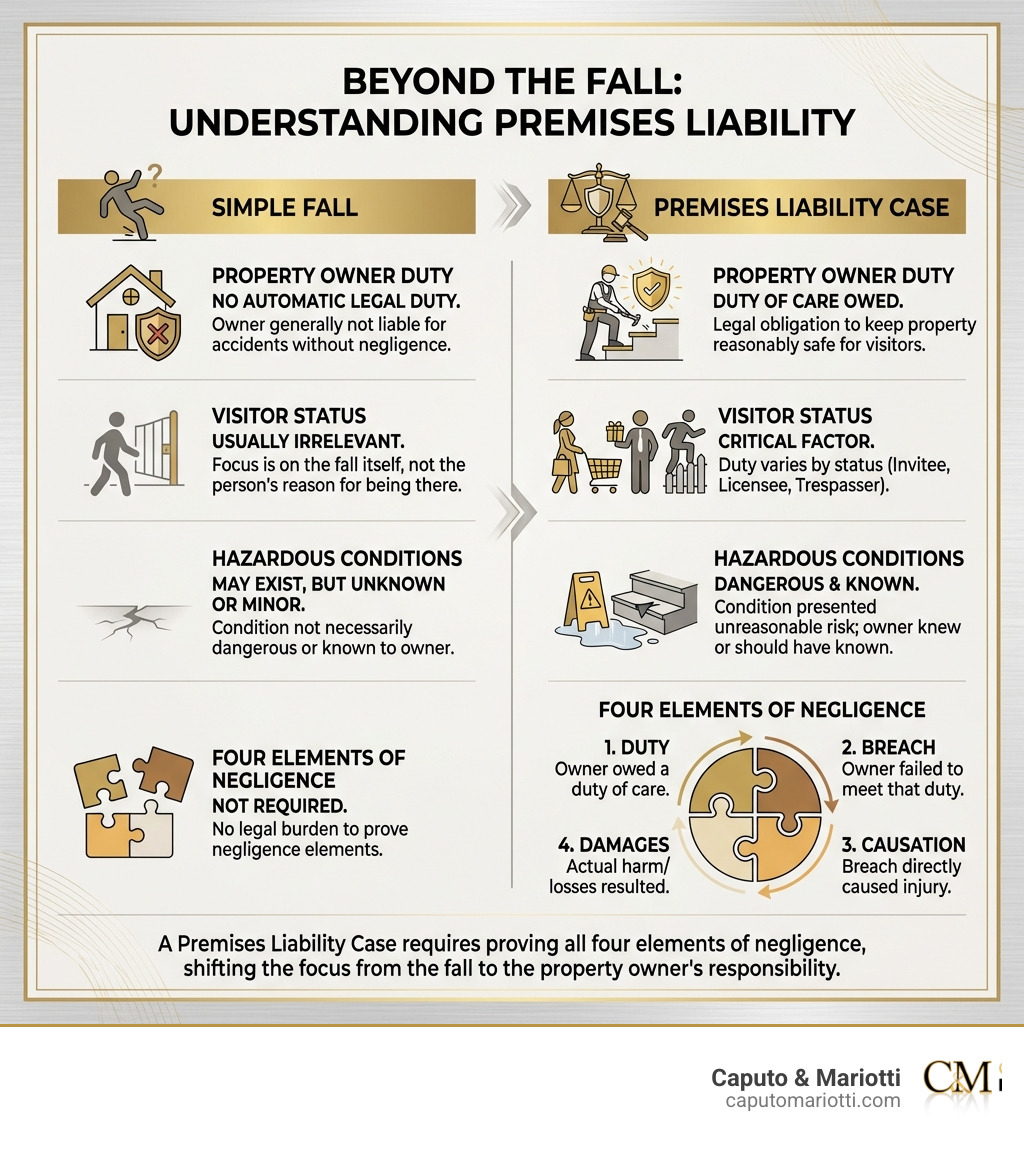
Premises liability is a specific area of personal injury law. At its core, Premises liability refers to potential legal responsibility for injuries caused by unsafe conditions on almost any kind of property. Property owners have a legal obligation, known as a “legal duty of care,” to ensure their property is reasonably safe for visitors.
A slip and fall claim arises when an injury occurs on another’s property from a hazard the owner knew (or should have known) about but failed to address. This is not just an accident; it’s about negligence.
Property owners in Pennsylvania, New Jersey, and Ohio must maintain their premises to reasonable safety standards by preventing harm, fixing hazards, and providing warnings. When they fail this duty and someone is injured, they should be held accountable. For more info about premises liability claims, we encourage you to explore our resources.
Visitor Status and the Standard of Care in Pennsylvania
A property owner’s legal duty of care often depends on the visitor’s status. Understanding these classifications is important in states like Pennsylvania and New Jersey.

- Invitee Status: Invitees are on the property for the owner’s benefit, such as customers in a store. Owners owe them the highest duty of care, which includes regularly inspecting for unknown hazards, fixing them, and warning of known dangers. If you’re shopping in Scranton or Wilkes-Barre, you are likely an invitee.
- Licensee Status: A licensee has permission to be on the property for their own purpose, like a social guest. The owner must warn them of known dangerous conditions that the licensee is unlikely to find. There is generally no duty to inspect for hidden dangers for licensees.
- Trespasser Status: A trespasser enters property without permission. Owners owe the lowest duty of care and cannot intentionally harm them. An exception exists for trespassing children drawn to an “attractive nuisance” (like a swimming pool), which creates a higher duty to protect them.
Common Hazardous Conditions
A premises liability accident often stems from preventable dangers that property owners fail to address, including:
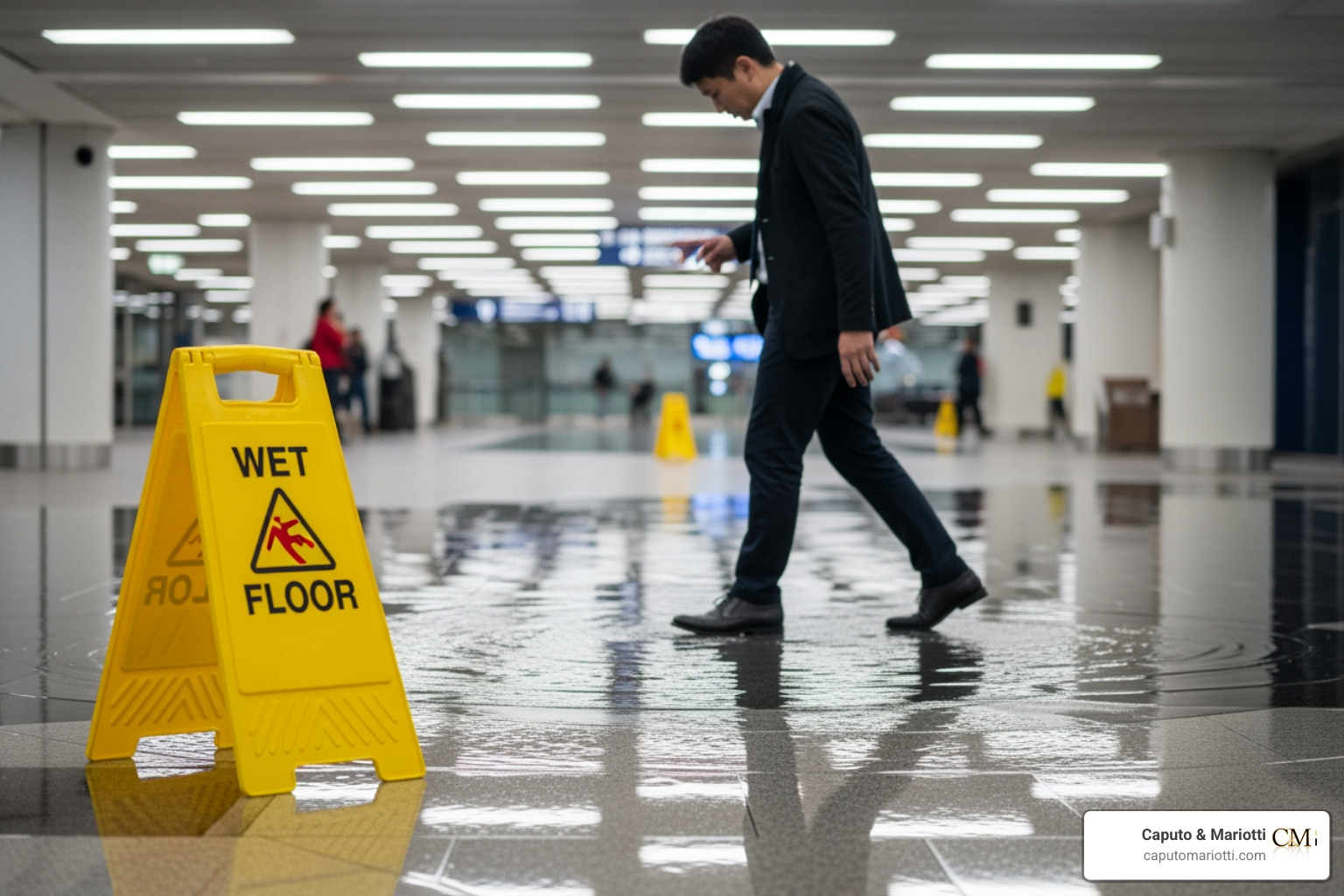
- Wet and Slippery Floors: Spills, leaks, freshly mopped floors without warning signs, or slick entryways are frequent causes of falls.
- Ice and Snow Accumulation: In Northeastern Pennsylvania, property owners must clear ice and snow from sidewalks, parking lots, and walkways in a reasonable manner.
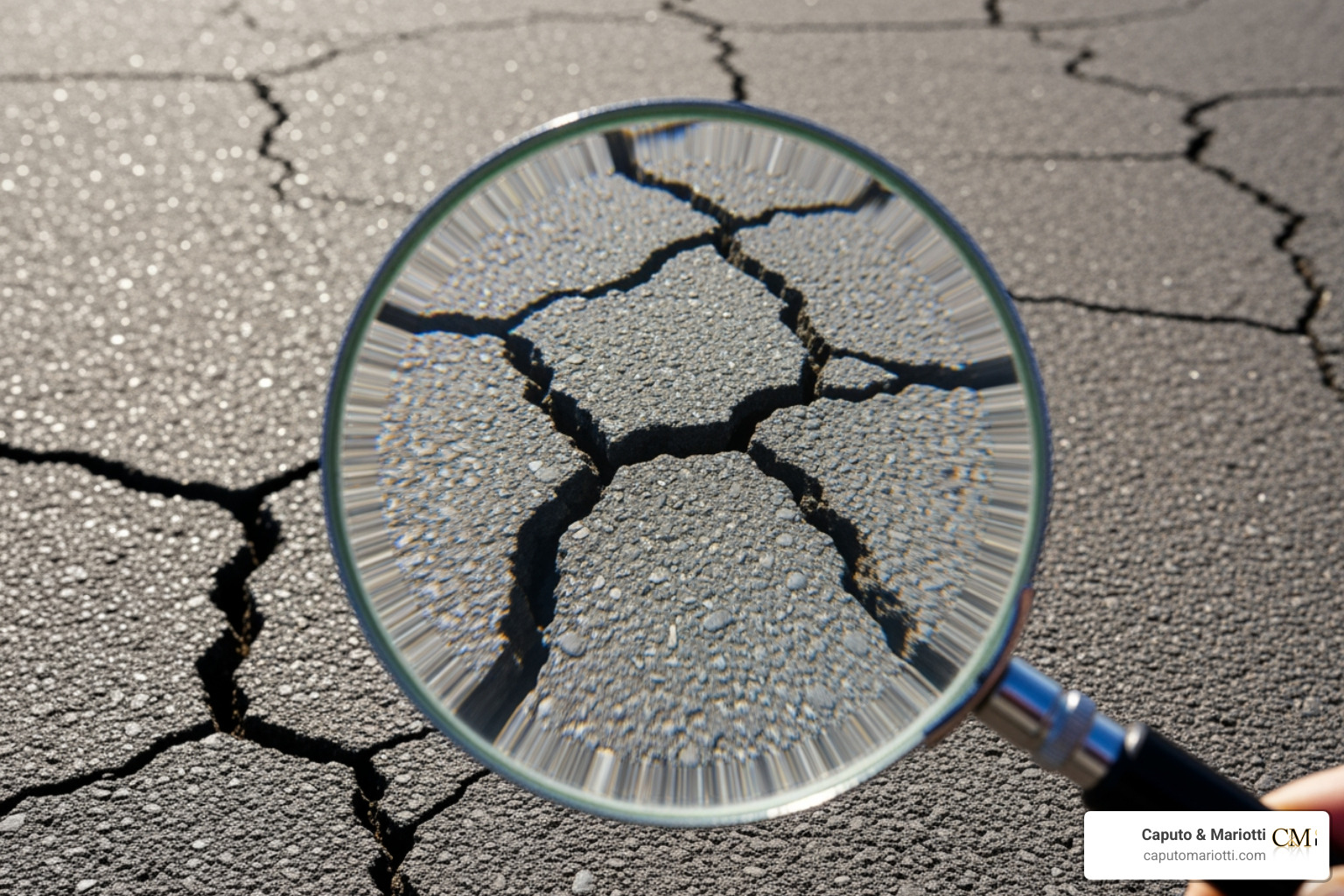
- Uneven Surfaces: Cracked pavement, potholes, loose rugs, broken tiles, or uneven steps can create tripping hazards.
- Poor Lighting: Inadequate lighting in stairwells, hallways, or parking garages can hide dangers.
- Broken Stairs or Handrails: Missing, loose, or broken handrails and damaged steps are significant risks.
- Cluttered Walkways: Debris, merchandise in aisles, or electrical cords can easily cause someone to trip and fall.
- Frayed Carpeting: Old or unsecured carpeting can bunch up, creating raised edges that lead to trips.
Proving Negligence in a Premises Liability Case
Proving the property owner was negligent is the central challenge in a premises liability case. You must show that the owner’s failure to act reasonably directly caused your accident and injury. Negligence is a legal concept that holds people accountable for the unintentional harm they cause to others.
A key part of proving negligence is showing the property owner had “notice” of the danger, which can be:
- Actual Notice: The owner or their employees actually knew about the hazard (e.g., an employee saw a spill and did nothing).
- Constructive Notice: The owner should have known about the hazard. This applies if the danger existed long enough that a reasonable owner would have found and fixed it during regular inspections, like a broken step that was unrepaired for weeks.
Once notice is established, we must show the owner failed to take reasonable action to fix the hazard or warn visitors.
The Four Essential Elements of a Negligence Claim
To successfully prove negligence in a premises liability case in Pennsylvania or New Jersey, we must establish four critical elements:
- Duty of Care: We must show the property owner owed you a legal duty of care. This duty varies based on your visitor status (invitee, licensee, or trespasser).
- Breach of Duty: We must prove the owner breached this duty by failing to act as a reasonably prudent person would, such as not cleaning a known spill or repairing a broken step.
- Causation: We must prove the owner’s breach of duty directly caused your injury. The negligence must be a “substantial factor” in causing the harm.
- Damages: You must have suffered actual, measurable harm, such as medical bills, lost wages, and pain and suffering.
For a more detailed breakdown, see What You Must Prove to Win a Slip and Fall Injury Claim.
Gathering Evidence to Strengthen Your Premises Liability Slip and Fall Claim
Compelling evidence is crucial for a strong premises liability claim. Key evidence includes:
- Accident Reports: A copy of the incident report filed with the property owner or manager.
- Witness Statements: Accounts from anyone who saw the fall or the hazardous condition.
- Photographs and Videos: Visual evidence of the hazard, the surrounding area, and your injuries.
- Surveillance Footage: Security camera footage of the fall. Acting fast is essential as this is often erased quickly.
- Maintenance Logs: Documents showing inspection schedules, which can reveal a lack of regular maintenance.
- Medical Records: Records proving the extent of your injuries and linking them to the fall.
- Preserving Footwear: The shoes you were wearing, as the defense may argue they contributed to the accident.
Determining Responsibility: Property Owner vs. Visitor
A common defense is arguing the injured person shares responsibility for the fall. This involves the concept of shared fault and the visitor’s own duty of care.
While property owners must maintain safe premises, visitors must also use reasonable caution. If you were texting while walking and tripped over an obvious obstacle, or ignored clear warning signs, the defense may argue your distraction or negligence contributed to the fall.
Navigating Pennsylvania Law and Your Right to Compensation
Navigating a premises liability case requires understanding state-specific laws. In Pennsylvania and New Jersey, our goal is to secure the financial recovery you deserve by pursuing compensation through insurance claims or a lawsuit. For more info about personal injury claims in general, we have extensive resources available.
How Pennsylvania’s Comparative Negligence Rule Affects Your Compensation
Pennsylvania, along with New Jersey, follows a legal principle known as modified comparative negligence. This rule is important because it dictates how your own actions might affect the compensation you can recover.
Under this rule, if you are found partially at fault for your accident, your compensation is reduced by your percentage of fault. For example, if your damages are $100,000 but you were 20% at fault, you would recover $80,000.
The critical part is the “51% bar”: you can only recover damages if you are less than 51% responsible. If you are 51% or more at fault, you are barred from any recovery. This is why the defense will try to shift blame onto you. Understanding comparative negligence is vital.
Potential Damages You Can Recover
If you’re injured in a premises liability accident, you may be entitled to recover a wide range of damages, both economic and non-economic.
Economic Damages cover your direct financial losses and can include:
- Medical Expenses: This encompasses all costs related to your treatment, from emergency room visits and doctor’s appointments to surgeries, medications, physical therapy, and future medical care.
- Lost Wages: If your injuries caused you to miss time from work, you can recover compensation for lost income.
- Loss of Earning Capacity: If your injuries result in a long-term or permanent disability that affects your ability to earn at the same level as before, you can seek damages for future lost earnings.
- Property Damage: This covers any personal property damaged in the fall, such as a broken phone or glasses.
- Replacement Services: Costs for services you can no longer perform due to your injuries, such as household chores, childcare, or home maintenance.
Non-Economic Damages address the intangible losses you’ve suffered, which are often more challenging to quantify but are equally valid:
- Pain and Suffering: Compensation for the physical pain and emotional distress caused by your injuries. This can be significant in serious injury cases.
- Emotional Distress: This includes anxiety, depression, fear, and other psychological impacts resulting from the accident and injuries.
- Loss of Enjoyment of Life: If your injuries prevent you from participating in hobbies, activities, or aspects of life you once enjoyed.
We work tirelessly to ensure our clients in Scranton, Wilkes-Barre, and throughout Northeastern Pennsylvania receive the maximum compensation they are entitled to for all their losses.
What to Do After a Fall and Why Legal Help is Crucial
A premises liability accident can be disorienting and painful. What you do in the immediate aftermath can significantly impact your ability to protect your rights and pursue a successful claim. Property owners and their insurance companies often act quickly to minimize their liability, making prompt legal guidance crucial. Our team offers trusted legal support in Scranton and Wilkes-Barre, ready to guide you through this complex process.
Immediate Steps to Take After an Accident
If you or a loved one experience a premises liability accident, follow these steps if possible:
- Seek Medical Attention: Your health is paramount. Even if you feel fine, some injuries may not be immediately apparent. Get a medical evaluation as soon as possible. This also creates an official record of your injuries.
- Report the Incident: Inform the property owner, manager, or an employee about your fall. Ask for an incident report and request a copy.
- Document the Scene: If you can, take photographs and videos of the hazardous condition that caused your fall. Capture the general area, specific details of the hazard, and any warning signs (or lack thereof). Also, photograph your injuries.
- Get Witness Information: If anyone saw your fall, ask for their names and contact information. Their testimony can be crucial.
- Preserve Evidence: Keep the clothes and shoes you were wearing. Do not clean or repair them.
- Do Not Admit Fault: Avoid making statements that suggest you were to blame for the fall, such as “I should have been more careful.”
- Do Not Give Recorded Statements: Do not provide a recorded statement to an insurance company without first consulting with an attorney. Insurers are looking for ways to minimize payouts.
The Role of a Personal Injury Attorney
Navigating a premises liability claim can be overwhelming, especially when you’re recovering from injuries. That’s where an experienced personal injury attorney becomes an invaluable asset. We provide comprehensive legal support by:
- Case Investigation: We thoroughly investigate your accident, visiting the scene, identifying potential hazards, and determining who is responsible.
- Evidence Collection: Our team gathers all necessary evidence, including accident reports, witness statements, surveillance footage, and maintenance logs.
- Negotiating with Insurers: We handle all communications and negotiations with insurance companies, protecting you from tactics designed to undervalue or deny your claim.
- Calculating Full Damages: We work with medical experts and financial professionals to accurately calculate the full extent of your economic and non-economic damages, ensuring nothing is overlooked.
- Filing a Lawsuit: If a fair settlement cannot be reached through negotiation, we are prepared to file a lawsuit and represent you vigorously in court.
Choosing the right legal representation is critical. For guidance on how to choose the right personal injury lawyer, consider our firm’s experience and dedication.
When Your Fall Happens at Work
If your premises liability accident occurs at your workplace in Pennsylvania, New Jersey, or Ohio, it often involves a different legal avenue: workers’ compensation. Typically, workers’ compensation provides benefits for medical expenses and lost wages, regardless of fault.
However, sometimes a workplace fall can also involve a “third-party liability claim.” This occurs if someone other than your employer (or a co-worker) caused the dangerous condition. For example, if you fall at work due to a hazard created by a negligent contractor, a delivery driver, or a defective product, you might have a third-party claim in addition to your workers’ compensation claim.
These cases can be complex, involving the interplay between workers’ compensation laws and personal injury law. It’s crucial to seek all available compensation. If you’ve been injured in a workplace fall, consulting with a knowledgeable workers’ compensation lawyer is essential to explore all your legal options.
Frequently Asked Questions about Premises Liability Slip and Fall Claims
How long do I have to file a slip and fall lawsuit in Pennsylvania?
In Pennsylvania, the statute of limitations for most personal injury claims, including premises liability cases, is generally two years from the date of the accident. This means you typically have two years from the day you fell to file a lawsuit in court. If you miss this deadline, you will likely lose your right to pursue compensation, regardless of the strength of your case. There can be rare exceptions, such as the “findy rule” where the two-year clock starts when you find, or reasonably should have finded, your injury. However, it is always advisable to act quickly and consult with an attorney as soon as possible to protect your rights.
What if I fell on government property like a public sidewalk or park?
Falling on government property, such as a public sidewalk in Wilkes-Barre, a municipal building in Scranton, or a state park, presents unique challenges for premises liability claims. Government entities in Pennsylvania are often protected by “sovereign immunity,” which generally shields them from lawsuits.
However, the Pennsylvania Tort Claims Act allows lawsuits against government entities in specific, limited circumstances, such as for dangerous conditions on roads, sidewalks, or public buildings. Crucially, claims against government entities typically have very strict and much shorter notice deadlines—often within six months of the incident. Failing to provide timely notice can permanently bar your claim. These cases are highly complex and require an attorney experienced in navigating the specific procedural rules and exceptions to sovereign immunity.
How much is my slip and fall claim worth?
There is no “average” settlement amount for a premises liability claim because each case is unique. The value of your claim depends heavily on several factors:
- Severity of Injuries: More severe, long-lasting, or permanent injuries typically result in higher compensation.
- Total Economic Losses: This includes all your medical bills (past and future), lost wages (past and future), and other out-of-pocket expenses.
- Impact on Quality of Life: This accounts for non-economic damages like pain and suffering, emotional distress, and how your injuries have affected your daily life and ability to enjoy activities.
- Strength of Evidence: The clarity of liability, the credibility of witnesses, and the thoroughness of documentation all play a crucial role.
- Jurisdiction: Local laws and jury tendencies in areas like Lackawanna County, Luzerne County, or Chester County can also influence potential awards.
Our experienced attorneys carefully evaluate all these factors to provide an accurate assessment of your claim’s potential value and fight for maximum compensation.
Conclusion
A premises liability accident can turn your life upside down, bringing unexpected pain, medical bills, and lost income. As we’ve explored, proving negligence in these cases is not a simple task. It requires understanding the property owner’s duty of care, establishing a breach of that duty, demonstrating causation, and carefully documenting all your damages.
Navigating Pennsylvania’s legal system, especially with complex rules like modified comparative negligence and strict statutes of limitations, demands experience and dedication. Property owners and their insurance companies will often aggressively defend against claims, making it challenging for injured individuals to secure fair compensation on their own.
That’s where the value of experienced legal counsel comes in. At Caputo & Mariotti, our dedicated team brings combined decades of experience to every case. We are committed to justice for our clients in Scranton, Wilkes-Barre, and across Northeastern Pennsylvania, New Jersey, and Ohio. We will investigate your claim, gather crucial evidence, negotiate with insurers, and, if necessary, advocate fiercely for you in court.
If you’ve suffered an injury due to a dangerous condition on someone else’s property, don’t wait. Protect your rights and explore your legal options. Schedule a free consultation with us today.