

The dedicated legal team of Caputo & Mariotti
Do I Need a Personal Injury Lawyer in Pennsylvania? A Practical Guide
September 25, 2026
Introduction
You generally need a personal injury lawyer in Pennsylvania if you suffered bodily injuries, face disputed liability, or must deal with commercial insurers. While minor property damage claims without physical injuries can often be handled independently, cases involving medical treatment, lost income, catastrophic trauma, or complex state liability rules require professional legal representation to secure full financial recovery.
The moment injuries enter the equation, the playing field tilts drastically in favor of corporate insurance carriers. These corporations employ teams of claims adjusters and defense counsel whose primary directive is to protect profits by reducing or denying payouts. Without seasoned representation, claimants routinely fall into common traps: accepting premature settlements that do not cover ongoing care, miscalculating long-term economic damages, or making inadvertent statements that insurers exploit to deny fault. Conducting an early legal assessment protects your rights, safeguards vital proof, and establishes a clear framework for your claim.
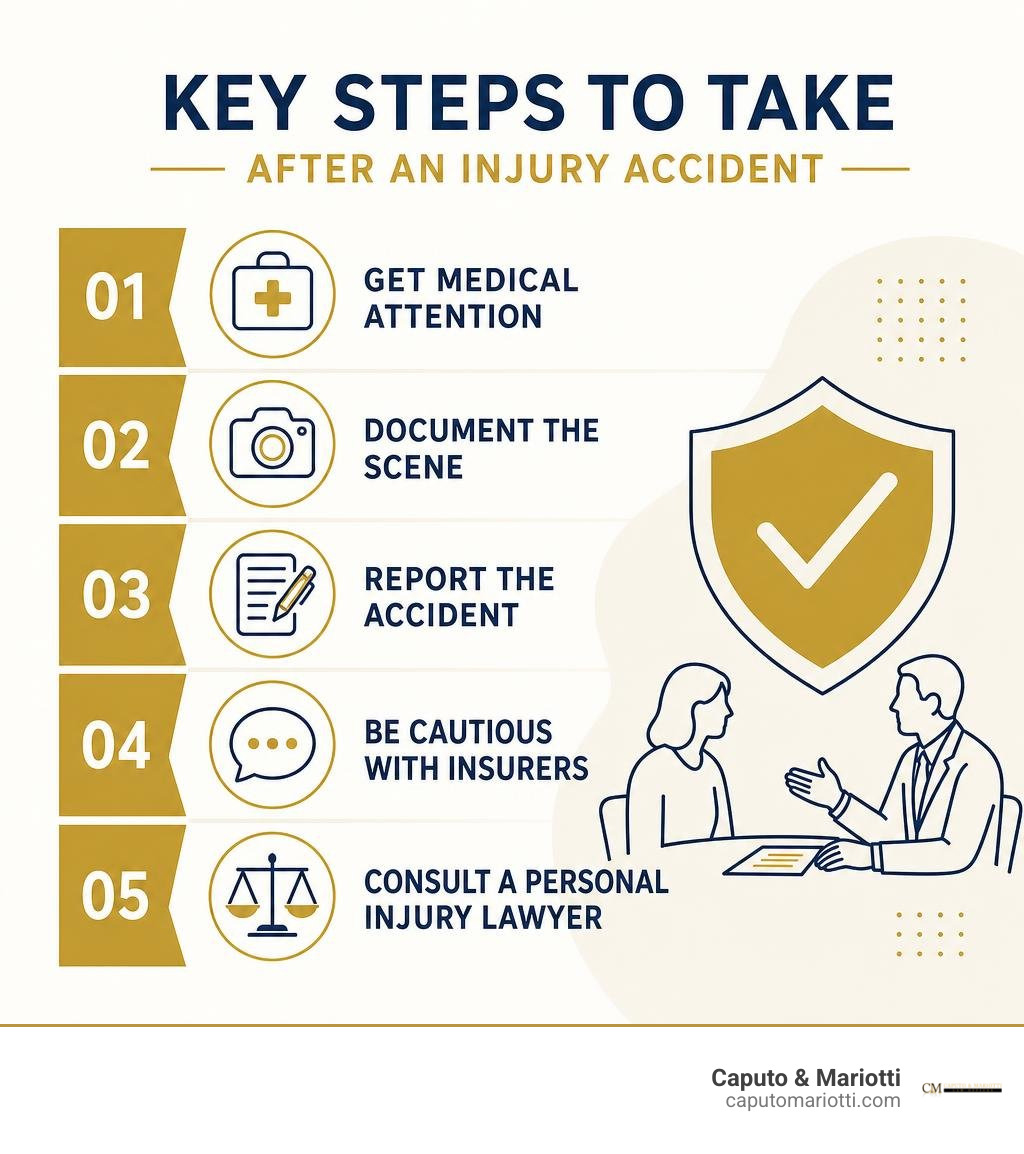
Do I Need a Personal Injury Lawyer Pennsylvania Guide: 5 Signs You Need Representation

Determining when to transition from handling a matter yourself to securing formal legal advocacy comes down to recognizing specific risk factors. As outlined in this guide on when should you hire a personal injury lawyer? Five signs you need legal help, certain scenarios introduce complexities that make self-representation dangerous. Understanding why you need a personal injury lawyer in Scranton PA helps you protect your claim from common insurance tactics.
Here are the five definitive signs that you should retain experienced counsel:
Catastrophic Damages: Do I Need a Personal Injury Lawyer Pennsylvania Legal Assessment
If your accident resulted in severe trauma—such as traumatic brain injuries, spinal cord damage, compound fractures, internal organ damage, or long-term disability—hiring legal counsel is essential. Catastrophic injuries involve extensive future medical costs, ongoing rehabilitation, specialized equipment, home modifications, and significant diminished earning capacity.
Calculating the real value of these claims requires collaborating with medical specialists, life care planners, and forensic economists to accurately project lifetime damages. Securing fair recovery involves maximizing compensation key steps in a Northeastern PA personal injury case, ensuring that every facet of physical, emotional, and economic loss is quantified and substantiated with medical documentation.
Complex Liability Disputes: Do I Need a Personal Injury Lawyer Pennsylvania Claim Analysis
If an insurance company disputes who caused the accident, or attempts to assign partial blame to you, legal intervention becomes vital. Under Pennsylvania’s modified comparative negligence framework, an insurer can eliminate your recovery entirely if they convince a jury that you were primarily at fault.
Overcoming disputed fault requires comprehensive evidence collection:
- Obtaining commercial video or dashcam footage before it is erased
- Subpoenaing electronic control module (black box) data
- Retaining certified accident reconstruction experts
- Interviewing eyewitnesses under formal deposition conditions
A seasoned personal injury lawyer in Scranton your trusted advocate after an accident builds an evidentiary record that counters insurer defenses and establishes clear legal responsibility.
Multiple Liable Parties and Commercial Entities
Accidents involving commercial vehicles, multi-vehicle pileups, industrial worksites, or defective products introduce overlapping layers of liability. In a commercial trucking crash, for example, liability might extend beyond the truck driver to the motor carrier, the maintenance contractor, the cargo loading vendor, and the vehicle manufacturer.
Each corporate defendant maintains its own dedicated insurer and legal team, often pointing fingers at other parties to delay or diminish settlement payouts. Successfully coordinating claims across multiple corporate policies requires legal formal procedures, thorough discovery requests, and an understanding of federal and state regulatory standards.
Lowball Settlement Offers and Premature Release Forms
If an insurance adjuster contacts you within days of an incident offering a fast check, caution is warranted. Early settlement offers are designed to resolve claims for pennies on the dollar before the full extent of your physical injuries and medical prognosis are understood.
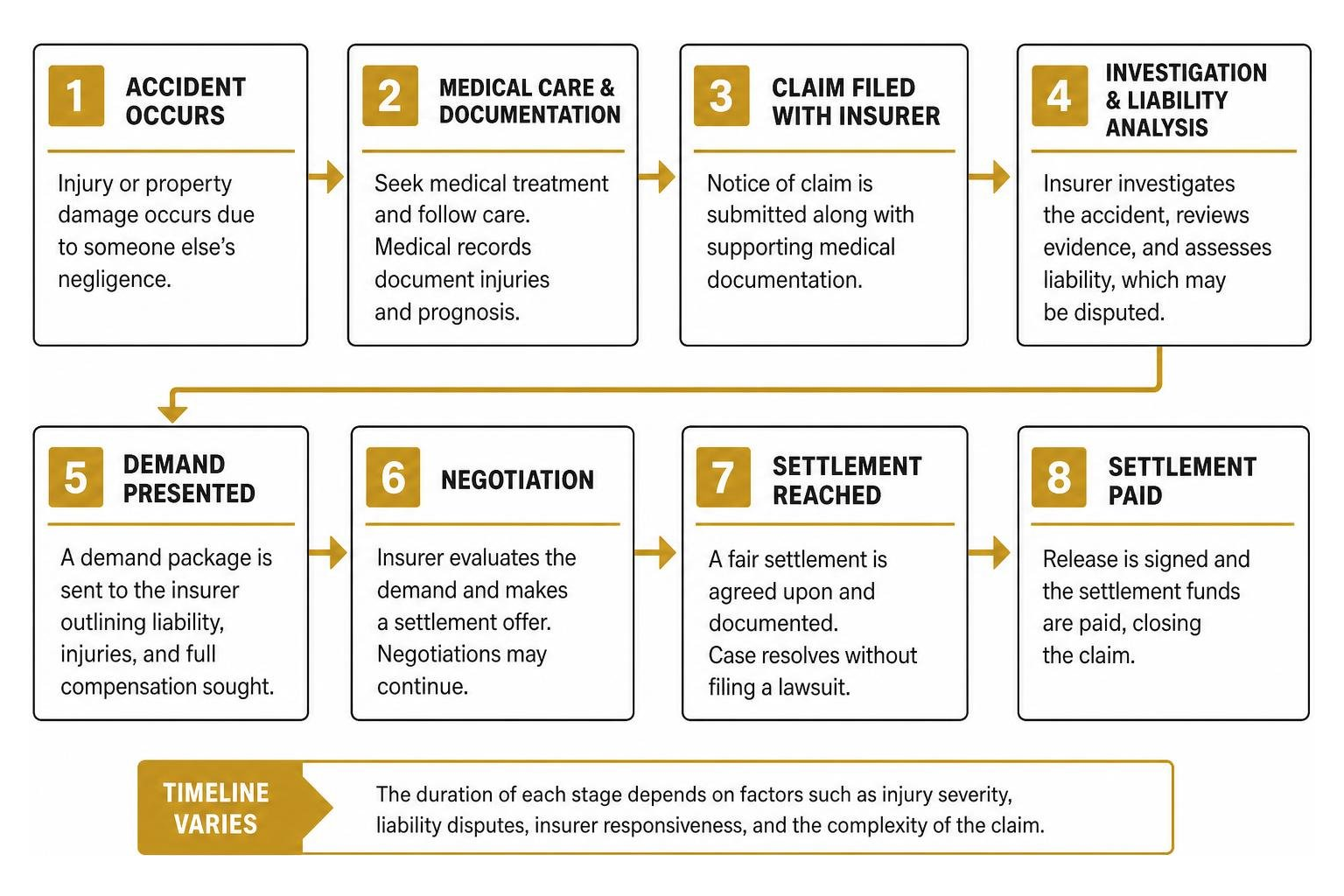
To receive that fast payment, you must sign a general release of liability. This legal document permanently extinguishes your right to pursue further compensation from that insurer or defendant. If you discover months later that you require spinal fusion surgery or extended physical therapy, you cannot reopen the claim; those expenses become your sole financial responsibility.
Insurance Pressure for Recorded Statements
Insurance adjusters are skilled interrogators who frequently request recorded statements early in the claims process. While presented as a standard, helpful step, these recorded interviews are often structured to elicit statements that can be taken out of context to argue that your injuries were pre-existing, your pain is minor, or your actions contributed to the incident.
Retaining legal counsel establishes a protective shield. Once represented, all communications, inquiries, and negotiation requests must flow through your attorney, preventing insurers from using manipulative interview tactics against you.
How Pennsylvania Injury Laws Directly Impact Your Settlement Recovery

Personal injury claims in Pennsylvania operate within a distinct statutory framework. Successfully recovering compensation requires an understanding of how state-specific doctrines govern fault, damages, insurance selections, and filing deadlines. Learning the fundamentals through an introduction to personal injury law navigating the path to justice provides important baseline knowledge for injured victims across the Commonwealth.
Modified Comparative Negligence Under 42 Pa.C.S. § 7102
Pennsylvania applies a modified comparative negligence system, codified under 42 Pa.C.S. § 7102. This statute dictates how compensation is calculated when multiple parties share responsibility for an incident.
Under this rule:
- The 51 Percent Bar: You can recover financial compensation only if your share of causal negligence is 50 percent or less. If a court determines you are 51 percent or more at fault, you are legally barred from recovering any damages.
- Proportional Reduction: If you are 50 percent or less at fault, your total financial award is reduced in direct proportion to your percentage of fault. For example, if your total damages equal $200,000 but you are assigned 20 percent of the fault, your recovery is reduced by 20 percent ($40,000), leaving a net recovery of $160,000.
Because crossing the 51 percent threshold entirely eliminates financial recovery, defense insurers aggressively search for ways to inflate an injured victim’s perceived fault.
Full Tort vs. Limited Tort and PA Statute of Limitations
For motor vehicle collisions, your ability to recover compensation for non-economic damages (pain, suffering, loss of life’s pleasures) depends heavily on whether you selected Full Tort or Limited Tort on your auto insurance policy:
- Full Tort: Retains your unrestricted right to pursue full compensation for all economic and non-economic damages regardless of injury severity.
- Limited Tort: Restricts your recovery to out-of-pocket economic damages (medical bills, lost wages) unless your injuries meet the statutory definition of a “serious impairment of body function” or fit a specific legal exception (such as being hit by a drunk driver or an out-of-state vehicle).
Additionally, personal injury claims are governed by strict filing deadlines. Under 42 Pa.C.S. § 5524, Pennsylvania enforces a two-year statute of limitations for personal injury actions. Missing this deadline permanently forfeits your right to seek financial recovery in court.
In parallel, if your injury occurred within the scope of your employment, specific statutory guidelines govern your recourse. In these scenarios, consulting an experienced workers’ compensation lawyer is essential. Pennsylvania workers’ compensation operates as a no-fault administrative system that provides medical coverage and wage-loss benefits without requiring proof of employer negligence.
Navigating a workplace injury requires adhering to strict reporting requirements—specifically providing notice to your employer within 21 to 120 days of the injury. Injured workers must seek medical treatment from an employer-designated list of healthcare providers for the initial 90 days if proper notice was posted. Building a strong claim involves thorough evidence gathering, including witness accounts, medical documentation, and incident logs. If an employer or insurer disputes, denies, or modifies your benefits, your attorney will manage the formal filing procedures, petition structures, and legal appeals before Pennsylvania Workers’ Compensation Judges and the Appeal Board.
The Real Financial Impact: Contingency Fees vs. Settling on Your Own
A common concern among injured individuals is whether retaining legal counsel is financially practical. A review of legal cost structures and industry recovery data reveals the financial reality of professional representation.
Understanding the broader scope of claims through understanding personal injury claims in Scranton a comprehensive guide demonstrates why self-representation often results in lower net recovery.
| Case Factor | Self-Representation (Pro Se) | Retaining Professional Legal Counsel |
|---|---|---|
| Upfront Legal Costs | None | None (Contingency Fee Structure) |
| Valuation Methodology | Limited to immediate bills | Comprehensive life-care and economic forecasting |
| Negotiation Leverage | Minimal; insurer controls narrative | High; credible trial readiness forces fair offers |
| Evidence Gathering | Basic police reports and bills | Expert reconstruction, subpoenas, medical depositions |
| Average Net Compensation | Substantially lower overall | Significantly higher, even after legal fees are deducted |
| Protection from Legal Traps | High risk of signing premature releases | Complete protection from premature releases and insurer tactics |
Understanding Contingency Fees in Pennsylvania
Personal injury representation at Caputo & Mariotti operates on a contingency fee agreement. This structure ensures that quality legal advocacy is accessible to everyone, regardless of current financial circumstances.
Key components include:
- Zero Upfront Retainers: You pay no out-of-pocket costs to initiate your case or retain our legal services.
- No-Recovery, No-Fee Guarantee: If we do not successfully recover compensation for your claim through a settlement or verdict, you owe no attorney fees.
- Percentage-Based Payment: Legal fees are paid as an agreed-upon percentage deducted directly from the final settlement or jury award.
- Litigation Expense Coverage: Our firm advances all necessary litigation costs—such as court filing fees, expert witness evaluations, deposition transcripts, and medical records requests—which are reimbursed only upon successful case resolution.
Net Recovery Value: Self-Representation vs. Legal Representation
Industry research consistently demonstrates that represented claimants secure substantially higher gross settlements than those who negotiate alone. Even after deducting legal fees and advanced case expenses, the net compensation recovered by represented plaintiffs routinely exceeds what self-represented individuals obtain.
Insurance carriers recognize which firms are prepared to take a case through trial. This readiness changes the dynamic during negotiations. When an insurer knows a firm has the resources, trial experience, and evidentiary backing to present a case before a Lackawanna County or Luzerne County jury, their settlement offers increase accordingly.
Frequently Asked Questions About Hiring a Pennsylvania Injury Lawyer
How much does it cost to consult a personal injury attorney in Pennsylvania?
Initial consultations with reputable personal injury firms in Pennsylvania are completely free. You can discuss the details of your accident, review your medical status, evaluate liability questions, and determine whether you have a viable legal claim without incurring any financial obligation. Because personal injury cases proceed on a contingency basis, you face zero upfront financial risk throughout the entire legal process.
What happens if I am partially at fault for an accident in Pennsylvania?
Under Pennsylvania’s modified comparative negligence statute (42 Pa.C.S. § 7102), you can still recover financial compensation as long as your share of responsibility is 50 percent or less. Your total payout will be reduced proportionally by your fault percentage. If the insurer attempts to push your fault to 51 percent or higher to bar your claim completely, having dedicated legal counsel is critical to disprove their allegations using physical evidence, witness statements, and expert reconstruction.
Why should I avoid giving a recorded statement to the other party’s insurer?
Adjusters are trained to conduct recorded interviews using phrasing designed to lead you into making ambiguous statements. An offhand comment like “I’m doing okay today” or “I didn’t see the car until right before the crash” can later be used to claim that your injuries are minor or that you were not paying attention. Directing all communication through an attorney protects you from being led into damaging admissions.
Conclusion
Deciding whether you need legal counsel after an accident often comes down to the severity of your injuries, the clarity of fault, and the tactics used by the insurance company. While minor property damage claims with no bodily harm can often be handled independently, serious injury claims involve legal, medical, and financial considerations that require professional representation.
Pennsylvania’s 51 percent comparative fault bar, complex insurance rules, and the strict two-year statute of limitations create hurdles that can jeopardize your recovery if handled without counsel. Waiting too long to take action risks losing critical evidence, missing statutory deadlines, and settling for far less than your injuries require.
At Caputo & Mariotti, our attorneys bring over 55 years of combined experience fighting for injured individuals across Northeastern Pennsylvania, including Scranton, Wilkes-Barre, Moosic, Pittston, Hazleton, and Dickson City. If you or a loved one has suffered an injury due to another party’s negligence, contact our dedicated personal injury attorneys today or request a free consultation to protect your rights and pursue the full compensation you deserve.
