
The dedicated legal team of Caputo & Mariotti
A – Z Guide to Product Liability in Pennsylvania
July 3, 2026
Understanding What is Product Liability Pennsylvania Law
What is product liability in Pennsylvania? It is the area of law that holds manufacturers, distributors, and sellers legally responsible when a defective product causes injury, illness, or death.
Here is a quick answer:
| Key Question | Quick Answer |
|---|---|
| What is it? | Legal responsibility for harm caused by a defective product |
| Who can be sued? | Manufacturer, designer, distributor, wholesaler, retailer |
| Legal standard | Strict liability — no need to prove negligence or intent |
| Types of defects | Manufacturing, design, failure to warn |
| Time limit to file | 2 years from date of injury (42 Pa.C.S. § 5524) |
| Key legal basis | Restatement (Second) of Torts § 402A |
Each year, hundreds of thousands of people across the United States are injured or killed by dangerous products — from household appliances and children’s toys to vehicles and medical devices. In Pennsylvania, the law gives injured people a clear path to hold the responsible parties accountable, even without proving the manufacturer did anything intentionally wrong.
This guide covers everything you need to know: the types of claims, legal standards, filing deadlines, defenses, and damages available under Pennsylvania law.
I’m Chris Caputo, a Pennsylvania personal injury attorney with decades of litigation experience, including representing clients in complex product liability in Pennsylvania cases. If you or a loved one has been hurt by a defective product, this guide will help you understand your rights before you take your next step.
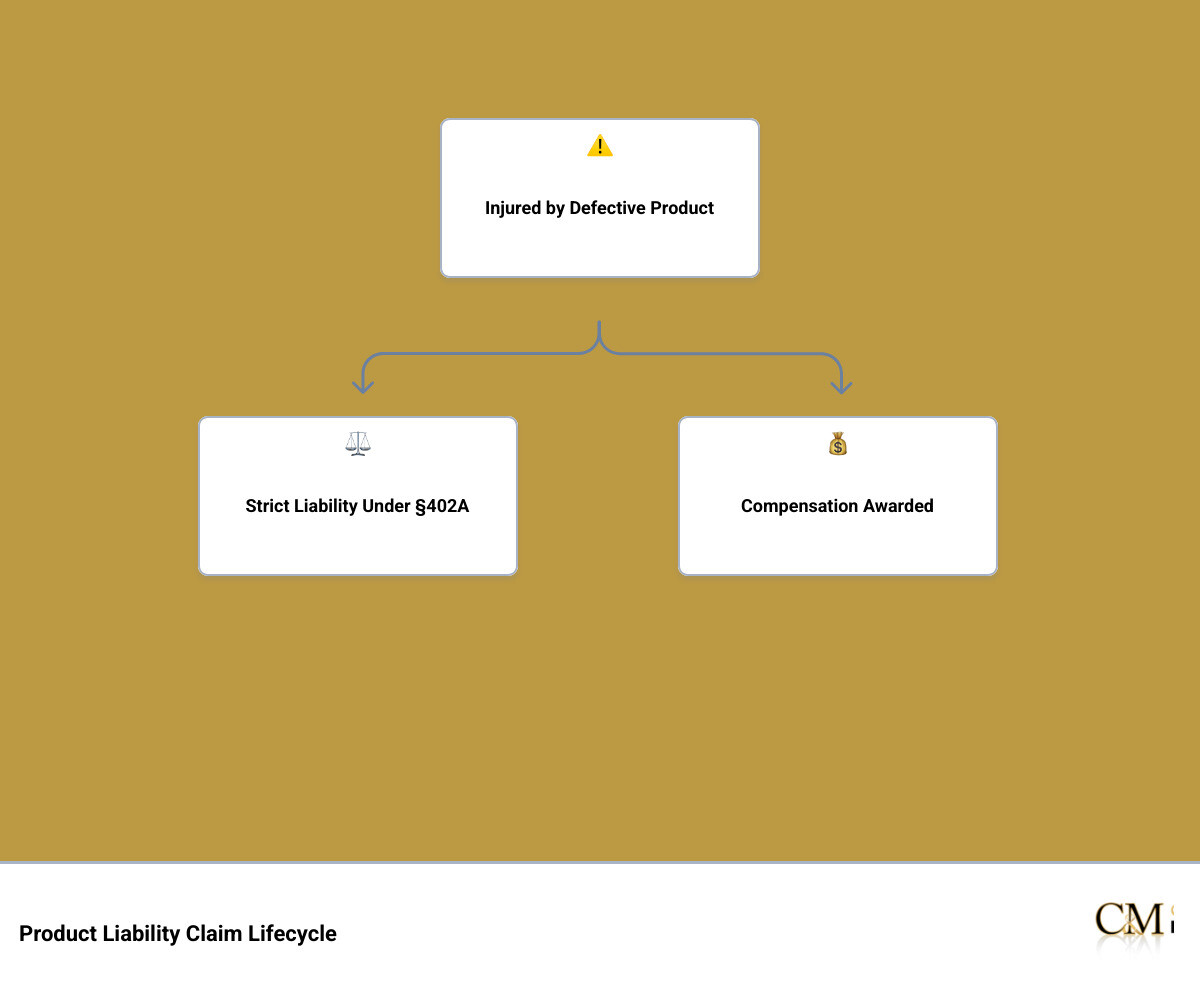

At its heart, what is product liability pennsylvania is a system designed to protect you, the consumer. In our state, we primarily follow the Restatement (Second) of Torts § 402A. This sounds like a mouthful of “legalese,” but it essentially means that a commercial seller who sells a product in a “defective condition unreasonably dangerous” to the user is liable for the physical harm caused by that product.
Unlike many other types of personal injury cases where you have to prove someone was “careless” or “negligent,” Pennsylvania applies a strict liability standard. This means if the product was defective when it left the seller’s hands and that defect caused your injury, the seller is responsible—regardless of how much care they took during the manufacturing process.
The law looks at the entire chain of distribution. This means you aren’t just limited to suing the person who built the item; you can often hold the wholesaler, the distributor, and even the retail store where you bought it accountable. For a deeper dive into how these laws work, you can explore the legal definition of products liability or learn more about our product liability legal services.
The Core Elements of a Claim
To win a case, we generally need to prove four things:
- The defendant is a commercial seller: They are in the business of selling these types of products.
- The product was defective: It was in a condition that made it unreasonably dangerous.
- The defect existed at the time of sale: It didn’t break because you used it for ten years or hit it with a hammer.
- Proximate cause: The defect was the actual reason you got hurt.
Whether you are dealing with a faulty car part or a dangerous household chemical, proving these elements is essential for a successful Pittston Product Liability claim.
Strict Liability vs. Negligence
Think of it this way: In a negligence case, we argue the manufacturer was “lazy” or “clumsy.” In a strict liability case, we don’t care about their behavior. We only care about the product. If the product is dangerous, they pay. This is a powerful tool for consumers in places like Hazleton Product Liability cases because it removes the need to find “smoking gun” emails proving a company knew they were being sloppy.
The Three Pillars of Defective Product Claims

Not all defects are created equal. In Pennsylvania, we categorize defects into three main “pillars.” Understanding which one applies to your situation is the first step in our investigation. You can also view The Ultimate Guide To Types Of Defective Product Liability Claims for more specific examples.
Identifying a Manufacturing Defect in Pennsylvania
A manufacturing defect occurs when a product departs from its intended design. Even if the design is perfect and 99.9% of the products coming off the line are safe, your specific unit had a “bad day” at the factory. This could be due to:
- Production errors: Using the wrong grade of bolt.
- Assembly flaws: Forgetting to tighten a critical connection.
- Quality control failures: Missing a crack in a glass bottle.
If you bought a bicycle in the Wilkes Barre Product Liability area and the frame snapped because of a bubble in the metal that wasn’t supposed to be there, that is a classic manufacturing defect.
Design Defects: Flaws by Intent
A design defect is more “systemic.” It means every single unit of that product is dangerous because the blueprints themselves were flawed. The product was manufactured exactly as planned, but the plan was bad. Pennsylvania courts use two tests to determine if a design is defective: the Consumer Expectations Test (is it more dangerous than a reasonable person would expect?) and the Risk-Utility Test (could they have made it safer without making it useless or way too expensive?).
Marketing Defects and the Duty to Warn
Sometimes the product works exactly as intended, but it’s still dangerous because the manufacturer didn’t tell you how to use it safely or didn’t warn you about hidden risks. This is often called a “failure to warn.”
- Inadequate instructions: Not explaining that a certain cleaner shouldn’t be mixed with bleach.
- Hidden dangers: Failing to mention that a medication causes severe dizziness.
- Foreseeable risks: Not putting a choking hazard label on a toy with small parts.
We handle many of these cases under our Category/Product Liability practice area.
Key Legal Standards: From Tincher to Sullivan
The landscape of what is product liability pennsylvania shifted significantly over the last decade due to two landmark cases.
The Impact of Tincher on What is Product Liability Pennsylvania
In 2014, the case of Tincher v. Omega Flex, Inc. changed the game. Before Tincher, judges had a lot of power to decide if a product was “unreasonably dangerous” before a case even got to a jury. Tincher moved that power to the jury. Now, it is up to twelve regular citizens to decide if a product meets the Consumer Expectations or Risk-Utility standards.
This case also brought back the “Wade factors”—a list of seven things a jury can look at to see if a product’s risks outweigh its benefits. To see how these rules translate to a courtroom, legal professionals often look at the Suggested Standard Jury Instructions.
Evidence of Industry and Government Standards
A common question we get is, “But the company followed all the government safety rules, so they aren’t liable, right?” Wrong.
In 2023, the Pennsylvania Supreme Court decided Sullivan v. Werner Co. This was a huge win for consumers. The court ruled that in strict liability cases, a manufacturer cannot use the fact that they followed industry or government standards (like OSHA or ANSI) as a defense. Just because a product meets the bare minimum legal requirement doesn’t mean it isn’t defective. This ruling keeps the focus on the product’s safety, not the manufacturer’s compliance with paperwork. This is particularly relevant for residents seeking a Scranton Product Liability attorney.
| Test | Definition | Key Question |
|---|---|---|
| Consumer Expectations | Product is defective if it is dangerous beyond what an ordinary consumer would expect. | Would a regular person think this is safe? |
| Risk-Utility | Product is defective if the risk of harm outweighs the cost/burden of making it safer. | Was there a safer, affordable alternative? |
Statutes of Limitations and Recoverable Damages
In law, timing is everything. If you wait too long, you lose your right to sue, no matter how bad your injury is.
Filing Deadlines for What is Product Liability Pennsylvania
The general statute of limitations for a product liability claim in Pennsylvania is two years from the date of the injury (42 Pa.C.S. § 5524). However, there is something called the Discovery Rule. If your injury wasn’t immediately obvious (like a disease caused by long-term chemical exposure), the two-year clock might not start until you actually discovered (or should have discovered) the injury and its cause.
There is also a statute of repose. This is a hard “cutoff” date. For example, in defective construction or certain real estate improvements, you generally cannot sue more than 12 years after the work was finished. You can find more Pennsylvania Statute of Repose Details in the state statutes. If you are worried about a deadline, contact us for Personal Injury Support.
Types of Compensation Available
If we win your case, you may be entitled to several types of damages:
- Pecuniary Damages: These are your “out-of-pocket” costs, like medical bills, lost wages, and property damage.
- Nonpecuniary Loss: This covers “pain and suffering,” loss of life’s enjoyments, and emotional distress.
- Punitive Damages: These are rare and only awarded if the company’s behavior was especially outrageous or malicious.
Our team at Caputo & Mariotti works as a Personal Injury Attorney in Scranton to ensure every penny of these damages is accounted for.
Liability and Defenses in the Supply Chain
When we file a lawsuit, we look at everyone. This includes the manufacturer who built it, the importer who brought it into the US, the wholesaler who stored it, and the retailer who sold it to you. Each of these parties can be held “jointly and severally” liable.
However, defendants aren’t defenseless. They often try to use Common Defenses to Product Liability Actions (PA), such as:
- Product Modification: You changed the product after you bought it.
- Product Misuse: You used a lawnmower to trim your hedges (yes, people try this).
- Assumption of Risk: You knew exactly how dangerous the product was and used it anyway.
Modified Comparative Negligence and Plaintiff Fault
Pennsylvania follows a modified comparative negligence rule. If you were partially at fault for your injury (maybe you ignored a warning label), the jury will assign you a percentage of fault. As long as you are 50% or less at fault, you can still recover money, but your check will be reduced by your percentage of fault. If you are 51% or more at fault, you get nothing. This is a critical factor in cases involving Product Liability On The Job.
Workplace Injuries and Third-Party Claims
If you are hurt at work by a defective machine, you usually have two paths. First, you file for workers’ compensation, which is a no-fault system. However, workers’ comp often doesn’t cover everything (like pain and suffering). That’s where a “third-party claim” comes in. We can sue the manufacturer of the machine while your workers’ compensation lawyer handles your employer’s insurance claim.
In the workers’ comp system, you must report your injury to your employer immediately (usually within 21 to 120 days) and seek medical treatment from approved providers. Evidence gathering is essential, including witness statements and medical records. The filing process begins with a claim petition if benefits are denied. If your claim is denied, your workers’ compensation lawyer will guide you through the legal appeals process.
Frequently Asked Questions about PA Product Liability
Who can be held liable for a defective product in Pennsylvania?
Under strict liability, any party in the “chain of distribution” can be held liable. This includes the manufacturer, component part manufacturers, designers, wholesalers, and retail stores. If a product is imported, the importer can also be held responsible.
What is the “Discovery Rule” in Pennsylvania product liability?
The Discovery Rule is an exception to the standard two-year statute of limitations. It “pauses” the clock if the victim could not have reasonably known they were injured or that a product caused the injury. For example, if a defective medical implant causes internal damage that only shows up on an X-ray three years later, the clock might start from the date of that X-ray.
How does the Sullivan v. Werner ruling affect my case?
The Sullivan ruling is a major benefit for plaintiffs. It means a manufacturer cannot hide behind “industry standards” to prove their product is safe. Even if every other company in the world makes a product the same dangerous way, or if the government says the design is “okay,” a Pennsylvania jury can still find the product defective based on the actual risks it poses to you.
Conclusion
Navigating what is product liability pennsylvania is complex, but you don’t have to do it alone. At Caputo & Mariotti, we bring over 55 years of combined experience to the table. We’ve seen the tricks big corporations use to avoid responsibility, and we know how to counter them.
Whether you are in Scranton, Wilkes-Barre, Hazleton, or anywhere in Northeastern Pennsylvania, our dedicated team is committed to getting you the justice you deserve. We serve clients throughout Lackawanna and Luzerne Counties, including Moosic, Pittston, and Dickson City.
Don’t let a statute of limitations expire or a manufacturer pressure you into a low-ball settlement. Schedule a Free Consultation with us today and let our family help yours.