

The dedicated legal team of Caputo & Mariotti
The Complete Guide to Choosing a Personal Injury Lawyer in PA
September 11, 2026
How to Choose a Personal Injury Lawyer Pennsylvania Accident Victims Can Trust
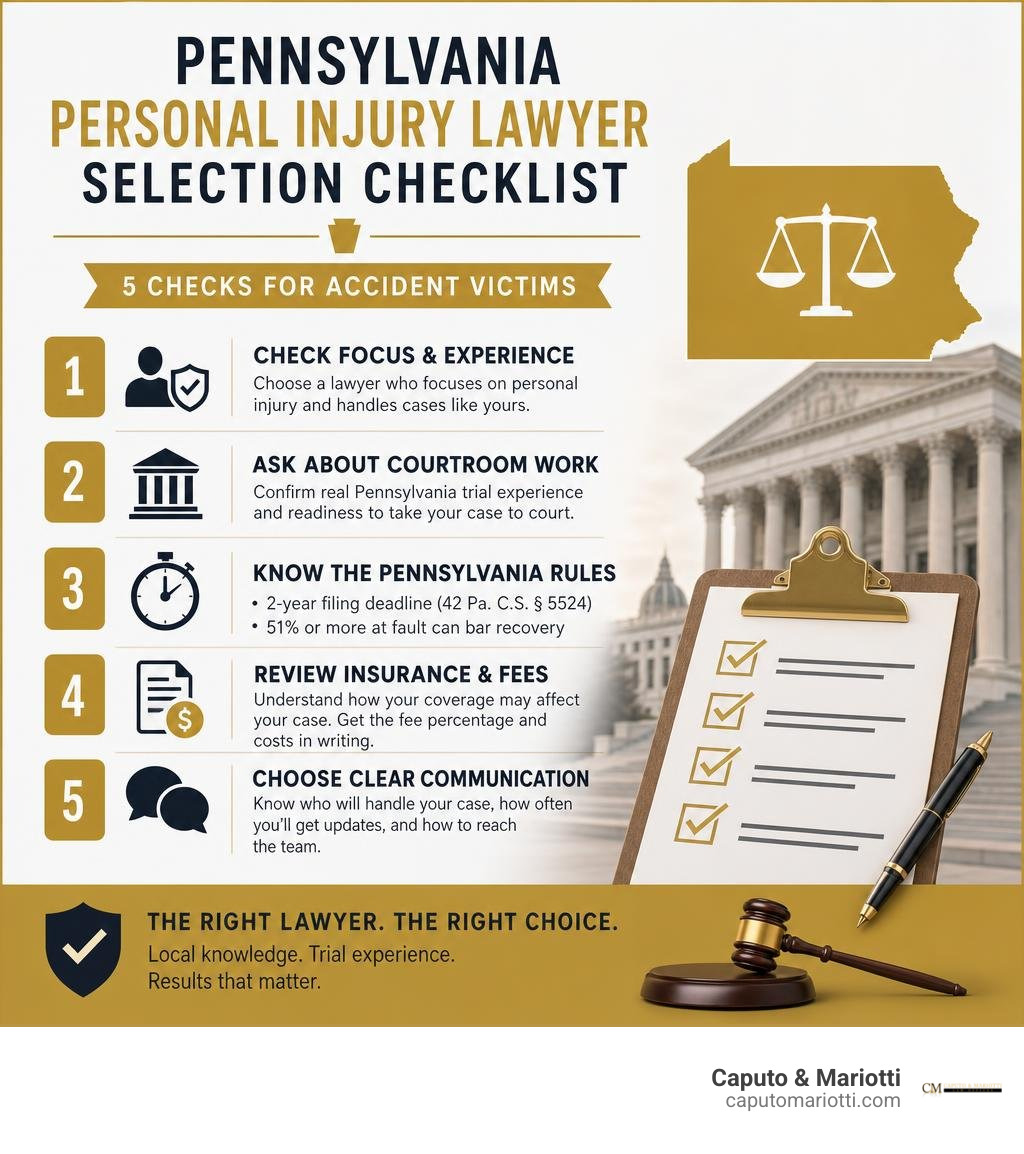
How to choose a personal injury lawyer pennsylvania residents can trust starts with four checks: choose a lawyer who handles cases like yours, confirm real Pennsylvania trial experience, understand the written contingency-fee agreement, and act quickly to protect deadlines.
- Check focus and experience. Look for a practice devoted to personal injury, wrongful death, or medical malpractice, with experience in the type of accident or negligence involved.
- Ask about courtroom work. A lawyer should be ready to explain their trial background and how they prepare a case when an insurer will not make a fair offer.
- Know the Pennsylvania rules. Most injury claims have a two-year filing deadline under 42 Pa. C.S. § 5524. Pennsylvania’s comparative-fault rule can bar recovery when you are found 51% or more responsible.
- Review insurance and fees. Your Full Tort or Limited Tort auto-insurance choice may affect pain-and-suffering damages. Get clear, written answers about the fee percentage and case costs.
- Choose clear communication. You should know who will handle your case, how often you will receive updates, and how to reach the legal team when questions arise.
The right fit is not simply the firm with the loudest advertising. It is a lawyer with the resources, local knowledge, and willingness to investigate your claim fully – whether it involves a winter crash in Northeastern Pennsylvania, a commercial vehicle collision, medical negligence, or another serious injury.
I am Chris Caputo, a Pennsylvania attorney since 1994 who has tried, litigated, and resolved hundreds of cases involving serious injuries, wrongful death, and insurance disputes. My experience as a prosecutor, defense litigator, and injury lawyer informs this guide to how to choose a personal injury lawyer pennsylvania families can rely on, beginning with the state-specific issues that can shape a claim.
Key Legal Factors in How to Choose a Personal Injury Lawyer Pennsylvania Residents Trust
When evaluating legal representation across Lackawanna County, Luzerne County, or anywhere in Northeastern Pennsylvania, understanding state-specific statutory guidelines is critical. Pennsylvania personal injury law contains strict procedural rules and recovery thresholds that directly impact case valuation and litigation strategy.
First, Pennsylvania enforces a strict two-year statute of limitations for personal injury claims under 42 Pa. C.S. § 5524. With few exceptions, if a formal civil lawsuit is not filed within two years from the exact date of the accident or injury, the legal right to recover monetary damages is permanently barred.
Second, Pennsylvania adheres to a modified comparative fault rule governed by 42 Pa. C.S. § 7102. Under this standard, an injured plaintiff can only recover financial damages if their share of liability is equal to or less than 50 percent. If an investigation assigns 51 percent or more of the fault to you, Pennsylvania law completely prevents any financial recovery. For example, if total damages equal $100,000 and you are determined to be 20 percent at fault, your total award is reduced by 20 percent to $80,000. However, reaching the 51 percent threshold results in zero compensation. Insurance claims adjusters routinely leverage this rule to shift blame onto victims, making immediate, thorough evidence collection essential.
Finally, claims against government entities in Pennsylvania are subject to statutory damage caps. Under the Political Subdivision Tort Claims Act, claims against local government entities (such as municipal police departments, local school districts, or borough road crews in Scranton or Wilkes-Barre) are strictly capped at $500,000 per occurrence. Claims against the Commonwealth of Pennsylvania (such as PennDOT) are capped at $250,000 under the Sovereign Immunity Act.
Understanding these legal parameters helps ensure that early decisions protect full rights to financial recovery. For a deeper breakdown of local legal frameworks, read our guide on Understanding Personal Injury Law in Scranton.
Understanding Full Tort vs. Limited Tort Auto Insurance
Pennsylvania operates under a “Choice No-Fault” motor vehicle insurance system. When purchasing auto insurance, drivers choose between two primary tort options: Limited Tort and Full Tort. Understanding how this selection affects a personal injury lawsuit is essential when learning how to choose a personal injury lawyer pennsylvania drivers need following a severe motor vehicle accident.
- Limited Tort Coverage: Selecting Limited Tort lowers monthly insurance premiums. However, it waives the right to seek financial recovery for non-economic damages, commonly referred to as pain and suffering, emotional distress, and loss of life’s pleasures. Under Limited Tort, an injured driver can only recover actual out-of-pocket economic losses—such as medical bills and lost wages—unless the injuries meet the statutory definition of a “serious injury.” Pennsylvania law defines a serious injury as a personal injury resulting in death, serious impairment of a body function, or permanent serious disfigurement.
- Full Tort Coverage: Opting for Full Tort maintains an unrestricted right to seek full financial recovery for both economic losses (medical treatment, rehabilitation, lost income) and non-economic damages (pain, suffering, mental anguish) regardless of injury severity.
Experienced injury lawyers review policy details immediately to determine whether a statutory exception applies. Exceptions to Limited Tort restrictions include being struck as a pedestrian, being hit by a drunk driver convicted of DUI, or riding as a passenger in a commercial vehicle. Navigating these exceptions requires meticulous medical documentation and aggressive legal advocacy, as detailed in this resource on How to Choose a Personal Injury Lawyer in Pennsylvania (2026) – Counsel Index.
Navigating Local Hazards: From Appalachian Winter Driving to Fracking Accidents
Northeastern Pennsylvania presents unique regional accident hazards that require specialized investigative techniques and local court familiarity. A generalized approach often fails when confronting complex environmental or industrial liability claims.
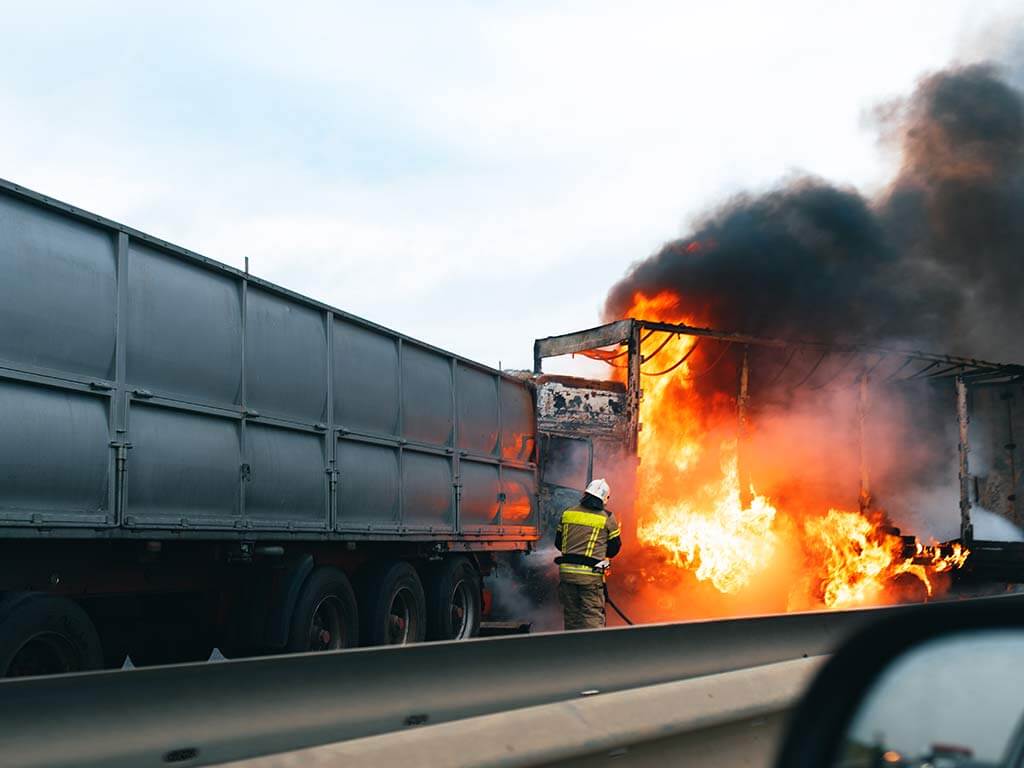
- Commercial Trucking Collisions: Interstate corridors such as I-81, I-84, I-380, and the Pennsylvania Turnpike carry massive volumes of commercial freight. Severe collisions involving 18-wheelers require prompt action to preserve federal Electronic Logging Device (ELD) records, driver qualification files, and vehicle black box data before insurance carriers attempt to overwrite critical evidence.
- Appalachian Winter Hazards: Severe winter weather in the Pocono Mountains and surrounding valleys creates hazardous driving conditions, including black ice and sudden snow squalls. Litigating these collisions involves analyzing whether a commercial driver or commercial operator failed to exercise reasonable care under severe atmospheric conditions.
- Industrial and Fracking Site Injuries: Energy extraction across the Marcellus Shale region involves hazardous heavy machinery, third-party contractors, and complex industrial worksites. When workers suffer catastrophic harm on job sites, securing compensation often involves pursuing third-party personal injury lawsuits alongside statutory work injury claims.
If an injury occurs on the job, working with an experienced workers’ compensation lawyer is vital. Pennsylvania operates a statutory no-fault workers’ compensation system designed to provide medical care and wage replacement benefits regardless of who caused the workplace incident. Navigating these claims requires strict adherence to mandatory reporting requirements, such as informing the employer within 21 days (and no later than 120 days) of the injury. Injured workers must seek medical treatment from employer-designated panel physicians during the initial 90 days of treatment if a valid list was properly posted.
Gathering robust evidence—including witness statements, incident records, and complete medical documentation—is essential during filing procedures when preparing formal petitions before Workers’ Compensation Judges or prosecuting administrative legal appeals.
Evaluating Credentials, Legal Directories, and Trial Track Records
Finding top-tier legal representation requires looking beyond standard commercial advertising. Evaluating verified legal credentials, peer recognition, and documented trial results allows clients to make informed, objective decisions.
When reviewing candidates, cross-reference recognized attorney evaluation bodies:
- Chambers USA: Conducts independent editorial research and in-depth peer and client interviews to rank top legal practices.
- Super Lawyers: Utilizes a patented selection process combining independent research, peer nominations, and peer evaluations.
- U.S. News – Best Law Firms: Evaluates law firms based on client feedback, peer review, and professional standing.
- Specialized Board Certifications: Organizations such as the Academy of Truck Accident Attorneys (ATAA) and the National Trial Lawyers offer specialized certifications indicating advanced litigation training and focus in specific area disciplines like truck crash reconstruction or trial advocacy.
Cross-referencing legal directories provides an objective baseline of professional standing, as shown in directories like Best Personal Injury Lawyers in Luzerne County, PA. For an overview of essential evaluation criteria, review our primary guide on How to Choose a Personal Injury Lawyer.
How to Choose a Personal Injury Lawyer Pennsylvania Directory Rankings to Cross-Reference
Relying on a single review platform or advertisement creates unnecessary risk. A disciplined evaluation strategy involves cross-referencing candidate attorneys across multiple independent legal rating directories.
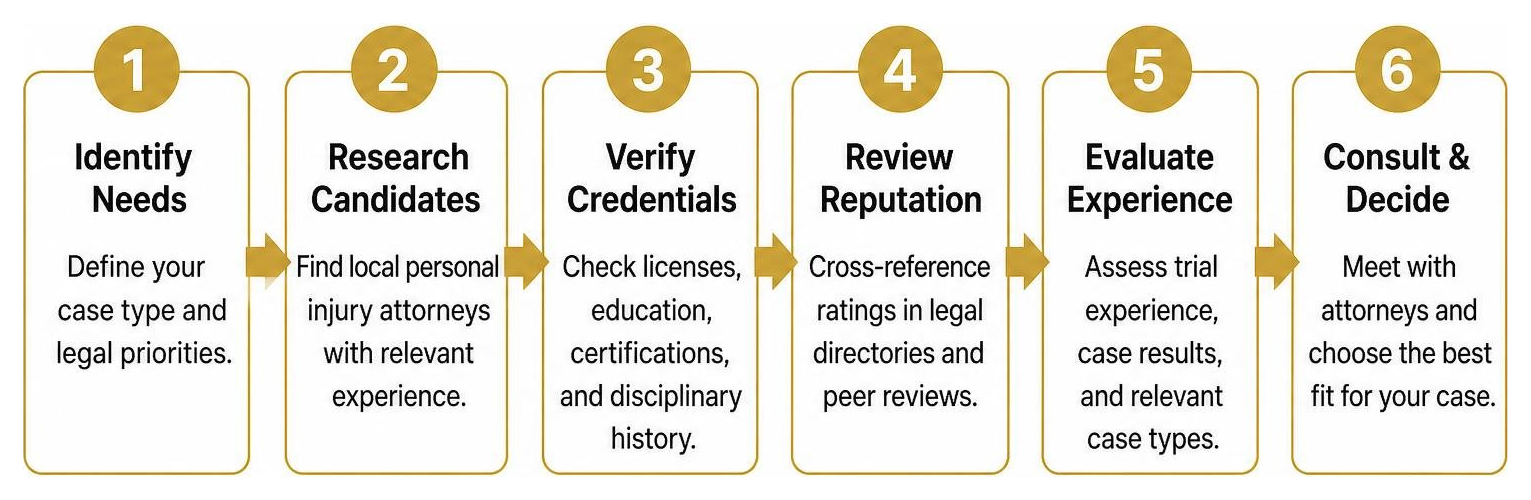
When cross-referencing directories, focus on peer-reviewed ratings rather than paid promotional listings. Look for attorneys who consistently maintain high ratings across professional organizations, peer reviews, and verified client testimonials. Independent editorial research ensures that rankings reflect actual courtroom capability, ethical standing, and client satisfaction rather than marketing budgets.
Verifying Real Pennsylvania Trial Experience and Case Outcomes
Not all personal injury attorneys regularly take cases to trial. Some high-volume law offices operate as “settlement mills”—firms that quickly resolve large numbers of cases for low settlement amounts to avoid trial preparation costs and courtroom litigation.

Insurance companies maintain detailed records of which personal injury lawyers actually take cases to trial and which routinely accept early settlement offers. When an attorney demonstrates a track record of preparing every case for trial and trying cases before Lackawanna County or Luzerne County juries, insurance carriers are far more likely to offer fair settlement terms.
During your initial consultation, ask directly about recent verdict history, expert witness funding capability, and actual courtroom trial experience in local Pennsylvania courts.
Red Flags, Fee Structures, and Consultation Preparation
Selecting an attorney requires evaluating clear warning signs during preliminary interactions. Identifying potential red flags early protects injured clients from poor communication, predatory fee arrangements, or inadequate representation.
Common Red Flags to Watch For:
- Guaranteed Payout Promises: No honest lawyer can guarantee a specific settlement amount or verdict before fully reviewing medical records, liability evidence, and insurance policy limits.
- Pressure to Settle Quickly: Beware of attorneys who encourage accepting early, lowball settlement offers before the full extent of your medical recovery and long-term prognosis is known.
- Lack of Direct Communication: If you cannot speak directly with an attorney during your initial evaluation or if calls are routinely ignored, client service will likely remain poor throughout litigation.
- Vague Fee Terms: Refusal to provide a clear, written contingency fee agreement detailing case expense handling is a major red flag.
Understanding contingency structures is essential. Learn more about how fee agreements function by reading PA Personal Injury Lawyers – What Does No Win No Fee Actually Mean?.
| Fee Structure Characteristic | Standard Contingency Fee Agreement | Hourly or Traditional Retainer Model |
|---|---|---|
| Upfront Legal Cost | $0 (No upfront legal fees paid by client) | Requires substantial upfront cash retainer deposit |
| Attorney Remuneration | Percentage of final settlement or verdict | Billed at hourly rates regardless of case outcome |
| Financial Risk Burden | Attorney absorbs legal labor risk | Client bears financial risk if case is unsuccessful |
| Out-of-Pocket Case Expenses | Advanced by law firm during litigation | Paid upfront or billed monthly to the client |
| Payment Trigger | Paid only upon successful financial recovery | Billed continuously regardless of court ruling |
How to Choose a Personal Injury Lawyer Pennsylvania Consultation Questions
Preparing a structured list of questions for an initial consultation helps ensure that prospective legal counsel possesses the experience and resources necessary to handle your case effectively.
- What percentage of your practice is dedicated exclusively to personal injury litigation?
- How many personal injury cases have you personally tried before local Pennsylvania juries?
- Will my case be handled directly by a senior trial attorney or passed to junior associates?
- How are advanced case expenses (such as expert medical witness fees and accident reconstruction) handled if the claim does not yield a recovery?
- What specific experience do you have handling cases under Pennsylvania’s 51% comparative fault rule and tort option laws?
- How frequently will your office provide status updates regarding my medical treatment tracking and legal proceedings?
Evaluating these factors thoroughly ensures you choose an attorney with transparent fee terms and proven dedication to your claim.
Steps to Take Immediately After an Accident in Pennsylvania
The actions taken in the hours and days following an accident significantly influence the outcome of a personal injury claim. Protecting physical health and preserving legal rights require immediate, methodical steps.
- Seek Prompt Medical Care: Visit an emergency room, urgent care center, or primary physician immediately. Detailed medical documentation directly links your injuries to the accident.
- Report the Incident: File an official police report for traffic collisions or an incident report for slip-and-fall injuries on commercial property.
- Gather Evidence at the Scene: Take photographs of physical damage, road conditions, hazardous premises, and visible bodily injuries. Collect names and contact details of all independent witnesses.
- Avoid Recorded Statements: Do not provide recorded statements to insurance adjusters or sign release documents without legal advice. Statements can be used to assign comparative fault under 42 Pa. C.S. § 7102.
- Organize Records: Maintain a dedicated file containing medical bills, discharge summaries, pay stubs documenting missed work, and insurance communications.
Taking these steps ensures your legal team has solid evidence to build a strong claim. For further guidance on post-accident protocols, see our detailed guide on Personal Injury Lawyer in Scranton – Your Trusted Advocate After an Accident. If you need immediate assistance, you can Schedule a Free Consultation directly with our team.
Frequently Asked Questions About Hiring a PA Personal Injury Attorney
What is Pennsylvania’s statute of limitations for personal injury claims?
Under 42 Pa. C.S. § 5524, Pennsylvania imposes a strict two-year statute of limitations for personal injury claims. This deadline typically begins on the exact date the injury occurred. If you fail to file a lawsuit before the two-year window expires, the court will dismiss your case, permanently barring financial recovery. Limited exceptions exist—such as the Discovery Rule (when an injury could not reasonably be discovered immediately) or claims involving injured minors—but these exceptions are narrow and require immediate attorney evaluation.
How does Pennsylvania’s 51% comparative fault rule affect my claim?
Pennsylvania operates under a modified comparative fault rule defined by 42 Pa. C.S. § 7102. Under this standard, an injured party can recover monetary damages only if their responsibility for the accident is 50 percent or less. If you are found 51 percent or more at fault, you are legally barred from recovering any financial compensation. If you are found 30 percent at fault and total damages equal $100,000, your final recovery is reduced by 30 percent, resulting in $70,000. Insurance adjusters frequently attempt to assign fault above 50 percent to eliminate payouts entirely.
What is the difference between Full Tort and Limited Tort insurance in PA?
Under Pennsylvania’s Choice No-Fault auto insurance system, drivers choose between Limited Tort and Full Tort coverage. Limited Tort reduces premium costs but limits your right to sue a at-fault driver for non-economic damages, such as pain and suffering, unless your injuries meet the statutory “serious injury” threshold (resulting in death, serious body function impairment, or permanent disfigurement). Full Tort maintains your unrestricted right to seek financial compensation for both economic losses and pain and suffering, regardless of injury severity. Specific statutory exceptions can unlock Full Tort rights even if you selected Limited Tort policy coverage.
Conclusion
Choosing the right legal representation after a serious accident affects your financial recovery, access to top medical care, and peace of mind. Knowing how to choose a personal injury lawyer pennsylvania families can rely on comes down to verifying trial readiness, seeking local courtroom familiarity, ensuring fee transparency, and confirming a dedication to direct client communication.
At Caputo & Mariotti, our legal team brings over 55 years of combined legal experience representing personal injury victims across Northeastern Pennsylvania, including Scranton, Wilkes-Barre, Lackawanna County, Luzerne County, Moosic, Pittston, Hazleton, and Dickson City. We investigate claims thoroughly, handle negotiations aggressively, and stand ready to advocate for full justice in court whenever insurance companies refuse to offer fair compensation.
If you or a family member has suffered a severe personal injury, do not navigate complex insurance rules and statutory deadlines alone. Contact our team today to review your legal rights and Explore Personal Injury Representation tailored to your case.
