

The dedicated legal team of Caputo & Mariotti
Navigating Pennsylvania Birth Injury Lawsuits After Delivery Complications
November 9, 2026
When to Contact a Birth Injury Law Firm in Pennsylvania
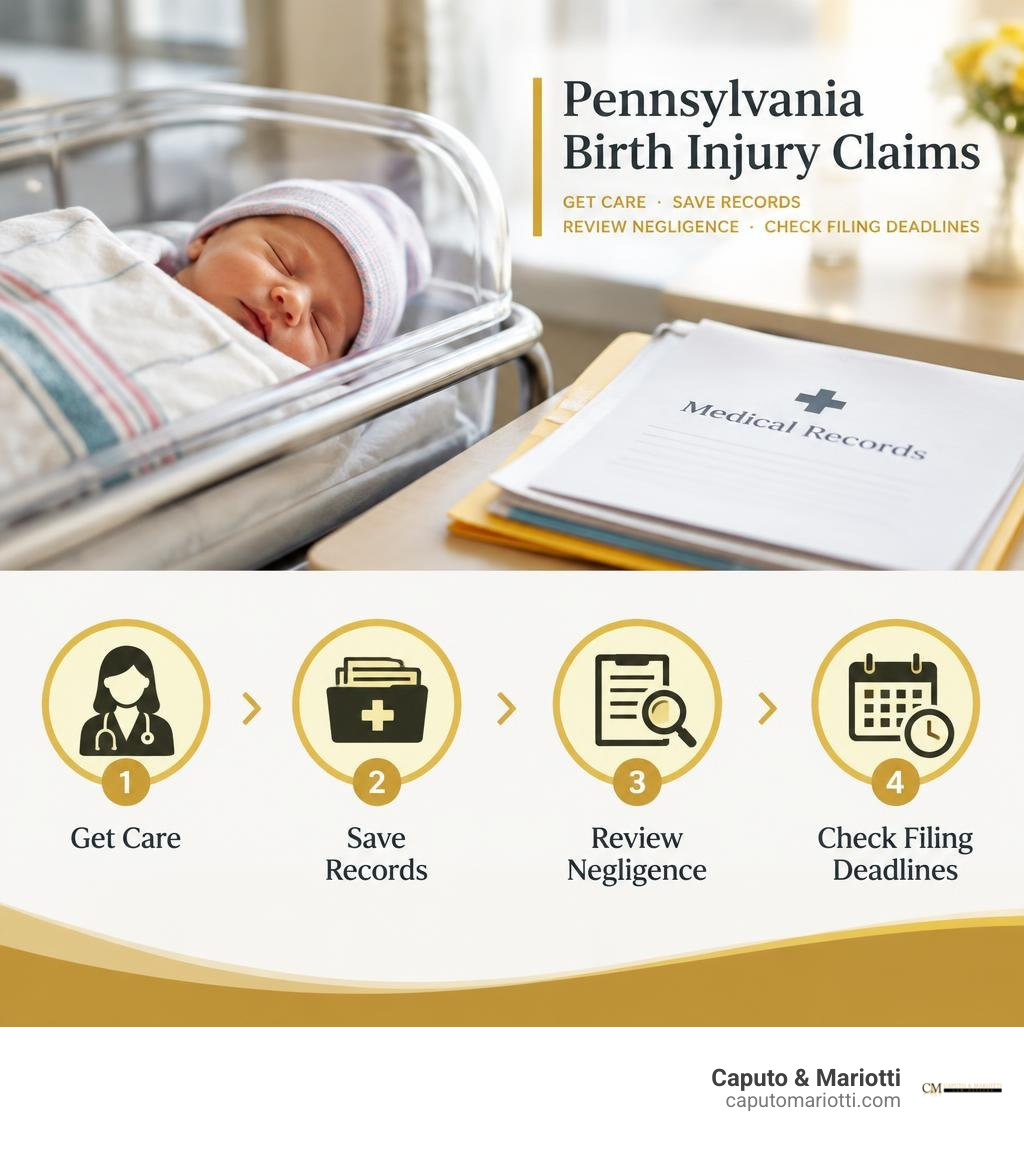
If you think a delivery error harmed your child, get medical care, request the labor and newborn records, and contact a birth injury law firm in Pennsylvania promptly. A lawyer can review whether a medical provider failed to meet the accepted standard of care and whether that failure caused the injury.
Not every delivery complication is malpractice. A careful review of the records can help your family understand what happened, what support your child may need, and whether a lawsuit is an option.
I’m Chris Caputo, a Pennsylvania attorney admitted in 1994 with experience handling professional negligence cases and representing people harmed by negligence. If you searched for “birth injury law firm pennsylvania,” this guide explains the questions our team at Caputo & Mariotti would help you work through.
Understanding Delivery Complications and Qualifying Birth Injuries
Childbirth involves complex medical procedures where unpredictable emergencies can arise. However, there is a fundamental legal and clinical distinction between an unavoidable developmental complication and an avoidable injury caused by substandard clinical care. Our detailed guide to birth injury claims in Pennsylvania outlines how preventable errors during labor and delivery can cause long-term physical, cognitive, and neurological harm.

A qualifying birth injury claim arises when an obstetrician, labor and delivery nurse, midwife, or hospital staff member deviates from the accepted standard of medical care, directly harming the child or birthing parent. Major qualifying conditions frequently evaluated by legal and medical professionals include:
- Hypoxic-Ischemic Encephalopathy (HIE): Severe brain dysfunction caused by oxygen deprivation (hypoxia) and limited blood flow (ischemia) to the baby’s brain during labor or delivery.
- Cerebral Palsy (CP): A group of neurological disorders affecting movement, muscle tone, and posture, often stemming from preventable oxygen deprivation or head trauma during childbirth.
- Brachial Plexus Trauma and Erb’s Palsy: Damage to the network of nerves controlling the shoulder, arm, and hand, often resulting from excessive traction or pulling during difficult deliveries involving shoulder dystocia.
- Intracranial Hemorrhages: Bleeding within or around the brain, frequently caused by improper use of mechanical extraction tools such as forceps or vacuum extractors.
- Uterine Rupture: A catastrophic tearing of the uterine wall that threatens the life of both birthing parent and child, often linked to mismanaged induction drugs or improper monitoring of prior cesarean scars.
Common Causes of Preventable Labor and Delivery Trauma
Medical negligence during labor and delivery rarely stems from ill intent; rather, it typically involves miscommunication, delayed action, fatigue, or failure to follow established clinical protocols. The most common causes of preventable delivery trauma include:
- Fetal Distress Mismanagement: Failing to identify or appropriately respond to abnormal changes in fetal heart rate patterns indicating that the baby is running out of oxygen.
- Delayed Emergency Cesarean Section (C-Section): Unreasonable delays in ordering or performing a surgical delivery when vaginal delivery becomes unsafe for the patient or infant.
- Improper Use of Forceps and Vacuum Extractors: Applying excessive mechanical force, misplacing cups or blades, or continuing extraction attempts after repeated cup detachments.
- Uterine Hyperstimulation via Pitocin: Administering excessive doses of labor-inducing medications (such as Pitocin or oxytocin), causing rapid, intense contractions that compress the umbilical cord and deplete the baby’s oxygen reserves.
- Failure to Manage Umbilical Cord Complications: Inadequate monitoring and delayed intervention during umbilical cord prolapse, nuchal cord entanglement, or cord compression.
Key Signs of Medical Negligence During Delivery
Recognizing labor and delivery errors immediately is challenging because medical teams often work quickly during critical moments. However, reviewing the key signs of medical negligence during birth helps families identify warning indicators that warrant a comprehensive medical chart review.
Critical indicators of potential delivery negligence include:
- Low APGAR Scores: Persistently depressed APGAR scores at 5 and 10 minutes following delivery (typically scores of 3 or lower).
- Emergency Resuscitation: Immediate requirements for advanced neonatal resuscitation, endotracheal intubation, or emergency transfer to a Level III or Level IV Neonatal Intensive Care Unit (NICU).
- Neonatal Seizures: Seizure activity occurring within the first 24 to 48 hours of life, often pointing to acute brain swelling or oxygen starvation.
- Therapeutic Hypothermia (Cooling Therapy): Placement of the newborn in a specialized body-cooling protocol to mitigate permanent brain damage following acute hypoxic events.
- Missed Developmental Milestones: Ongoing delays in rolling over, sitting up, crawling, speaking, or tracking objects during infancy and early childhood.
How a Birth Injury Law Firm in Pennsylvania Evaluates and Proves Negligence
Proving medical malpractice requires clear evidence showing that healthcare providers deviated from established professional standards. Understanding the birth injury lawsuit process helps families navigate the legal and investigative steps involved in building a strong claim.

To establish liability under Pennsylvania tort law, four distinct legal elements must be established:
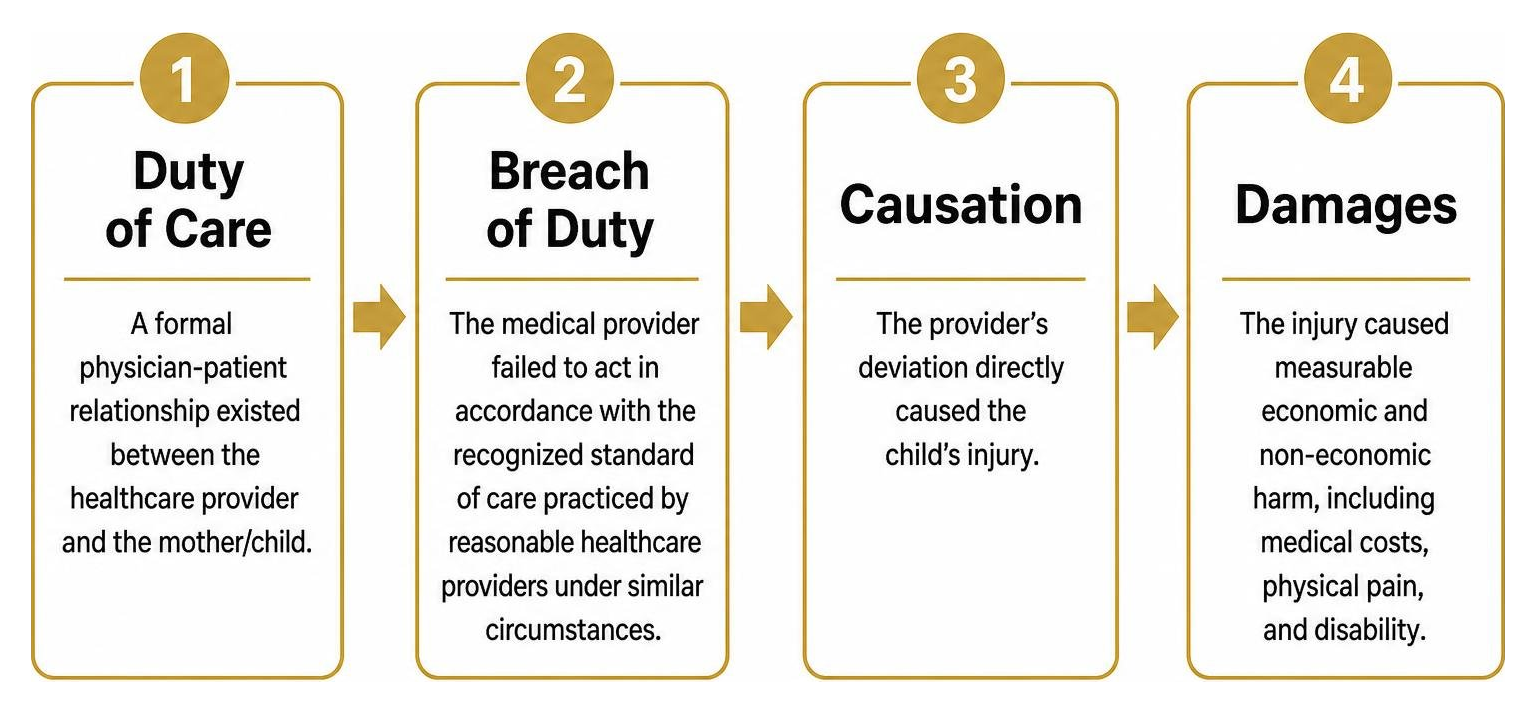
- Duty of Care: A formal physician-patient relationship existed between the healthcare provider and the patient/newborn.
- Breach of Duty: The medical provider failed to act in accordance with the recognized standard of care practiced by reasonable healthcare providers under similar circumstances.
- Causation: The provider’s deviation directly caused the child’s injury.
- Damages: The injury caused measurable economic and non-economic harm, including medical costs, physical pain, and disability.
Under 231 Pa. Code Rule 1042.3. Certificate of Merit., Pennsylvania law requires plaintiffs to file a formal Certificate of Merit within 60 days of initiating a professional negligence lawsuit. This document must confirm that an appropriately licensed and qualified medical expert has reviewed the facts and determined in writing that there is a reasonable probability that the care fell outside acceptable professional standards and caused the harm.
Evidence Required by a Birth Injury Law Firm Pennsylvania Families Trust
Evaluating a complex obstetrical malpractice case requires deep technical investigation and thorough medical record gathering. Experienced legal teams assemble an extensive evidentiary record, including:
- Electronic Fetal Monitoring (EFM) Strips: Real-time data showing baseline fetal heart rate, variability, accelerations, decelerations, and uterine contraction patterns.
- Obstetric and Neonatal Medical Charts: Admission histories, nursing progress notes, physician orders, medication administration records, and labor flow sheets.
- Labor Medication Records: Exact dosing logs, infusion pump records, and administration timelines for drugs such as Pitocin, epidurals, and emergency tocolytics.
- Diagnostic Imaging and Pathology Reports: Placental pathology reviews, neonatal head ultrasounds, CT scans, and brain MRI imaging.
- Pediatric Neurology and Specialist Evaluations: Clinical progress notes from neurologists, developmental pediatricians, and physical therapists tracking physical and cognitive deficits.
The Case Evaluation and Investigation Process
Once initial records are secured, legal teams work with independent board-certified obstetricians, high-risk pregnancy specialists, and pediatric neurologists. These independent medical specialists evaluate whether early signs of fetal compromise were overlooked, whether interventions were delayed, and whether the injury could have been prevented with prompt medical action.
An essential step during case evaluation is distinguishing between non-preventable congenital conditions and preventable birth trauma:
| Category | Congenital Conditions / Birth Defects | Preventable Birth Trauma / Injuries |
|---|---|---|
| Primary Cause | Genetic abnormalities, chromosomal issues, or pregnancy-related infections occurring early in gestation. | Mechanical trauma, oxygen deprivation, or improper medical interventions during labor and delivery. |
| Timing of Origin | First or second trimester during embryonic organogenesis. | Intrapartum period, active labor, delivery, or immediate postpartum resuscitation. |
| Preventability | Generally unpreventable through standard obstetrical delivery techniques. | Preventable through vigilant monitoring, standard interventions, and timely emergency delivery. |
| Key Examples | Down syndrome, spina bifida, congenital heart defects, inherited metabolic disorders. | Hypoxic-ischemic encephalopathy, Erb’s palsy, skull fractures, forceps lacerations, vacuum-induced hemorrhages. |
| Legal Status | Typically not actionable under medical malpractice law unless prenatal screening was mismanaged. | Fully actionable when caused by deviations from the accepted standard of care. |
Legal Rights, Deadlines, and Financial Recovery for Pennsylvania Families
Families facing lifelong medical and supportive care needs must understand their rights under Pennsylvania’s specialized birth injury statutes. These cases require forward-looking financial planning to ensure children have the resources they need for ongoing medical care, education, and assistive technology throughout their lives.

Statutes of Limitations and Standing in Pennsylvania Birth Injury Claims
Pennsylvania imposes strict legal time limits, known as statutes of limitations, on personal injury and medical malpractice claims:
- The Adult Standard: Generally, adults have two years from the date of the negligent act or reasonable discovery of the injury to file a medical malpractice lawsuit in Pennsylvania, subject to a seven-year statutory cap from the date of the incident.
- The Minor Tolling Statute: Recognizing that developmental delays and brain injuries in infants may take years to fully manifest, Pennsylvania law tolls (pauses) the statute of limitations for minors. Under 42 Pa.C.S. § 5533(b), a birth injury claim brought on behalf of an injured child must be filed before the child reaches 20 years of age (two years after their 18th birthday).
- Parental Individual Claims: While the child’s claim enjoys the minor tolling exception, individual claims brought directly by parents for their own economic losses (such as medical expenses paid out-of-pocket prior to the child turning 18) are generally subject to the standard two-year limitation from the date of injury.
Standing to file a lawsuit rests with the child’s biological parents or legally designated court guardians during the child’s minority. If an injured individual reaches the age of 18 without a lawsuit being filed, they hold individual legal standing to file on their own behalf prior to turning 20.
Compensation Available Through a Pennsylvania Birth Injury Claim
A successful birth injury claim seeks comprehensive compensation to cover both immediate expenses and lifelong support needs. Recoverable damages are categorized into economic and non-economic losses:
- Past and Future Medical Care: Hospital stays, surgical interventions, pediatric specialist consultations, prescription medications, and specialized diagnostic testing.
- Lifelong Rehabilitation: Physical therapy, occupational therapy, speech and language therapy, and behavioral interventions.
- Assistive Devices and Home Modifications: Wheelchairs, mobility lifts, communication devices, orthotics, home accessibility remodeling, and handicap-accessible transportation.
- In-Home Nursing and Custodial Support: Long-term skilled nursing care, personal care attendants, and respite care for family members.
- Loss of Future Earning Capacity: Compensation for the income the child would have been capable of earning over their adult lifetime had the preventable injury not occurred.
- Non-Economic Damages: Pain and suffering, physical impairment, loss of life’s pleasures, emotional distress, and permanent disfigurement. Pennsylvania does not place a statutory cap on compensatory non-economic damages in medical malpractice lawsuits.
Steps to Take and Choosing the Right Legal Representation
When you suspect medical negligence during labor or delivery, taking organized, proactive steps protects your child’s legal rights and builds an objective record of events.
Immediate Actions When Negligence Is Suspected
- Prioritize Comprehensive Medical Care: Seek evaluations from independent pediatric specialists, neurologists, and developmental therapists outside the hospital system where the delivery occurred.
- Request Complete Certified Medical Records: Request copies of all prenatal records, labor and delivery charts, electronic fetal monitoring tracings, and the child’s complete neonatal intensive care records.
- Maintain a Detailed Care Journal: Document missed developmental milestones, seizure activity, therapeutic regimens, medication schedules, behavioral observations, and out-of-pocket medical expenses.
- Avoid Recorded Statements with Hospital Risk Managers: Hospital representatives and insurance adjusters may reach out early. Do not provide recorded statements or sign liability releases before consulting an attorney.
- Schedule an Initial Personal Injury Consultation: Have an experienced firm examine the hospital documentation and consult independent medical experts. Families facing other complex legal challenges across our region can also seek support from a workers’ compensation lawyer for workplace injury claims.
Selecting an Experienced Birth Injury Law Firm Pennsylvania Parents Can Rely On
Birth injury litigation is one of the most challenging areas of civil trial practice. Hospitals and insurance companies invest significant resources into defending these claims. When evaluating legal counsel, families should look for firms with deep medical malpractice trial experience, access to top medical experts, and the financial resources required to litigate complex cases.
Families throughout Northeastern Pennsylvania often turn to the best birth trauma lawyers in NEPA for local, dedicated advocacy. Firms handling these cases across regional communities include:
- Scranton Birth Injury Lawyer
- Wilkes-Barre Birth Injury Lawyer
- Hazleton Birth Injury Lawyer
- Pittston Birth Injury Lawyer
Frequently Asked Questions about Pennsylvania Birth Injury Lawsuits
Who is legally permitted to file a birth injury claim in Pennsylvania?
A birth injury lawsuit on behalf of an injured minor is typically filed by the child’s biological parents or legal guardians. If parents are unavailable, a court-appointed guardian ad litem can initiate the action. Once the child reaches 18 years of age, they may legally file the claim in their own name up until their 20th birthday.
How long does a birth injury lawsuit typically take to resolve in Pennsylvania?
Most birth injury claims require between one and three years to resolve. The timeline depends on the complexity of the medical records, the scheduling of expert depositions, court trial calendars in counties such as Lackawanna or Luzerne, and whether the case resolves through settlement negotiations or requires a jury trial.
How much does it cost to hire an attorney for a birth injury case?
Reputable birth injury law firms handle cases on a contingency fee basis. Families pay zero upfront legal fees or out-of-pocket litigation expenses. Case expenses—including hiring medical experts, obtaining certified records, and court filings—are advanced by the firm and reimbursed only if compensation is successfully recovered through a settlement or verdict.
Conclusion
A birth injury creates lasting emotional, physical, and financial challenges for a growing family. When medical providers fail to meet their professional standard of care during labor and delivery, holding them accountable helps secure the vital resources your child needs for lifelong therapy, medical equipment, and personal care.
At Caputo & Mariotti, our attorneys bring over 55 years of combined legal experience to medical malpractice and catastrophic injury cases across Northeastern Pennsylvania, including Scranton, Wilkes-Barre, Hazleton, Pittston, Moosic, and Dickson City. We are dedicated to helping families hold negligent healthcare facilities accountable while securing their children’s futures.
If you suspect medical errors contributed to your baby’s delivery complications, schedule a free case consultation with our legal team today to discuss your rights and legal options.
