

The dedicated legal team of Caputo & Mariotti
Key Signs of Medical Negligence During Birth Parents Must Know
October 29, 2026
Signs of Medical Negligence During Birth: What to Watch For
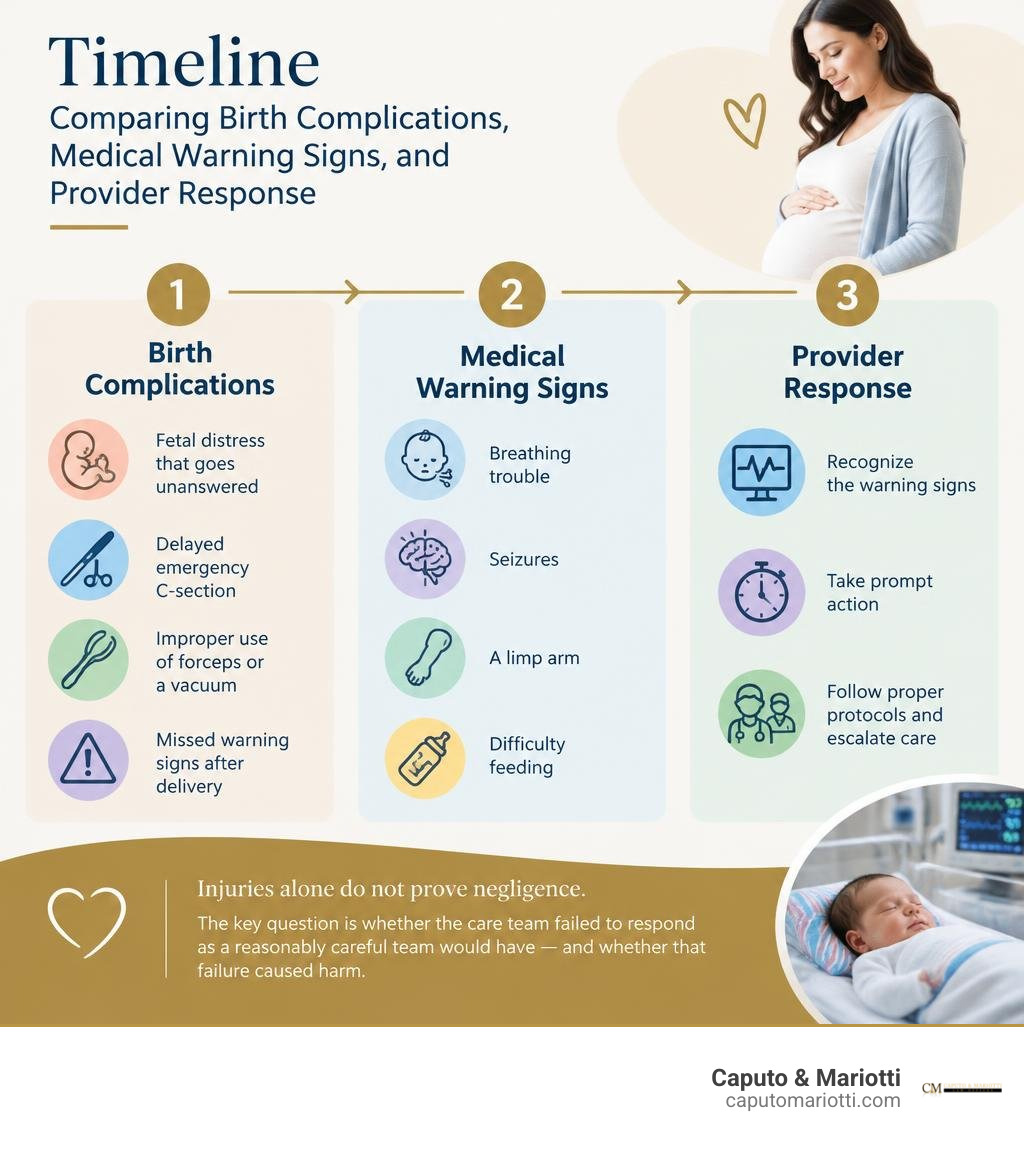
Signs of medical negligence during birth may include fetal distress that goes unanswered, a delayed emergency C-section, improper use of forceps or a vacuum, and missed warning signs after delivery. In a newborn, breathing trouble, seizures, a limp arm, or difficulty feeding calls for prompt medical attention.
An injury alone does not prove negligence. The question is whether the care team failed to respond as a reasonably careful team would have, and whether that failure caused harm. If you are concerned, seek medical care first, then request the labor, delivery, and newborn records.
I’m Chris Caputo, a Pennsylvania personal injury attorney with decades of litigation experience, including work on professional negligence claims. That background helps me guide families through the records and questions behind signs of medical negligence during birth.
Critical Signs of Medical Negligence During Birth in Labor and Delivery
Bringing a child into the world is an intense milestone. While many deliveries proceed smoothly, approximately 6 to 7 out of every 1,000 live births in the United States involve some form of birth trauma. That equates to roughly 30,000 infants each year facing birth-related injuries.

When unexpected complications arise, parents often struggle to distinguish between an unavoidable biological event and substandard medical care. In Pennsylvania medical malpractice law, healthcare providers are held to an accepted standard of care. When obstetricians, labor and delivery nurses, or anesthesiologists deviate from these established protocols, preventable injuries occur. Understanding the 5 common types of medical malpractice in Scranton, PA can help families recognize when hospital errors cross the line into legal liability.
| Delivery Situation | Unavoidable Natural Complication | Potential Provider Negligence |
|---|---|---|
| Fetal Heart Decelerations | Brief dips during contractions that resolve spontaneously | Ignoring persistent late decelerations or prolonged bradycardia |
| Difficult Presentation | Baby enters birth canal in an unusual position | Using excessive traction or improper tools to force delivery |
| Meconium Fluid | Normal physiological passage in post-term pregnancies | Failing to monitor fetal oxygenation or clear airways upon delivery |
| Uterine Contractions | Natural progression of intense labor | Over-administering induction drugs leading to uterine hyperstimulation |
Fetal Distress Signs and Delayed Emergency C-Section
Electronic fetal monitoring tracks the baby’s heart rate alongside maternal contractions. A healthy fetal heart rate typically ranges between 110 and 160 beats per minute. When a baby experiences oxygen deprivation, the monitor reveals warning patterns such as repetitive late decelerations, severe variable decelerations, or sustained bradycardia.
When fetal distress appears, delivery teams must act quickly. Medical guidelines dictate specific response times for performing an emergency Cesarean section once non-reassuring fetal status is confirmed. A delay in ordering or executing a surgical delivery can starve the brain of oxygen within minutes. To understand how these surgical delays form the foundation of a legal claim, parents can review our detailed guide to birth injury claims in Pennsylvania.
Improper Tool Usage and Assisted Delivery Errors
When labor stalls in the second stage, doctors may choose an operative vaginal delivery using vacuum extractors or forceps. While these instruments can assist in critical moments, their misuse presents significant risks to the infant’s fragile skull and nervous system.
Errors during assisted deliveries often stem from:
- Applying forceps or vacuum cups before the cervix is fully dilated or the head is properly positioned.
- Exerting excessive physical pulling traction on the baby’s head or neck.
- Continuing multiple attempts after the vacuum cup pops off or forceps slip.
- Failing to abandon instrumental delivery in favor of a prompt Cesarean delivery.
Improper technique can cause skull fractures, subgaleal hematomas, intracranial hemorrhages, and permanent brain damage.
Mismanagement of Meconium-Stained Amniotic Fluid
Meconium is the infant’s first stool. While meconium-stained amniotic fluid (MSAF) occurs in 10% to 15% of term pregnancies and up to 30% of post-term deliveries, its presence is a critical warning signal. Fetal distress often triggers an early bowel movement in utero.
When thick meconium is present, the risk of Meconium Aspiration Syndrome (MAS) rises to 5% to 10%. If an infant inhales meconium-laden fluid into the lungs, it causes severe airway obstruction and chemical inflammation. Medical teams must be prepared with specialized suctioning and resuscitation equipment immediately upon delivery. While up to 80% of infants with MSAF are born with normal umbilical cord blood pH levels, failing to respond to combined fetal heart decelerations and thick meconium can cause severe hypoxia.
Medication and Anesthesia Administration Errors
Labor induction and pain management require meticulous dosing. Synthetic oxytocin (Pitocin) is routinely administered to stimulate uterine contractions. However, excessive doses can cause tachysystole—contractions occurring too frequently or lasting too long. Tachysystole prevents the placenta from replenishing its oxygen supply between contractions, suffocating the fetus.
Similarly, epidural and spinal anesthesia errors can lead to sudden, severe maternal hypotension, sharply cutting off blood flow to the placenta. Delivery teams that fail to monitor vitals or react to drug side effects can cause uterine rupture or severe neonatal distress. Families facing these complications can consult our in-depth guide to anesthesia errors malpractice claims.
Physical and Neurological Symptoms in Newborns
In the immediate moments following birth, doctors assess the infant’s transition using Apgar scores at one and five minutes. Low Apgar scores, abnormal muscle tone, or an inability to breathe independently often signal that something went wrong during delivery.

Proving that a physical or neurological condition stems from medical error requires establishing duty, breach, causation, and damages. You can explore the critical elements of medical negligence lawsuits to see how attorneys evaluate these medical records.
Recognizing Signs of Medical Negligence During Birth in Neonatal Brain Injuries
Oxygen deprivation during labor can cause Hypoxic-Ischemic Encephalopathy (HIE), a serious brain injury occurring in roughly 1.5 of every 1,000 live births. HIE is responsible for nearly one quarter of all neonatal deaths globally and is a primary cause of cerebral palsy.
Key neonatal signs of HIE and brain trauma include:
- Extreme lethargy or an infant who is unusually floppy (hypotonia).
- Seizures or abnormal repetitive twitching within the first 24 to 48 hours.
- Poor or absent primitive reflexes, such as sucking or grasping.
- Depressed respiration requiring immediate intubation or high-flow oxygen.
- Abnormal cord blood gas results showing severe metabolic acidosis.
When HIE is suspected, hospitals must consider therapeutic hypothermia (cooling therapy) within the first six hours of life to slow neurological cell death. Missing this therapeutic window often constitutes a compounding medical error.
Brachial Plexus and Physical Nerve Damage Signs
Physical trauma during delivery can tear or stretch delicate nerve networks. Shoulder dystocia occurs when an infant’s shoulder becomes lodged behind the mother’s pelvic bone. While shoulder dystocia itself is an unpredictable emergency, the medical response must follow strict, gentle maneuvers.
When a practitioner panics and uses excessive lateral traction on the baby’s head, they can rupture the brachial plexus nerves. This trauma leads to Erb’s palsy or total arm paralysis. Warning signs include:
- A limp, unmoving arm on one side while the other arm moves freely.
- Lack of a Moro (startle) reflex on the affected side.
- An asymmetric grip or hand held in a “waiter’s tip” posture.
- Fractures of the clavicle (collarbone) or humerus (upper arm bone).
Families dealing with physical delivery injuries can consult the best birth trauma lawyers in NEPA to evaluate if improper delivery maneuvers were used.
Post-Delivery Newborn Warning Signs
Medical oversight does not conclude once the umbilical cord is cut. Nurses and pediatricians must monitor the newborn throughout the hospital stay. Parents should watch for warning signs that warrant immediate clinical attention:
- Feeding Difficulties: An inability to coordinate sucking and swallowing can indicate underlying neurological dysfunction.
- Excessive Sleepiness: While newborns sleep frequently, an infant who cannot be aroused for scheduled feedings may be experiencing hypoglycemia, infection, or intracranial pressure.
- Respiratory Grunting and Retractions: Flaring nostrils, rapid breathing over 60 breaths per minute, or chest retractions indicate respiratory distress.
- Severe Jaundice: Untreated hyperbilirubinemia can cross the blood-brain barrier and cause kernicterus, a preventable form of permanent brain damage.
What to Do When You Suspect Signs of Medical Negligence During Birth
Discovering that your newborn has sustained a birth injury is overwhelming. Taking structured steps helps protect your child’s health and preserves legal rights.
If you suspect medical errors occurred during labor or delivery, our team can help you understand the birth injury lawsuit process and what you need to know. Outside of birth-related matters, individuals facing distinct on-the-job injuries may need to consult a workers’ compensation lawyer regarding state no-fault claims, mandatory employer reporting deadlines, required panel physician visits, documentation procedures, and formal appeal structures.
Preserving Essential Medical Records and Evidence
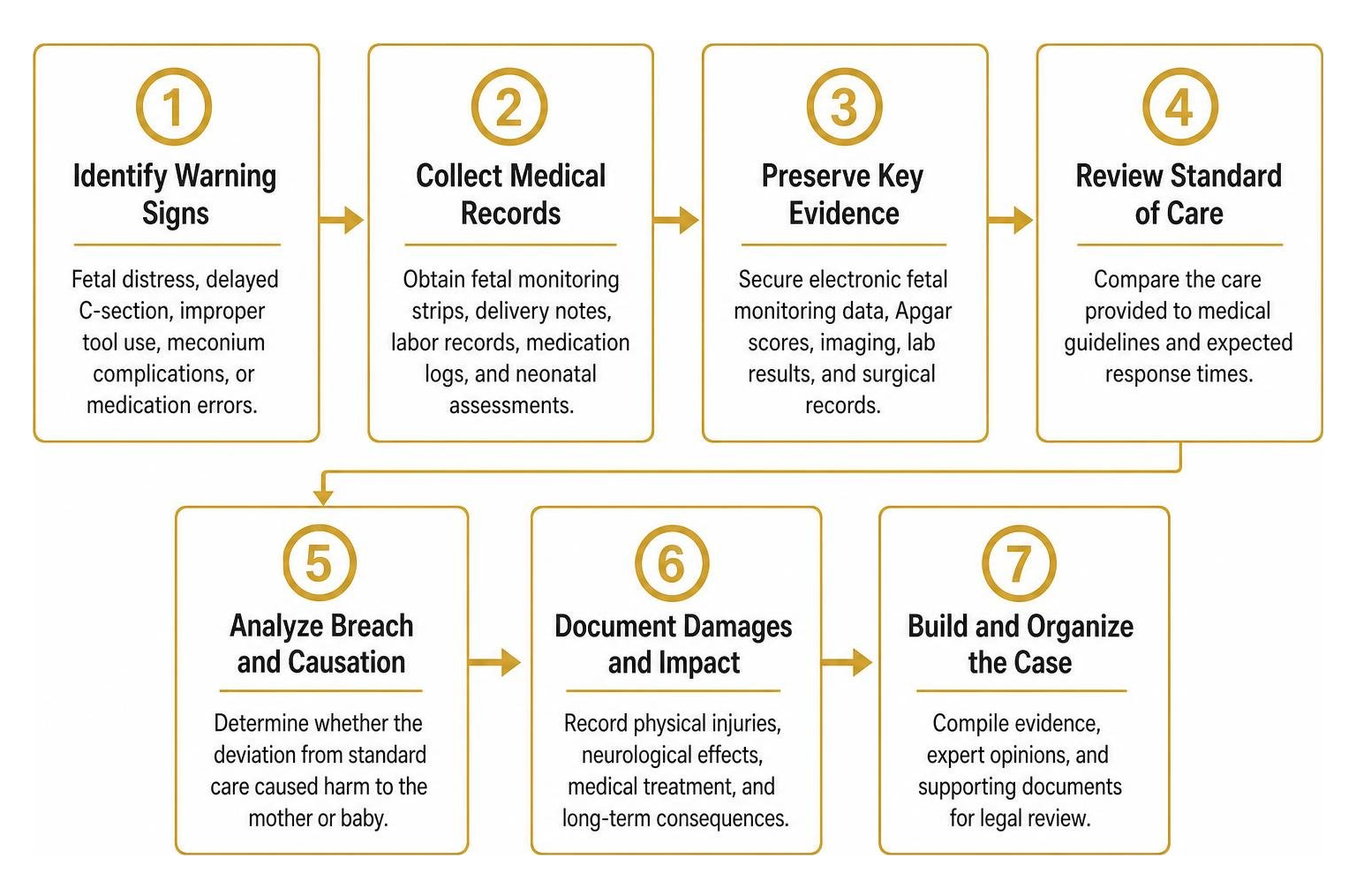
Hospitals maintain vast electronic records that capture every intervention during labor. Securing these files early prevents loss of critical data. Essential documents include:
- Continuous electronic fetal monitoring (EFM) strip tracings.
- Labor and delivery flowsheets, including Pitocin administration logs.
- Physician operative reports and neonatal resuscitation notes.
- Maternal and infant blood gas analyses.
- NICU admission notes, nursing charts, and neuroimaging studies (ultrasound, CT, MRI).
To understand how documentation impacts a claim, review the role of evidence in personal injury claims.
Tracking Milestones and Documenting Ongoing Care Needs
As your child grows, subtle injuries may manifest as delayed developmental milestones. Keeping a dedicated journal provides valuable documentation for both medical teams and legal counsel.
Record observations such as when your baby rolls over, sits up, tracks objects with their eyes, or attempts verbal sounds. Keep copies of physical therapy evaluations, occupational therapy notes, and pediatric neurology consultations. If you are unsure whether your situation involves clinical errors, review our guide on identifying whether you suffered medical malpractice.
Navigating the Statute of Limitations and Legal Deadlines
Every state imposes strict deadlines, known as statutes of limitations, for filing medical negligence lawsuits. In Pennsylvania, adult personal injury claims generally must be filed within two years. However, special rules often apply to minors injured at birth:
- The Minor Tolling Rule: Under Pennsylvania law (the Minors’ Tolling Statute), the statute of limitations for a child injured at birth is generally extended until the child’s 20th birthday.
- Parental Claims: Claims brought directly by parents for their own medical costs or emotional distress may be subject to the standard two-year limitation period from the date of injury or discovery.
- Certificates of Merit: Pennsylvania requires an attorney to file a Certificate of Merit within 60 days of filing a complaint, confirming an appropriate medical expert has reviewed the case and found reasonable grounds for malpractice.
For complete details on statutory exceptions, consult our in-depth guide to Pennsylvania’s personal injury statute of limitations.
Financial Compensation and Legal Recourse for Birth Trauma
A birth injury can require lifetime specialized care. Pursuing a legal claim seeks accountability and the financial resources required to ensure your child receives the highest quality of life possible. Learn more about available damages in the ultimate guide to recoverable damages in a PA personal injury case.
Calculating Lifetime Medical and Care Expenses
Securing fair compensation requires analyzing both immediate and long-term costs. Birth injury settlements and verdicts often involve comprehensive Life Care Plans developed by medical and economic experts. Compensation covers:
- Physical, occupational, speech, and cognitive therapies.
- Specialized mobility equipment, wheelchairs, orthotics, and communication devices.
- In-home nursing assistance and specialized childcare.
- Home and vehicle modifications, such as wheelchair ramps and accessible vans.
- Loss of the child’s future earning capacity and vocational assistance.
- Non-economic damages for physical pain, suffering, and loss of life’s pleasures.
To explore how these figures are structured, review our detailed guide to estimating personal injury case values.
How Birth Injury Malpractice Lawsuits Work
The legal process for a birth trauma claim involves several distinct phases:
- Initial Investigation: Your legal team gathers all hospital charts, fetal monitor records, and neonatal files.
- Expert Review: Independent board-certified obstetricians and pediatric neurologists evaluate the care provided against the medical standard of care.
- Filing the Lawsuit: A formal complaint and Certificate of Merit are filed in the appropriate court.
- Discovery: Both sides exchange evidence, review internal hospital policies, and take sworn depositions of doctors and nurses.
- Settlement Negotiations or Trial: While many birth injury claims resolve through structured settlements, an experienced trial team prepares every case for the courtroom.
For a full walkthrough of these steps, read the legal process in personal injury cases.
Contingency Fees and No Win No Fee Representation
Families managing medical bills and caregiving needs should not face upfront legal costs. Birth injury litigation is handled on a contingency fee basis. Under this arrangement:
- You pay zero upfront fees or out-of-pocket costs for medical record retrieval, expert witnesses, or court filings.
- Legal fees and case expenses are paid solely as an agreed-upon percentage of the financial recovery obtained through a settlement or verdict.
- If your legal team does not recover compensation for your case, you owe no legal fees.
To learn more about this approach, read how to understand contingency fee basics without legal jargon.
Frequently Asked Questions About Birth Negligence
How do I know if my baby’s birth injury was caused by medical negligence or an unavoidable complication?
Differentiating between an unavoidable biological complication and medical negligence requires a thorough review of the electronic fetal monitoring strips, nursing notes, and delivery logs. If medical providers failed to respond to documented fetal distress, used excessive force with delivery tools, or delayed an indicated Cesarean section, the resulting injury is often preventable and constitutes malpractice.
What is the average settlement payout for a birth injury medical malpractice case?
While every case depends on specific injuries and future care requirements, nationwide data indicates the average birth injury payout is around $1 million, with severe brain injury or cerebral palsy cases often resulting in multi-million-dollar settlements or verdicts. These funds reflect the extensive cost of lifelong medical treatment, therapy, and specialized living assistance.
Can medical negligence occur after the baby is delivered?
Yes. Post-delivery negligence occurs when neonatal staff fail to properly resuscitate an asphyxiated infant, delay treatment for dangerous neonatal infections, mismanage high bilirubin levels leading to kernicterus, or fail to monitor oxygen levels in the NICU. Postnatal care is held to the same strict medical standard of care as labor and delivery.
Conclusion
A birth injury diagnosis brings profound challenges for any family. When those injuries result from preventable medical errors, you deserve clear answers, compassionate guidance, and dedicated legal support.
At Caputo & Mariotti, our attorneys bring over 55 years of combined legal experience to advocating for injured individuals and their families throughout Northeastern Pennsylvania, including Scranton, Wilkes-Barre, Lackawanna County, and Luzerne County. If you suspect that medical negligence harmed your child during delivery, contact an experienced Scranton birth injury lawyer today to schedule a free consultation and learn how we can help protect your family’s future.