

The dedicated legal team of Caputo & Mariotti
Family Lawyer Terms Demystified
September 23, 2026
What Type of Lawyer Is a Personal Injury Lawyer?
A personal injury lawyer is a civil litigator who represents individuals who have suffered physical, emotional, or financial harm due to the careless, reckless, or intentional conduct of another party. Within civil jurisprudence, these legal advocates operate under tort law—the branch of civil justice established to restore injured victims to the position they would have occupied had the wrongful act never occurred.
Unlike criminal proceedings that seek punitive sanctions or state penalties against an offender, personal injury law focuses entirely on civil liability and monetary compensation for damages. In Pennsylvania civil courts, these actions are governed by statutory frameworks, local rules of civil procedure, and established common-law precedents across Northeastern Pennsylvania jurisdictions such as Lackawanna County and Luzerne County.
The scope of matters handled by a personal injury attorney encompasses a wide spectrum of harm, including:
- Motor Vehicle Collisions: High-impact car crashes, commercial trucking collisions, motorcycle wrecks, and pedestrian knockdowns.
- Premises Liability: Slip, trip, and fall incidents resulting from neglected property maintenance, structural defects, or inadequate security.
- Medical Negligence and Malpractice: Diagnostic failures, surgical errors, birth injuries, and pharmaceutical mismanagement.
- Workplace Incidents: Occupational injuries requiring both administrative remedy and third-party civil litigation. A dedicated workers’ compensation lawyer assists injured workers through the no-fault administrative system, ensuring strict compliance with the mandatory 120-day injury reporting requirement, coordinating care through designated medical providers during the initial 90-day treatment window, compiling crucial witness accounts and medical documentation, filing formal Claim Petitions, and prosecuting appeals before Workers’ Compensation Judges and the Appeal Board.
- Catastrophic Harm and Wrongful Death: Fatal accidents and life-altering spinal cord or traumatic brain injuries.
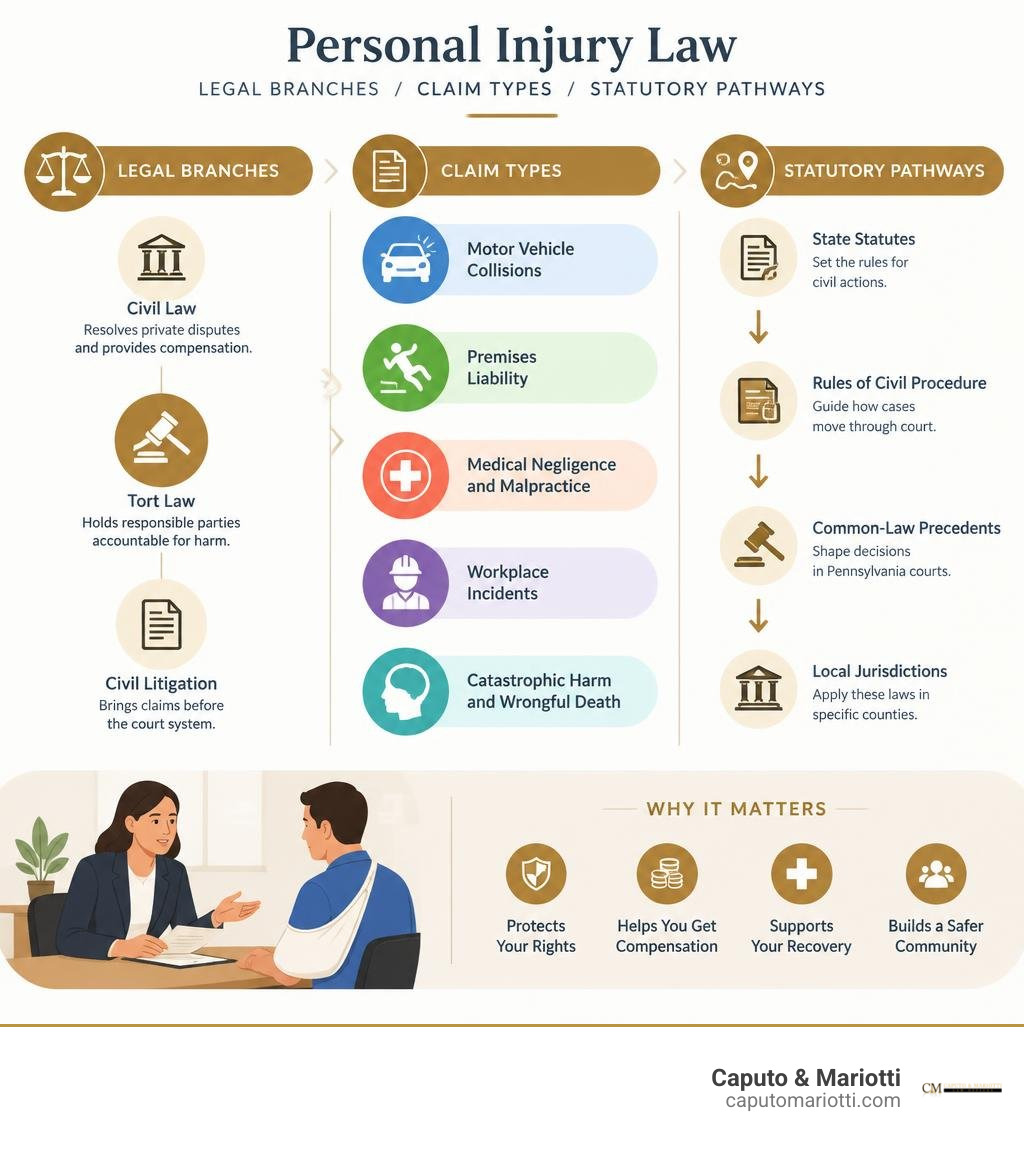
The statistical reality of preventable injuries underscores the critical need for qualified legal counsel. According to national civil litigation datasets, preventable injuries represent millions of emergency department visits each year, generating billions in medical debt and lost household earnings. While general practice attorneys handle basic transactions, personal injury and medical malpractice claims demand focused trial preparation, access to certified medical specialists, and an exhaustive understanding of insurance defense tactics. For a broader overview of this field, see personal injury law.
What Are the Specific Practice Areas and Types of Personal Injury Lawyers?

Personal injury law is not a monolithic practice. Depending on the factual circumstances of the underlying accident, attorneys specialize in distinct sub-disciplines that require specific technical, investigative, and evidentiary knowledge.
Attorneys within this field generally balance two primary approaches: out-of-court settlement negotiation and courtroom litigation. While many claims reach resolution through direct settlement discussions, trial-focused litigators prepare every filing from day one with the assumption that a jury verdict will be required to achieve full justice. Understanding the different types of issues handled by an attorney helps injured claimants identify counsel tailored to their legal needs.
| Lawyer Specialization | Primary Focus Areas | Key Evidentiary Focus | Primary Resolution Methods |
|---|---|---|---|
| Motor Vehicle Accident Litigators | Auto, commercial truck, motorcycle, and pedestrian collisions | Black box data, police crash reports, accident reconstruction, dashcam footage | Insurer settlement negotiations, policy limit demands, jury trials |
| Medical Malpractice Lawyers | Misdiagnosis, surgical mistakes, hospital negligence, birth trauma | Hospital charts, nursing logs, standard-of-care medical expert testimony | Pre-trial mediation, structured arbitration, complex courtroom litigation |
| Premises Liability Attorneys | Slip-and-falls, building code violations, falling merchandise | Surveillance footage, property maintenance logs, building inspection reports | Direct negotiation with property insurers, bench and jury trials |
| Wrongful Death Attorneys | Fatal accidents, corporate gross negligence, fatal malpractice | Pecuniary loss analysis, autopsy findings, economic loss forecasting | Settlement with estate representatives, formal civil litigation |
Motor Vehicle Accident Attorneys
Motor vehicle collision lawyers represent drivers, passengers, cyclists, and pedestrians harmed on roadways throughout Scranton, Wilkes-Barre, Moosic, and surrounding corridors. These practitioners evaluate complex insurance policies—including full tort versus limited tort coverage options under Pennsylvania law—uncover underinsured and uninsured motorist provisions, and quantify total vehicle loss alongside severe bodily injuries.
They lead negotiations with automobile insurance carriers to secure compensation for emergency room care, future orthopedic or neurological treatments, physical therapy regimens, lost wages, and non-economic pain and suffering.
Medical Malpractice Attorneys
Medical malpractice lawyers concentrate on complex civil actions against physicians, surgeons, nurses, pharmacists, and health systems when care falls below accepted medical standards. These cases require thorough technical evaluations involving:
- Failure to Diagnose or Delayed Diagnosis: Missed conditions such as cancer, cardiac events, or acute infections that worsen due to delayed intervention.
- Surgical and Anesthesia Errors: Operating on the wrong surgical site, leaving foreign objects inside a patient, or administering improper dosages of anesthesia.
- Medication Mistakes: Prescribing contraindicated medications or lethal dosing combinations.
- Lack of Informed Consent: Performing medical procedures without fully advising the patient of known material risks.
Navigating these claims requires analyzing volumes of medical charts and securing independent expert opinions to demonstrate causation and standard-of-care breaches.
Premises Liability and Wrongful Death Attorneys
Premises liability attorneys hold commercial and residential property owners accountable for injuries caused by hazardous conditions. Common actions involve icy walkways in commercial parking lots, poorly lit stairwells, uneven flooring, building code non-compliance, and negligent security that allows criminal assaults to take place on commercial property.
When severe accidents result in fatal outcomes, wrongful death litigators represent the personal representatives and surviving family members of the deceased. These actions pursue statutory damages for funeral costs, final medical expenses, estate administration fees, and the loss of financial contributions, companionship, and guidance that the decedent would have provided to their dependents.
What Key Responsibilities Does a Personal Injury Lawyer Handle?
The daily work of a personal injury attorney extends far beyond courtroom appearances. From the moment an attorney-client relationship is formed, a lawyer performs comprehensive investigations, marshals documentary evidence, communicates with insurance adjusters, and protects the client from procedural traps.
Attempting to manage a claim without legal representation exposes injured victims to severe risks. Understanding the risks of navigating a claim solo emphasizes why professional representation is critical. For those unacquainted with the legal system, reviewing injury claim fundamentals clarifies how civil liability is established under state law and outlines the protections afforded by dedicated legal support.
Evidence Collection and Medical Discovery
A successful personal injury claim rests entirely on persuasive evidence. Personal injury attorneys gather and preserve vital records before they are altered, destroyed, or lost to ensure an unassailable foundation for trial:
- Securing Incident Records: Obtaining official police crash reports, workplace incident forms, OSHA safety audits, and municipal surveillance recordings.
- Medical Documentation Analysis: Collecting complete diagnostic imaging records (MRIs, CT scans, X-rays), surgical summaries, physical therapy notes, and billing ledgers to establish the mechanism and permanence of physical injuries.
- Deploying Expert Witnesses: Working with accident reconstructionists, forensic engineers, vocational rehabilitation specialists, and forensic economic analysts to calculate the full financial impact of lifelong physical limitations.
- Insurance Discovery: Identifying all available primary, excess, and umbrella liability policies to ensure sufficient funds exist to cover catastrophic losses.
Document Preparation and Legal Filings
Civil injury practice is governed by strict statutory deadlines and procedural rules. Personal injury lawyers manage all written submissions required by the judicial system, including:
- Comprehensive Demand Packages: Detailed factual and legal briefs submitted to insurance adjusters that outline liability, itemize medical damages, analyze future loss of earning capacity, and set formal settlement terms.
- Civil Complaints and Pleadings: Formal court pleadings that establish legal causes of action and define the scope of damages sought.
- Discovery Requests and Motions: Drafting Interrogatories, Requests for Production of Documents, Requests for Admissions, and motions to compel compliance when opposing parties withhold evidence.
- Compliance with Statutes of Limitations: Enforcing mandatory filing deadlines (such as Pennsylvania’s strict two-year statute of limitations for personal injury and wrongful death actions) to preserve the client’s right to pursue financial recovery.
Out-of-Court Settlement vs. Courtroom Litigation
The vast majority of civil claims resolve through negotiation or alternative dispute resolution (ADR) rather than an actual jury verdict. However, achieving maximum settlement leverage requires building a trial-ready posture.

Attorneys prepare their clients for depositions, guide them through mandatory settlement conferences, and present strong arguments before mediators or judges in county courts such as the Lackawanna County Court of Common Pleas in Scranton or the Luzerne County Court in Wilkes-Barre. When insurance carriers refuse to make a fair offer, trial attorneys present their cases before civil juries.
How Much Does Hiring a Personal Injury Lawyer Cost?

A primary concern for injured individuals is the cost of retaining qualified legal counsel. In traditional legal practices such as corporate, estate, or family law, attorneys often require substantial up-front retainer fees (averaging $2,300 on the low end and exceeding $10,000 to $50,000 for complex matters) alongside standard hourly billing rates that frequently average $317 per hour.
In personal injury litigation, however, attorney compensation is structured to provide open access to the civil justice system regardless of the client’s current financial circumstances. Claimants seeking to understand their financial rights can explore affordable legal options designed to ensure fair representation without upfront retainers.
Contingency Fees and Case Expenses
Personal injury and medical malpractice lawyers represent clients primarily through contingency-fee agreements. Under this arrangement:
- No Up-Front Legal Fees: The client pays no hourly charges, retaining fees, or initial out-of-pocket costs to secure legal representation.
- Percentage-Based Payment: The legal fee consists of an agreed-upon percentage of the gross financial recovery obtained through an out-of-court settlement, arbitration award, or jury verdict.
- No Recovery, No Fee: If the attorney is unable to secure a financial settlement or verdict on the client’s behalf, the client owes no attorney fees for the legal services provided.
In addition to legal fees, civil litigation involves hard case expenses, including court filing costs, deposition transcript fees, expert witness fees, and medical record retrieval charges. A transparent contingency-fee agreement clearly outlines how these advanced litigation expenses are deducted from the final recovery.
Flat Fees and Limited-Scope Representation
While contingency billing dominates personal injury litigation, certain legal matters use alternate billing arrangements:
- Flat Fees: Applied occasionally for discrete services such as reviewing a proposed release agreement or providing a single-issue legal assessment.
- Limited-Scope Representation: An arrangement where counsel is hired to handle a specific component of a legal dispute (such as drafting a motion or attending a single settlement conference) rather than providing full representation from start to finish.
For catastrophic injury and medical malpractice matters, full-service representation on a contingency basis remains the standard because complex discovery, expert depositions, and trial preparation require ongoing legal guidance.
When Should You Hire a Personal Injury Lawyer and How Do You Choose One?
Engaging legal counsel early is essential to protecting your rights after an accident. You should consult a personal injury lawyer immediately if:
- You or a family member sustained serious, permanent, or debilitating injuries requiring extensive medical intervention.
- The insurance company disputes liability, attempts to blame you for the accident, or offers an inadequate settlement that fails to cover future care.
- The incident involves multiple liable parties, commercial trucking fleets, or government entities with sovereign immunity rules.
- You suspect medical negligence or malpractice involving a hospital, surgeon, or diagnostic laboratory.
- An accident resulted in the untimely death of a loved one.
Choosing the right legal advocate requires careful evaluation of their trial experience, reputation, and familiarity with regional courts. Reviewing resources on when to hire legal assistance, following essential tips for legal success, and learning how to choose the right personal injury lawyer in Scranton helps ensure you retain qualified local counsel.
At Caputo & Mariotti, we bring over 55 years of combined legal experience to every case we handle. Our dedicated team serves clients throughout Northeastern Pennsylvania, including Scranton, Wilkes-Barre, Moosic, Pittston, Hazleton, and Dickson City. We provide steadfast advocacy, compassionate guidance, and an unwavering commitment to justice, ensuring our clients receive the full financial compensation they deserve.
Questions to Ask During Your Initial Legal Consultation
- How many years of trial experience do you have handling my specific type of injury or malpractice claim?
- Do you routinely handle cases in local courts throughout Lackawanna and Luzerne Counties?
- How are litigation costs advanced, and how are expenses calculated if our claim resolves through a settlement versus a trial?
- Who in your office will be responsible for managing my case files and communicating regular updates?
- What potential challenges or liability disputes do you anticipate during the discovery phase of this case?
What Are the Most Frequently Asked Questions About Personal Injury Lawyers?
What is the difference between a personal injury lawyer and a medical malpractice attorney?
A medical malpractice attorney is a personal injury lawyer who focuses on injuries caused by negligent healthcare providers, diagnostic failures, and surgical errors. While all medical malpractice claims fall under personal injury law, general personal injury lawyers often handle motor vehicle accidents, premises liability, and workplace injuries, whereas medical malpractice practitioners concentrate primarily on clinical negligence and standard-of-care litigation.
Can one personal injury lawyer represent both sides in an injury claim?
No. Under state ethical canons and professional conduct rules, a personal injury lawyer is strictly prohibited from representing both the injured claimant and the allegedly negligent party in the same legal matter. Doing so represents a non-waivable conflict of interest. An attorney must maintain undivided loyalty to their client’s interests throughout negotiations and court proceedings.
Do personal injury attorneys work on a contingency-fee basis?
Yes. Personal injury and medical malpractice lawyers represent injured clients primarily on a contingency-fee basis. This ensures that injured individuals have access to legal counsel without having to pay upfront legal fees or hourly billing rates. Fees are earned only when a financial recovery is successfully obtained on the client’s behalf.