

The dedicated legal team of Caputo & Mariotti
How to Report Nursing Home Abuse in Pennsylvania
June 17, 2026
What Every Pennsylvania Family Needs to Know About Nursing Home Abuse
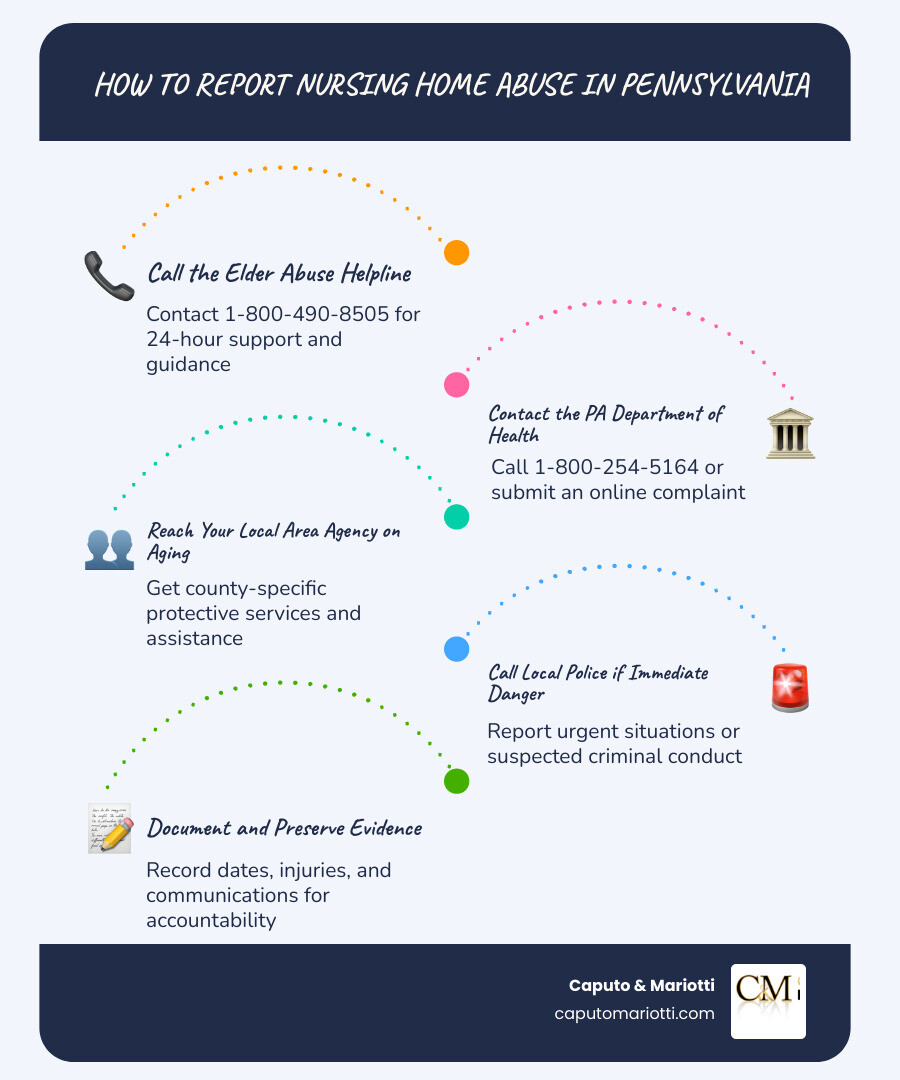
If you need to know how to report nursing home abuse in Pennsylvania, here are the most important steps you can take right now:
- Call the 24-Hour Elder Abuse Helpline: 1-800-490-8505
- Call the PA Department of Health Nursing Home Complaint Hotline: 1-800-254-5164
- File an online complaint at the Pennsylvania Department of Health complaint portal
- Contact your local Area Agency on Aging (AAA) for county-level protective services
- Call local police if there is immediate danger or criminal conduct
Pennsylvania is home to nearly 700 nursing homes serving more than 88,000 residents — and the state ranks #4 in the nation for the percentage of residents aged 65 and older. By 2030, nearly one in three Pennsylvanians will be over the age of 60. Yet despite this enormous elderly population, nursing home quality across the state remains deeply concerning. In Philadelphia, only 36 out of 273 nursing homes received a top rating. In Pittsburgh, just 18 of 123 facilities earned a positive review. In Harrisburg, only two nursing homes received a positive rating at all.
These numbers matter — because behind every statistic is a real person who trusted a facility to keep them safe.
Abuse and neglect in nursing homes can be difficult to see at first. Victims are often afraid to speak up. Family members may not know where to turn. But silence only allows the problem to continue.
I’m Chris Caputo, a Pennsylvania personal injury attorney with decades of experience litigating on behalf of injury victims. My background gives me a unique understanding of how to hold negligent institutions accountable — and I’ve dedicated my practice to helping families report nursing home abuse in Pennsylvania and pursue the justice their loved ones deserve.
Recognizing the Signs of Elder Abuse and Neglect
Before you can learn how to report nursing home abuse in Pennsylvania, you must first be able to identify it. Abuse isn’t always a physical blow; it can be a slow, quiet erosion of care that leads to catastrophic health consequences. In our experience at Caputo & Mariotti, many families feel a sense of “gut instinct” that something is wrong, even if they can’t quite put their finger on it.
Physical Indicators
Physical abuse is often the most visible, but it can still be hidden under clothing or explained away by staff. Watch for:
- Unexplained Bruising: Frequent marks, especially on the upper arms or thighs, which may indicate rough handling or the use of restraints.
- Bedsores (Pressure Ulcers): These are almost always a sign of neglect. Facilities are responsible for nursing home injury risk management, which includes turning immobile residents every few hours.
- Broken Bones: Falls are a major risk, and while some are accidents, many occur because a facility failed to provide adequate supervision or mobility assistance.
Signs of Neglect
Neglect is the failure to provide the basic necessities of life. This includes:
- Malnutrition and Sudden Weight Loss: If a resident is losing weight rapidly, it may be because they aren’t being assisted with meals.
- Dehydration: Sunken eyes or extreme lethargy can indicate a resident isn’t getting enough fluids.
- Poor Hygiene: Uncut nails, unwashed hair, or soiled clothing are major signs & red flags of nursing home abuse in PA you shouldn’t ignore.
Emotional and Financial Red Flags
Abuse can also be psychological or financial. If your loved one suddenly becomes withdrawn, fearful, or non-communicative, they may be suffering from emotional abuse. Additionally, keep a close eye on their finances. Missing personal items or unexplained withdrawals from bank accounts are common signs of financial exploitation.
How to Report Nursing Home Abuse in Pennsylvania: A Comprehensive Guide
Taking action is the only way to stop the cycle of neglect. Pennsylvania has established several pathways for families and whistleblowers to come forward. Knowing how to report nursing home abuse in Pennsylvania correctly ensures that the right agencies are alerted and an investigation is triggered.
The primary resource for reporting is the 24-hour Statewide Elder Abuse Helpline at 1-800-490-8505. This line is available every day of the year and connects you with the Department of Aging | Commonwealth of Pennsylvania. Under the Older Adults Protective Services Act (OAPSA), the state is mandated to investigate reports of abuse, neglect, exploitation, or abandonment of adults aged 60 and older.

Step-by-Step: How to Report Nursing Home Abuse in Pennsylvania to the Department of Health
While the Department of Aging handles protective services, the Pennsylvania Department of Health (DOH) is the agency responsible for licensing and regulating the facilities themselves. If you want to trigger a regulatory inspection that could lead to fines or citations, you must file a complaint with the DOH.
- Gather Your Information: Before calling, have the facility’s full name, the specific dates of the incidents, the names of any staff members involved, and a detailed description of the care issues.
- Use the Online Complaint Form: The most efficient way to file is through the official online intake form. This creates a digital paper trail for your complaint.
- Call the Hotline: If you prefer to speak to a person, call 1-800-254-5164. This line is specifically for complaints against healthcare facilities, including nursing homes.
- Send a Formal Letter: You can also mail a written complaint to the Division of Nursing Care Facilities at 2525 N. 7th Street, Harrisburg, PA 17120.
The Department of Health | Commonwealth of Pennsylvania investigates every complaint they receive. Depending on the severity, they may conduct an unannounced site visit to inspect the facility’s records and interview residents.
Anonymous Reporting and Legal Protections for Reporters
Many people hesitate to report abuse because they fear retaliation against their loved one or, if they are an employee, losing their job. Pennsylvania law provides strong protections to encourage reporting.
- Confidentiality: When you file a complaint with the DOH or the Ombudsman, you can request to remain anonymous. The facility will not be told who made the report.
- Whistleblower Protections: Employees of nursing homes are “mandated reporters.” This means they are legally required to report suspected abuse. OAPSA protects these employees from being fired or discriminated against for making a report in good faith.
- Anti-Retaliation for Families: It is illegal for a facility to discharge or mistreat a resident because their family filed a complaint.
If you are worried about the repercussions of reporting, we recommend nursing home abuse in Pennsylvania: recognizing the signs and taking action by consulting with an attorney first. We can help you navigate the reporting process while ensuring your legal rights—and your loved one’s safety—are protected.
Regional Reporting Resources: Philadelphia, Pittsburgh, and Harrisburg
While statewide hotlines are excellent, sometimes local intervention is faster. Pennsylvania’s Long-Term Care Ombudsman Program provides advocates who work specifically for residents’ rights.
| Region | Primary Agency | Phone Number | |
|---|---|---|---|
| Philadelphia | CARIE (Center for Advocacy for the Rights and Interests of the Elderly) | 215-545-5724 | |
| Pittsburgh | Allegheny County Area Agency on Aging | 412-350-5460 | |
| Harrisburg | Dauphin County Area Agency on Aging | 717-780-6130 | |
| Northeastern PA | [Adult Protective Services | Luzerne County, PA](https://www.luzernecounty.org/989/Adult-Protective-Services) | 570-822-1158 |
In the Scranton and Wilkes-Barre areas, our local Area Agencies on Aging are highly active. If you suspect abuse in Lackawanna or Luzerne County, these local offices can often get a caseworker on-site quickly to assess the situation.
The Investigation Process: What Happens After a Complaint is Filed?
Once you have learned how to report nursing home abuse in Pennsylvania and submitted your claim, the state’s regulatory machine begins to turn.
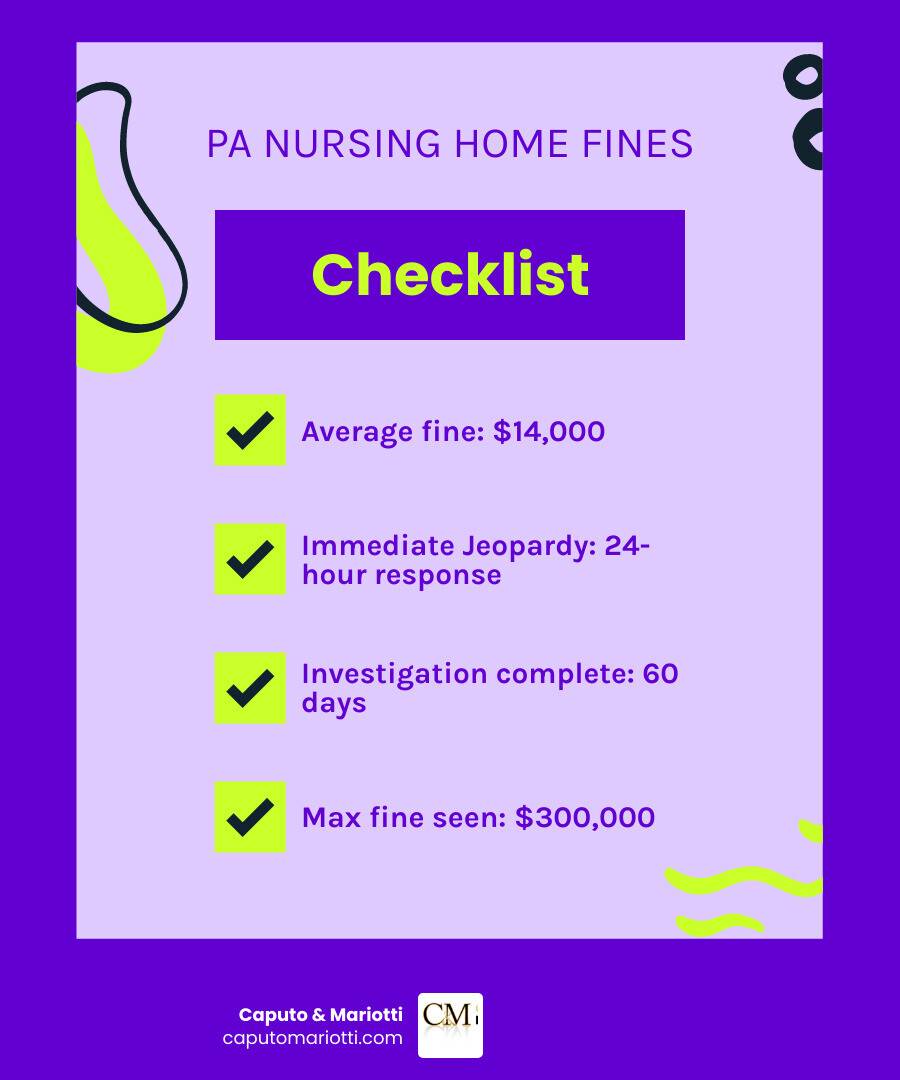
- Initial Assessment: The Department of Health reviews the complaint to determine the level of risk. If there is “Immediate Jeopardy” (a situation where a resident’s life is in danger), investigators must respond within 24 hours.
- Unannounced Inspections: For most other complaints, investigators will arrive unannounced at the facility. They will review charts, observe care, and speak with residents and staff.
- The 60-Day Timeline: Most investigations are concluded within 60 days. You will typically receive a letter notifying you of whether the complaint was “substantiated” or “unsubstantiated.”
- Consequences for Facilities: If the state finds violations, they issue “deficiency citations.” The facility may be forced to pay fines, which in Pennsylvania average about $14,000, though egregious cases have seen fines reach nearly $300,000.
If your loved one has been harmed, simply filing a state report might not be enough to cover the costs of their medical care or the trauma they endured. This is why many families ask: have you suffered an injury in a nursing home? and seek legal recourse.
Pursuing Accountability Through a Civil Lawsuit
While state investigations can lead to fines and citations, they do not provide compensation to the victim. A civil lawsuit is the only way to recover monetary damages for medical bills, pain and suffering, and the cost of relocating to a safer facility.
In Pennsylvania, the majority of nursing home negligence cases handled by experienced firms settle for amounts in excess of $100,000. These settlements serve two purposes: they provide for the victim and they hit the negligent corporation where it hurts most—their bottom line. Often, these facilities are part of large corporate chains that prioritize profit over staffing. By pursuing nursing home lawsuit settlements, families force these companies to take resident safety seriously.
In the most tragic cases, where neglect leads to a loss of life, families may pursue a wrongful death claim. Protecting elders: finding a nursing home wrongful death attorney is a critical step in holding a facility accountable for the ultimate failure in care.
Why You Should Know How to Report Nursing Home Abuse in Pennsylvania Immediately
Time is of the essence. Pennsylvania has a two-year statute of limitations for personal injury and medical malpractice claims. If you wait too long to report and investigate, critical evidence can disappear.
- Security Footage: Many facilities overwrite their camera footage every 30 days.
- Medical Documentation: Staff notes can be “updated” or lost if a legal hold is not placed on the records quickly.
- Witness Testimony: High staff turnover in PA nursing homes means that the nurse or aide who witnessed the abuse may leave the facility and become difficult to track down.
Comprehensive Legal Support: Beyond Nursing Home Abuse
At Caputo & Mariotti, we understand that nursing homes are complex environments. Sometimes, the victims of a facility’s negligence aren’t just the residents, but also the hardworking staff who are forced to work in unsafe, understaffed conditions.
If you are a healthcare worker in Northeastern Pennsylvania who has been injured on the job due to inadequate equipment or dangerous conditions, a workers’ compensation lawyer from our team can help. Pennsylvania’s no-fault system is designed to protect you, but the process is rigorous:
- Reporting: You must notify your employer of a workplace injury within strict timelines (usually 21 to 120 days) to remain eligible for benefits.
- Medical Treatment: For the first 90 days, you may be required to see doctors from a list designated by your employer.
- Evidence Gathering: We help collect witness statements and medical records to prove the extent of your disability.
- Filing Process: We ensure your Claim Petition is submitted correctly to avoid technical denials.
- Legal Appeals: If your claim is denied, we represent you before Workers’ Compensation Judges to fight for your lost wages and medical coverage.
Frequently Asked Questions about Reporting Abuse
Can I report nursing home abuse anonymously in Pennsylvania?
Yes. You can request confidentiality when calling the Department of Health or the Elder Abuse Helpline. While providing your name can help investigators follow up with you for more details, the state will not disclose your identity to the nursing home without your permission.
How long does the Pennsylvania Department of Health take to investigate?
By law, investigations into “Immediate Jeopardy” must begin within 24 hours. For non-emergency complaints, the timeline varies, but most investigations are completed and a report is issued within 60 days.
What information do I need to provide when filing a complaint?
Be as specific as possible. Include the resident’s name, the facility’s name and address, the names of involved staff, the dates and times of incidents, and a clear description of what happened. Photos of injuries or unsanitary conditions are also extremely helpful.
Conclusion
No one should have to spend their golden years in fear or pain. If you suspect that a loved one is being mistreated, don’t wait for “proof” that may never come. Knowing how to report nursing home abuse in Pennsylvania is the first step toward safety.
At Caputo & Mariotti, we have spent over 55 years fighting for the people of Northeastern Pennsylvania—from Scranton and Wilkes-Barre to Hazleton and Dickson City. We have the experience, the resources, and the unwavering commitment to justice needed to take on large nursing home corporations.
If you’re ready to take the next step, we’re here to listen. Contact us today for a Free Consultation and let us help you protect your family.