

The dedicated legal team of Caputo & Mariotti
In Depth Guide to Anesthesia Errors Malpractice Claims in Pennsylvania
June 5, 2026
When Anesthesia Goes Wrong: What Pennsylvania Patients Need to Know
Anesthesia errors malpractice claims in Pennsylvania are more common — and more serious — than most people realize. Every year, patients who trust their surgical teams suffer life-altering harm because of preventable mistakes made before, during, or after anesthesia was administered.
Here is a quick overview of what you need to know:
| Key Question | Quick Answer |
|---|---|
| What qualifies as an anesthesia error? | Any deviation from the accepted standard of care during anesthesia planning, administration, or monitoring |
| What must you prove? | Duty of care, breach of that duty, causation, and damages |
| Who can be liable? | Anesthesiologist, CRNA, surgical team, hospital, or surgical center |
| What damages can you recover? | Medical bills, lost wages, pain and suffering, wrongful death compensation |
| How long do you have to file? | Generally 2 years from the date of injury or discovery in Pennsylvania |
| Is a Certificate of Merit required? | Yes — a licensed medical expert must certify negligence within 60 days of filing |
An estimated 150 deaths occur each year in the United States due to anesthesia complications. Research compiled by the National Institutes of Health recorded over 2,200 anesthesia-related deaths across a single decade. Behind each of those numbers is a patient who trusted a medical team to keep them safe.
The consequences of anesthesia negligence can include permanent brain damage, stroke, nerve injury, and wrongful death — outcomes that affect not just patients, but entire families.
I’m Chris Caputo, a Pennsylvania personal injury attorney with decades of litigation experience, including complex medical negligence cases involving anesthesia errors malpractice claims in Pennsylvania. In the sections below, I’ll walk you through everything you need to know — from how these errors happen to how Pennsylvania law protects your right to seek compensation.
Common Types of Anesthesia Errors in Pennsylvania

When we talk about an anesthesia errors malpractice claim in Pennsylvania, we aren’t just talking about a minor side effect like a sore throat or a bit of nausea. We are talking about fundamental failures in medical care. In our 55+ years of combined experience at Caputo & Mariotti, we have seen how these errors stem from a variety of negligent actions.
The most frequent types of errors include:
- Dosage Mistakes: Administering too much anesthesia can lead to respiratory arrest, coma, or brain damage. Conversely, administering too little can lead to the terrifying experience of anesthesia awareness.
- Intubation Trauma: If a provider fails to properly place a breathing tube (esophageal intubation) or causes physical damage to the throat and vocal cords, the patient may suffer from oxygen deprivation.
- Monitoring Failure: Anesthesiologists and CRNAs must watch vital signs like a hawk. Failing to monitor blood pressure, heart rate, or oxygen levels (pulse oximetry) can lead to catastrophic organ failure.
- Allergy Oversight: Failing to review a patient’s medical history for drug allergies before administering a sedative.
Statistics show that human error is the primary driver of these injuries, though equipment failure or improper use of technology also plays a role. In some tragic Pennsylvania cases, even routine elective surgeries like cataract removal have resulted in wrongful death due to mismanagement of sedation and pre-existing conditions like hypertension. For a deeper look at how these cases are categorized, you can read our guide to understanding error and awareness cases.
Errors Before, During, and After Surgery
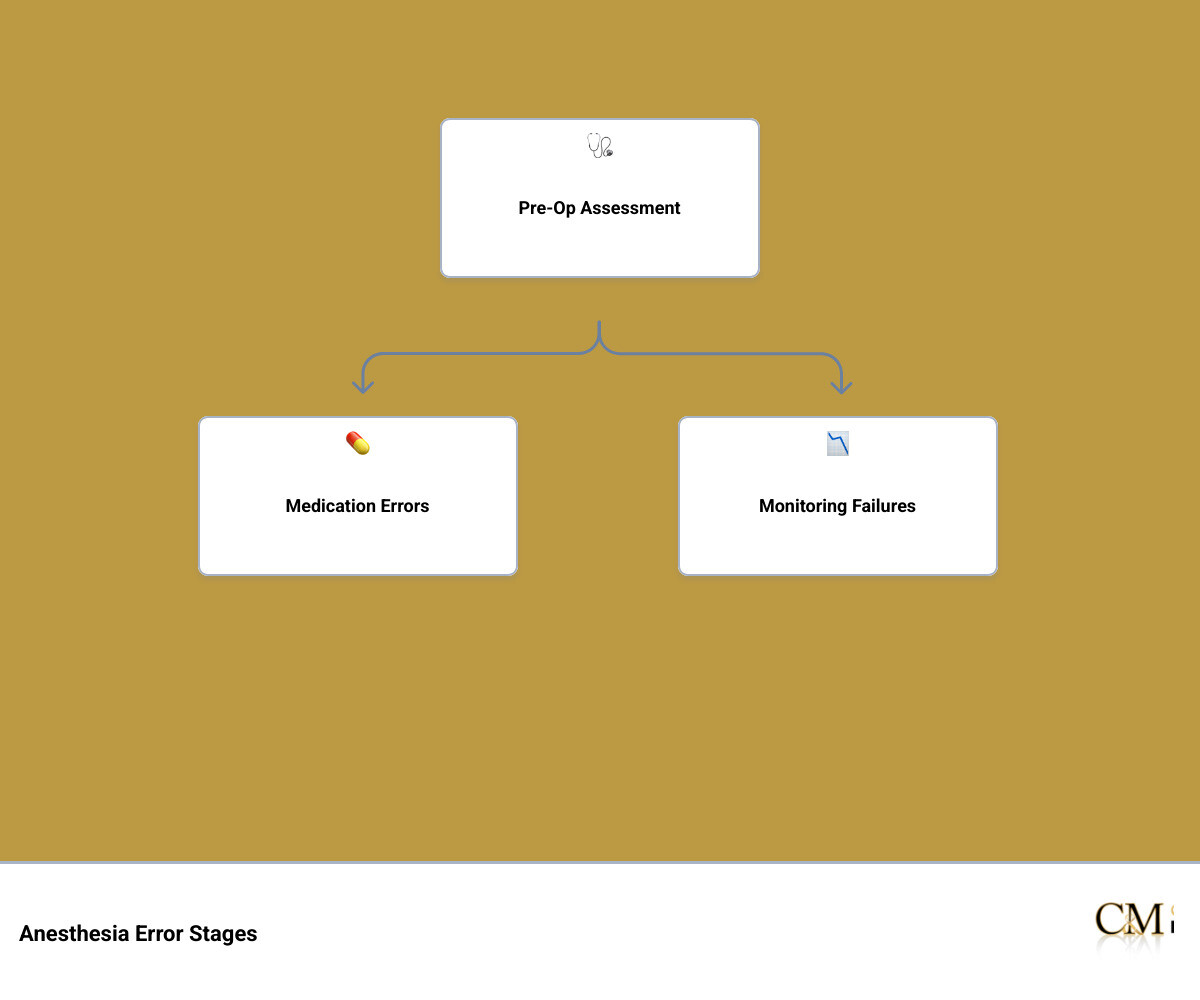
Negligence doesn’t only happen while the surgeon has a scalpel in hand. It is a timeline of responsibility:
- Pre-operative: The provider must conduct a thorough assessment. This includes checking for “difficult airways,” reviewing history of Larsen Syndrome or other conditions, and providing fasting instructions. Failure to do this is often where the malpractice begins.
- Intra-operative: This is the most critical phase. The team must manage “MAC” (Monitored Anesthesia Care) or general anesthesia, responding instantly if oxygen levels drop. A three-minute drop in oxygen can lead to permanent neurological injury.
- Post-operative: Once the surgery is over, the patient is moved to the Post-Anesthesia Care Unit (PACU). Errors here often involve premature extubation (removing the breathing tube too soon) or failing to monitor for respiratory depression as the drugs wear off.
Anesthesia Awareness and Psychological Trauma
Perhaps the most harrowing form of negligence is anesthesia awareness. This occurs when a patient is given enough paralytic to prevent movement but not enough anesthetic to maintain unconsciousness. The patient “wakes up” during surgery, feeling the pain and hearing the sounds of the procedure, but is unable to scream or signal for help.
This is almost always the result of a dosage or equipment error. The physical pain is immense, but the long-term psychological trauma—including severe PTSD, anxiety, and depression—can be just as debilitating. If you’ve experienced this, it is essential to understand what to know about medical malpractice and your rights to compensation for emotional distress.
Proving an Anesthesia Errors Malpractice Claim in Pennsylvania

Filing a lawsuit isn’t as simple as saying “something went wrong.” In Pennsylvania, medical malpractice is a specific legal hurdle. To succeed in an anesthesia errors malpractice claim in Pennsylvania, we must establish four critical pillars:
- Duty of Care: A doctor-patient relationship existed, meaning the medical team owed you a professional standard of care.
- Breach of Duty: The provider failed to meet the “standard of care”—the level of care a reasonably competent professional would have provided in the same situation.
- Causation: We must prove that the error directly caused your injury. It isn’t enough that an error happened; it must be the reason for the harm.
- Damages: You must have suffered actual losses, whether physical, financial, or emotional.
Establishing these critical elements of medical negligence requires a deep dive into medical science and Pennsylvania law.
The Role of the Certificate of Merit
Pennsylvania has a unique “gatekeeper” rule to prevent frivolous lawsuits. Under PA Rule 1042.3, any plaintiff filing a medical malpractice claim must file a Certificate of Merit within 60 days of the initial complaint.
This document is a statement from a licensed medical professional (usually a board-certified anesthesiologist) certifying that there is a “reasonable probability” that the care you received fell below professional standards. Without this certificate, your case will likely be dismissed. This is why we work closely with top-tier medical experts to review your records immediately. You can learn more about this on our medical malpractice overview page.
Evidence Needed for an Anesthesia Errors Malpractice Claim in Pennsylvania
Evidence is the backbone of your claim. When we investigate these cases in Scranton or Wilkes-Barre, we look for:
- The Electronic Anesthesia Record (EAR): This digital log tracks your vitals (heart rate, BP, oxygen) every few seconds. It is the “black box” of the operating room.
- Equipment Logs: To see if the anesthesia machine was properly calibrated or if alarms were ignored.
- Hospital Protocols: To determine if the facility followed the American Society of Anesthesiologists’ “Difficult Airway Algorithm.”
- Witness Statements: Interviews with nurses or other surgical staff who were in the room.
Gathering this information is a core part of our patient’s guide to filing a lawsuit.
Liability and Compensation for Anesthesia Negligence
Determining who is at fault can be complicated. In many Pennsylvania hospitals, the person administering your anesthesia might not even be an employee of the hospital.
Who Can Be Held Liable?
- Anesthesiologists: The primary doctor responsible for your sedation plan.
- CRNAs (Certified Registered Nurse Anesthetists): In many PA facilities, CRNAs handle the administration under the supervision of a doctor. If they make a mistake, both they and the supervisor may be liable.
- The Hospital: Under the doctrine of vicarious liability, a hospital can be held responsible for the negligence of its staff. Even if the doctor is an independent contractor, the hospital might still be liable if they didn’t clearly communicate that to you.
- Surgical Centers: Outpatient facilities often have less oversight than major hospitals, making them common sites for monitoring errors.
If you suspect the facility itself was at fault, see our guide to suing hospitals for negligence.
Recoverable Damages in an Anesthesia Errors Malpractice Claim in Pennsylvania
The goal of a legal claim is to “make you whole” again, as much as money can. Victims can seek:
- Economic Damages: These cover tangible losses like medical bills, future therapy costs, and lost wages. If an injury prevents you from returning to work, we calculate your “lost earning capacity.”
- Non-Economic Damages: This covers pain and suffering, loss of enjoyment of life, and disfigurement. Pennsylvania does not cap these damages in medical malpractice cases.
- Wrongful Death Damages: If a loved one died, the estate can seek funeral expenses and compensation for the family’s loss of companionship and support.
For more details on how we calculate these values, visit our medical malpractice services page.
Pennsylvania Legal Requirements and Deadlines
Time is not on your side in these cases. Pennsylvania law is very strict regarding deadlines and how fault is shared.
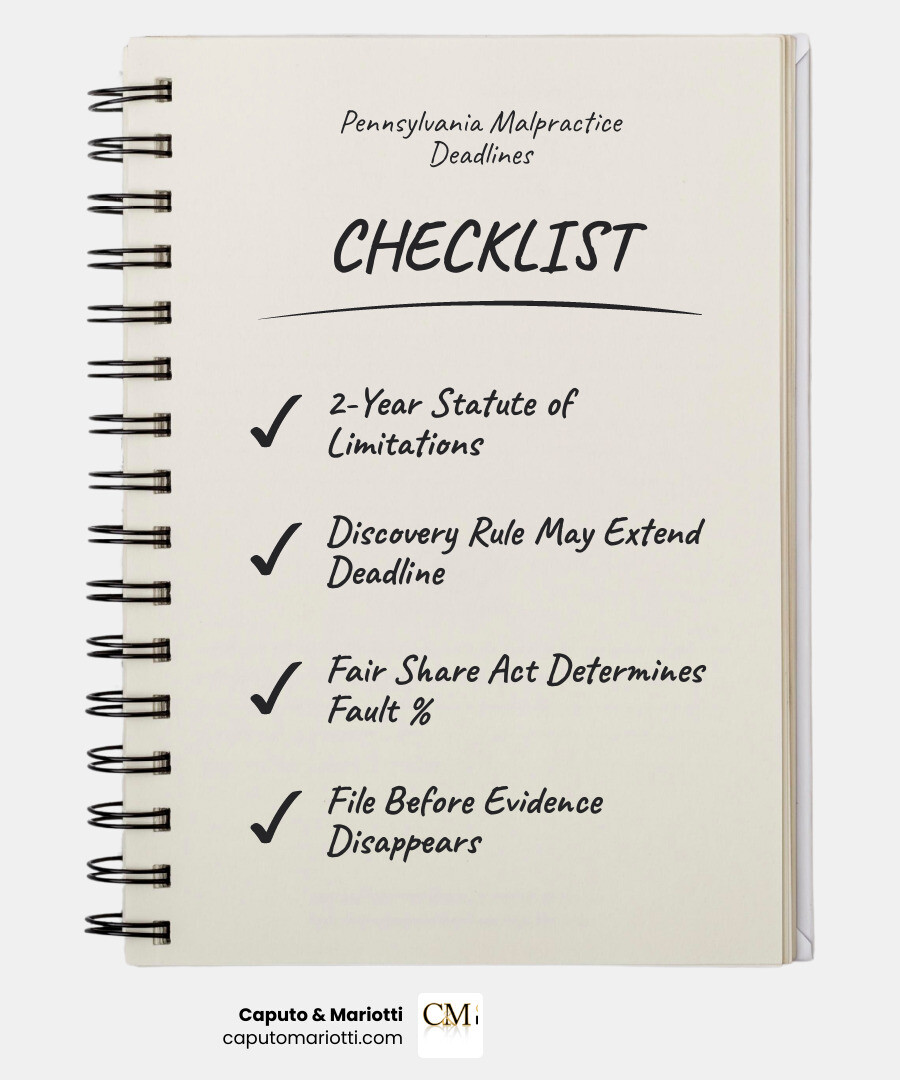
- Statute of Limitations: You generally have two years from the date of the error to file a lawsuit.
- The Discovery Rule: If the injury wasn’t immediately apparent (for example, nerve damage that didn’t manifest for months), the clock may start on the date you discovered the harm. However, this is a complex legal argument that requires an experienced attorney.
- The Fair Share Act: This PA law dictates how much each defendant pays based on their percentage of fault. If a hospital is 60% or more at fault, they can be held responsible for the total award.
Understanding these rules is vital, especially in cases where a misdiagnosis or delayed response led to the injury.
Related Legal Support for Workplace Injuries
If your surgery was required because of a workplace accident—such as a back surgery following a construction fall—and an anesthesia error occurred during that procedure, your case becomes even more complex. You are dealing with both a malpractice claim and a workers’ compensation claim. In these instances, it is vital to consult a workers’ compensation lawyer to ensure your medical benefits and disability payments are not jeopardized by the ongoing litigation.
When handling a concurrent workers’ compensation claim, you must address these key areas:
- Reporting: Notify your employer of the injury immediately to meet PA deadlines.
- Medical Treatment: Use employer-approved medical providers for the initial 90-day period.
- Evidence Gathering: Maintain thorough records of the accident and all subsequent medical care.
- Filing Process: Ensure all claim petitions are filed correctly with the Bureau of Workers’ Compensation.
Frequently Asked Questions about Anesthesia Malpractice
What is the statute of limitations for an anesthesia errors malpractice claim in Pennsylvania?
In Pennsylvania, the statute of limitations is typically two years from the date the malpractice occurred. Under the “discovery rule,” this might be extended if you couldn’t have reasonably known about the injury until later. However, the window is small, and evidence can disappear quickly.
Can I sue if I was awake during surgery?
Yes. Anesthesia awareness is a recognized medical injury. If we can prove the awareness was caused by an improper dose, faulty equipment, or a failure to monitor the patient’s level of consciousness, you may have a strong case for both physical and psychological damages.
How do I prove the anesthesiologist was negligent?
We prove negligence by comparing the actions taken in your case against the “standard of care.” We use the Electronic Anesthesia Record, testimony from other medical staff, and expert reviews from board-certified anesthesiologists to show exactly where the protocol was ignored.
Conclusion
Anesthesia is a miracle of modern medicine, but it leaves no room for “good enough.” When providers are tired, distracted, or poorly trained, the results are devastating. At Caputo & Mariotti, we serve the people of Scranton, Wilkes-Barre, and all of Northeastern Pennsylvania with a single goal: justice for those harmed by medical neglect.
With over 55 years of combined experience, we have the resources to take on large hospital systems and insurance companies. We understand the pain, the confusion, and the anger that follows a surgical error. You don’t have to navigate the legal system alone.
If you or a loved one has suffered because of an anesthesia errors malpractice claim in Pennsylvania, we are here to help. Contact us for a free consultation today. We will listen to your story, review your records, and help you understand your path forward.