

The dedicated legal team of Caputo & Mariotti
Should I Accept a Settlement Offer Pennsylvania?
October 12, 2026
Should You Accept a Settlement Offer in Pennsylvania?
Do not accept a Pennsylvania injury settlement offer until you know it covers the full cost of your injury. Before signing anything, review your medical status, current and future treatment costs, lost income, pain and suffering, and any release language that ends your right to seek more money later.
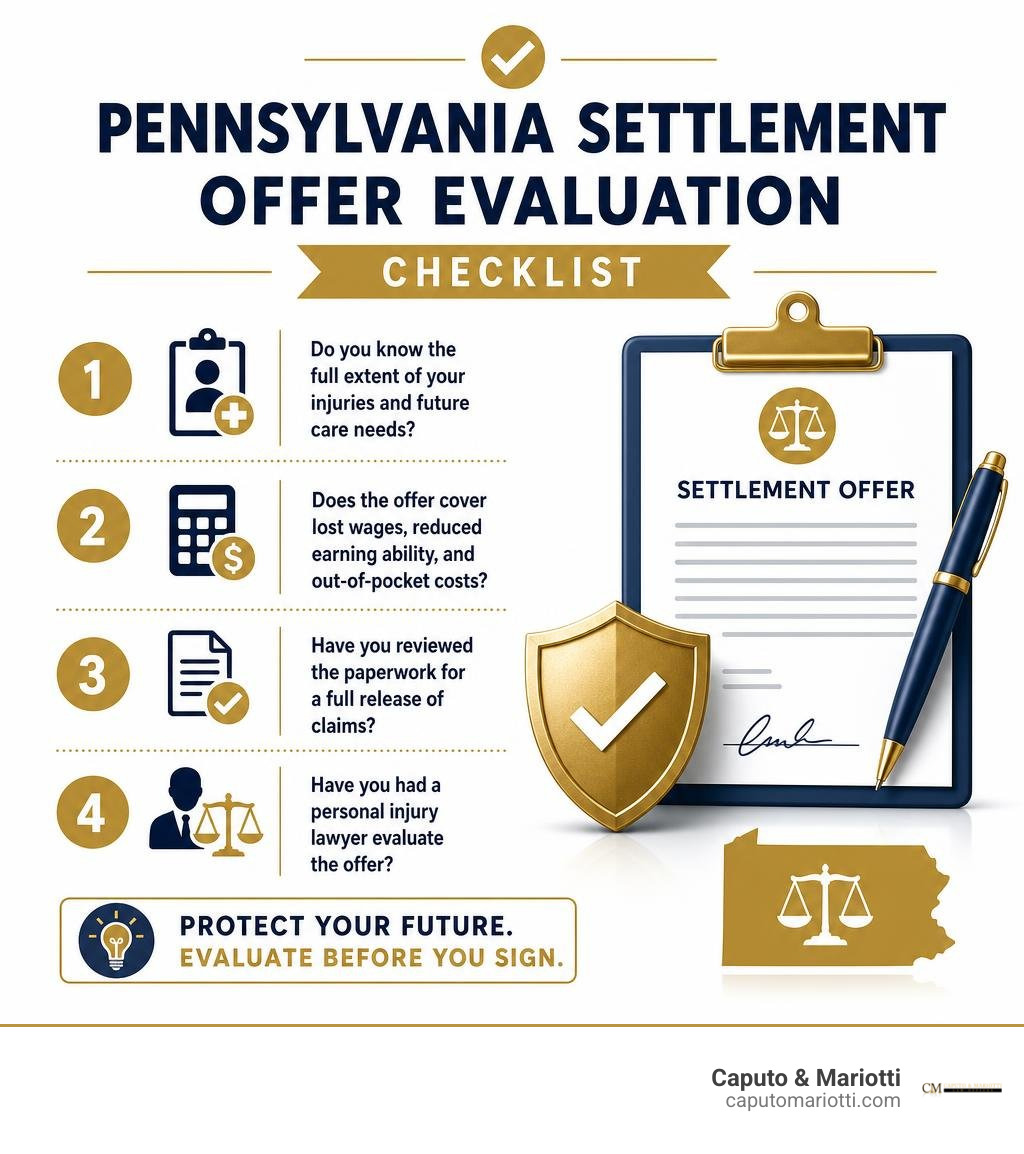
Use this quick check before responding:
- Do you know the full extent of your injuries and future care needs?
- Does the offer cover lost wages, reduced earning ability, and out-of-pocket costs?
- Have you reviewed the paperwork for a full release of claims?
- Have you had a personal injury lawyer evaluate the offer?
Early offers can feel helpful when bills are piling up. But insurers often seek a quick resolution before the long-term effects of an injury are clear. If you accept and sign a release, you will generally be unable to pursue additional compensation if your condition worsens.
I am Chris Caputo, a Pennsylvania personal injury attorney who has represented injured people and families since 2007 after years of litigation and trial work. If you are asking, should I accept a settlement offer Pennsylvania, my experience evaluating and litigating injury claims can help you assess whether an offer protects your future before you sign.
Know your should i accept a settlement offer pennsylvania terms:
Understanding Why Insurance Companies Make Early Settlement Offers
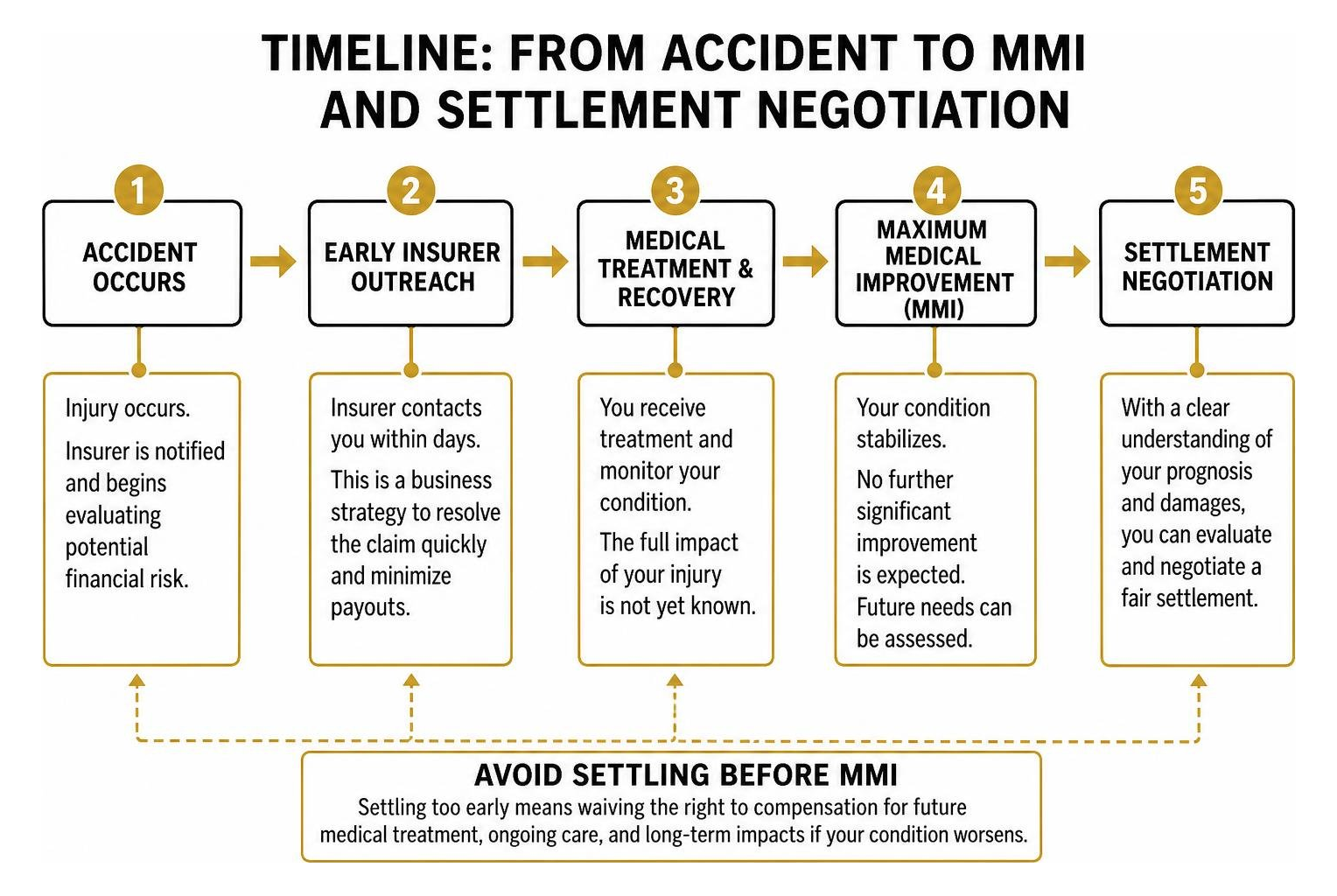
When an injury occurs in Scranton, Wilkes-Barre, or anywhere across Northeastern Pennsylvania, the liable party’s insurer often reaches out within days. This initial outreach might seem compassionate on the surface, but it is actually a calculated business strategy. Insurance companies are for-profit corporations with entire teams dedicated to minimizing claim payouts and mitigating financial exposure.
Understanding how insurance companies calculate injury settlements helps demystify why adjusters act so quickly. Adjusters evaluate potential financial risk immediately after a crash, fall, or medical negligence event. If liability is undeniable, their primary objective shifts to settling the claim before the claimant realizes the total scope of the financial and physical losses.
The Real Motivation Behind Quick Initial Payouts
The primary motive behind an early settlement offer is claims closure speed. When insurers resolve a claim before an injured victim speaks with legal counsel, they eliminate the risk of facing larger demands for future medical care or extensive non-economic damages.
Adjusters know that accident victims are vulnerable. Medical bills accumulate, wages stop due to missed work, and immediate expenses create severe financial strain. An offer of immediate cash can feel like a lifeline. However, this quick relief is often a fraction of what the claim is genuinely worth. When navigating insurance claims after an injury: a guide to dealing with insurance companies, adjusters may use recorded statements or polite inquiries to obtain statements that weaken the case, all while preparing an undervalued offer.
Should I Accept a Settlement Offer Pennsylvania Adjusters Push Before Maximum Medical Improvement?
One of the most dangerous missteps after an injury in Lackawanna County or Luzerne County is settling before reaching Maximum Medical Improvement (MMI). MMI is the stage in medical recovery where an injured person’s condition has stabilized, and no further significant improvement is expected, even with continuing medical intervention.

Before reaching MMI, calculating the true financial toll of an injury remains impossible. A mild back strain can evolve into a herniated disc requiring spinal fusion surgery. Ongoing physical therapy might fail to restore full mobility, resulting in permanent disability. Reaching the MMI milestone: when your medical journey reaches its max provides doctors and legal advocates with the medical clarity necessary to project lifetime care costs accurately. Accepting a settlement before reaching MMI means waiving the right to compensation for medical treatments that haven’t even been identified yet.
Key Factors: Should I Accept a Settlement Offer Pennsylvania Claimants Receive?
Deciding whether to sign an offer requires looking far beyond your current out-of-pocket expenses. Evaluating a claim requires examining every direct and indirect impact the injury has had on your day-to-day life and future financial security.
Understanding the full scope of understanding compensation in personal injury cases: a deep dive into damages allows you to separate adequate financial recoveries from inadequate early offers. When government bodies negotiate institutional settlements—such as the regional frameworks outlined by the Opioid Settlement Fund Committee – Welcome to Lackawanna County, PA—every long-term community cost is itemized. Individual injury victims must approach their personal claims with the exact same rigor.
| Evaluation Category | Short-Term Initial Offer | Comprehensive Full Valuation |
|---|---|---|
| Medical Expenses | Covers only emergency room visits and initial care | Includes past, present, and projected future surgeries, therapy, and medications |
| Lost Wages | Pays only for initial days missed from work | Accounts for long-term diminished earning capacity and lost retirement contributions |
| Non-Economic Loss | Minimal or completely omitted | Full calculation for physical pain, suffering, disfigurement, and loss of life enjoyment |
| Healthcare Liens | Left unpaid, making the victim personally responsible | Fully accounted for and negotiated down during settlement distribution |
| Long-Term Risk | Victim bears 100% of future complication costs | Insurer pays a complete financial recovery to insulate the victim against future costs |
Calculating Economic and Non-Economic Damages Accurately
A fair settlement in Pennsylvania must address two distinct categories of damages: economic and non-economic.
- Economic Damages: These are the quantifiable financial losses directly caused by the accident. They include past and future hospital bills, surgical fees, prescription costs, physical therapy, medical equipment, lost wages, and transportation costs for medical treatment.
- Non-Economic Damages: These intangible losses reflect the personal and physical impact of an injury. They include physical pain, emotional distress, physical impairment, loss of consortium, and loss of life’s pleasures. To properly calculate intangible losses, refer to the ultimate checklist for can i sue for emotional distress in pennsylvania.
Impact on Future Medical Expenses and Earning Capacity
Settling too soon often leaves future financial obligations uncovered. If an injury prevents you from returning to your prior profession in Moosic, Pittston, or Hazleton, you may face a permanent loss of earning capacity. A comprehensive valuation accounts for the wages, promotions, and retirement contributions lost over your working lifetime.
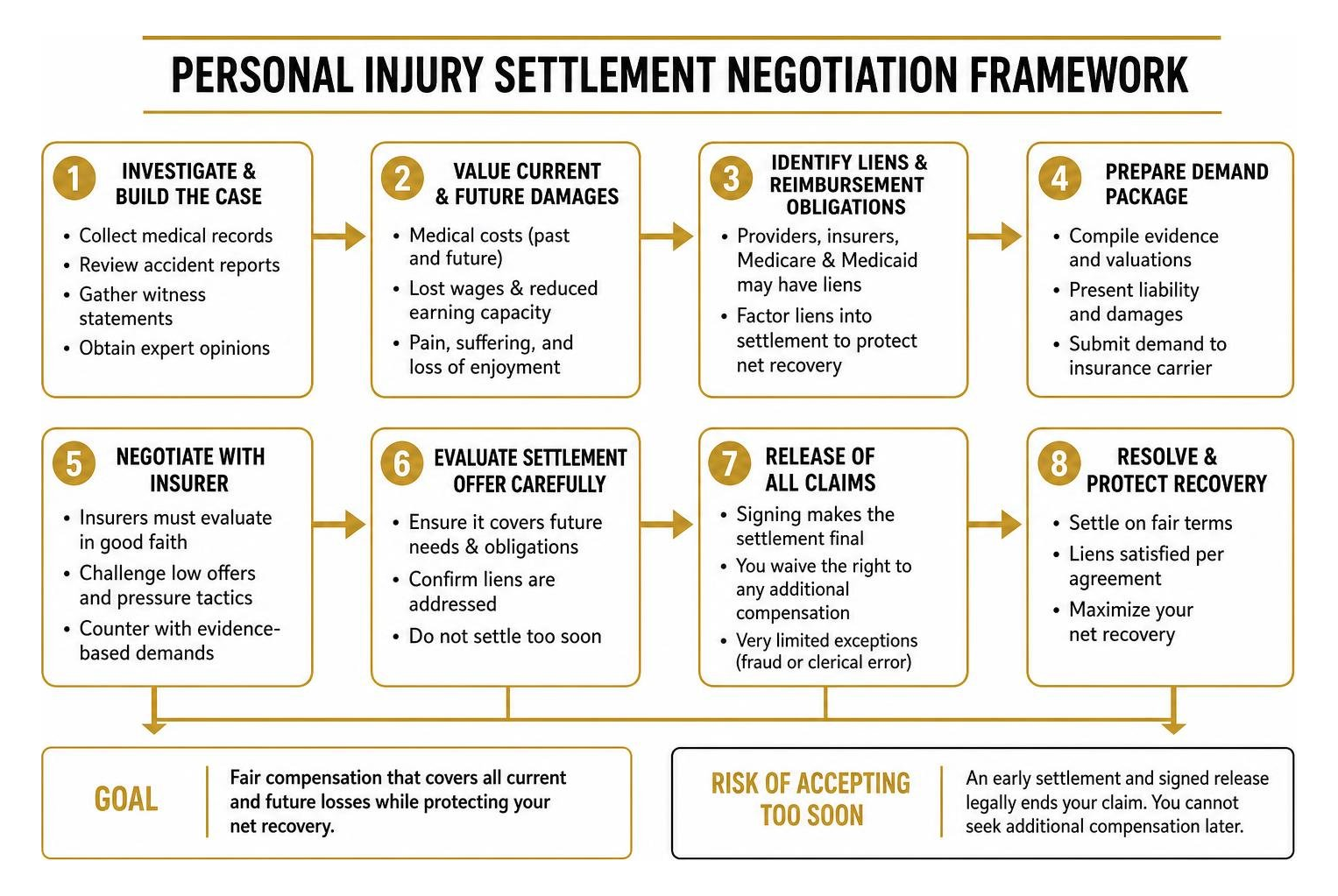
Furthermore, medical providers, private health insurers, Medicare, and Medicaid often hold statutory rights of reimbursement or medical liens against personal injury settlements. If a settlement agreement does not factor in these obligations, a large portion—or all—of the settlement check could be seized by healthcare providers. Knowing how to protect your net recovery is essential: don’t let liens ruin your pennsylvania personal injury settlement.
For workplace injuries, the process differs. Pennsylvania operates a no-fault workers’ compensation system requiring specific reporting protocols: you must report an injury to your employer within 21 days to receive benefits from the date of injury, and no later than 120 days or the claim may be barred completely. Workers must seek treatment from an employer-designated panel physician for the first 90 days if properly posted. Navigating medical records, witness statements, filing a formal Claim Petition, or appealing a Notice of Denial requires the specialized skill of a workers’ compensation lawyer.
Risks of Accepting the First Offer and What You Waive
The single greatest danger of accepting an early settlement offer is the legal finality it brings. When you accept an insurance settlement, you are required to sign a comprehensive “Release of All Claims” document.

This document is an enforceable, irreversible contract. Once signed, you permanently surrender your legal right to pursue any additional funds from the at-fault party or their insurer for the incident in question. Reviewing common claim pitfalls like things to avoid during the personal injury claim process helps safeguard your right to fair compensation. In both individual injury claims and broader civil matters—such as the Settlement Reached in Lawsuit Over Luzerne County, Pennsylvania’s … voting dispute—settlement contracts legally extinguish further claims.
Can You Seek Additional Compensation After Signing a Release?
No. Except in extremely rare instances of outright fraud or mutual clerical mistake, a signed settlement release in Pennsylvania is legally binding and final. Even if you discover months later that you require a costly spinal fusion or can never work again, you cannot reopen the claim. The financial burden of those unexpected medical bills falls squarely on your shoulders. Mastering the nuances of the release agreement is vital, which is detailed in mastering the settlement process: maximizing compensation and concluding your personal injury claim.
Should I Accept a Settlement Offer Pennsylvania First-Party Insurers Lowball?
When dealing with lowball offers from your own insurer (such as uninsured/underinsured motorist coverage or first-party medical benefits) or a third-party liability insurer, you are not obligated to accept unfair numbers. Insurers may employ artificial deadlines, telling you the offer “expires by Friday” or that “this is the highest number available under company policy.”
These are standard negotiation maneuvers designed to create urgency. In Pennsylvania, insurers are legally obligated to evaluate claims in good faith. You have the legal right to challenge an unreasonably low valuation. Understanding your rights versus insurance companies ensures you do not succumb to high-pressure settlement tactics.
How an Attorney Evaluates and Negotiates a Fair Settlement
Evaluating a personal injury settlement offer requires a thorough investigation of liability and damages. Personal injury lawyers collect medical records, consult with healthcare specialists, calculate present and future wage losses, and structure comprehensive demand packages backed by hard evidence.
Investigating accident reports, witness statements, and expert medical opinions levels the legal playing field against corporate defense teams. In personal injury cases, using evidence effectively is critical; you can read more in the role of evidence in personal injury claims: a comprehensive guide. Working with a dedicated personal injury attorney in Scranton and Wilkes-Barre PA ensures your case is handled with the experience and resources necessary to seek maximum financial recovery.
Your Legal Rights When Dealing with Insurance Adjusters
As an injured claimant in Pennsylvania, you have important legal protections when interacting with insurance carriers:
- Right to Decline Recorded Statements: You are generally not required to provide a recorded statement to the at-fault driver’s insurance adjuster. These statements are frequently scrutinized for ambiguities that can be used to dispute fault.
- Right to Independent Legal Counsel: You have the absolute right to have an attorney handle all correspondence, claim evaluations, and negotiations.
- Protection Against Bad Faith: Under Pennsylvania law (42 Pa.C.S. § 8371), insurance carriers must handle claims in good faith. Frivolous denials or unreasonable delays can expose them to bad faith litigation.
Learn more about defending your interests in our guide to your rights against insurance companies.
When to Consult Legal Representation in Pennsylvania
You should strongly consider consulting an attorney if:
- Your injuries require ongoing medical treatment, surgery, or long-term rehabilitation.
- Fault for the accident is disputed, or multiple parties are involved.
- The claim involves complex issues like medical malpractice, commercial truck crashes, or wrongful death.
- The insurance carrier is delaying communication, denying liability, or pushing an immediate lowball offer.
Selecting legal counsel with regional courtroom experience is essential. Review our guide on how to choose the right personal injury lawyer in Scranton to understand how contingency fee structures ensure you pay nothing upfront for legal representation.
Frequently Asked Questions About Pennsylvania Settlement Offers
What happens if I reject an initial settlement offer in Pennsylvania?
Rejecting an initial settlement offer does not end your claim. Instead, it serves as the starting point for negotiations. Your attorney will issue a formal counteroffer backed by medical records, wage documentation, and legal precedents detailing the full value of your damages. If the insurance carrier refuses to negotiate in good faith, your lawyer can file a formal personal injury lawsuit in the appropriate county court.
Can I reopen an injury claim if my medical condition worsens?
Under Pennsylvania law, once you execute a signed Release of All Claims and deposit the settlement proceeds, your claim is concluded. You cannot reopen the claim or demand additional compensation, even if your physical condition deteriorates or your doctors recommend surgery. This is why you should never settle a claim before reaching Maximum Medical Improvement.
How long do I have to accept or reject an injury settlement in PA?
In Pennsylvania, the statute of limitations for personal injury lawsuits (42 Pa.C.S. § 5524) is generally two years from the date of the injury. Insurance adjusters often set artificial, short-term deadlines to pressure you into settling quickly. While you do not need to accept an early offer within their arbitrary timeframe, you must formally settle the claim or file a lawsuit in court before the two-year statutory window expires. For more details, consult understanding the statute of limitations for personal injury cases in Scranton.
Conclusion
Deciding whether to accept an insurance settlement is one of the most critical financial choices you will make following an accident. A premature settlement may offer short-term relief, but it often leaves injured victims shouldering the burden of long-term medical care, unpaid healthcare liens, and lost earnings.
At Caputo & Mariotti, we bring more than 55 years of combined legal experience to personal injury, medical malpractice, and accident claims across Scranton, Wilkes-Barre, Lackawanna County, Luzerne County, and all of Northeastern Pennsylvania. Our dedicated team is committed to holding insurance companies accountable and securing the justice our clients deserve.
Before signing away your rights, let our experienced legal team review your settlement offer to ensure it truly meets your long-term needs. Schedule a free personal injury consultation today to discuss your case with an experienced advocate.
