

The dedicated legal team of Caputo & Mariotti
Step-by-Step Guide to What Qualifies as Nursing Home Negligence in Pennsylvania
June 24, 2026
When Families Need Answers: What Qualifies as Nursing Home Negligence in Pennsylvania
What qualifies as nursing home negligence in Pennsylvania comes down to four core legal elements a victim must prove:
| Legal Element | What It Means |
|---|---|
| Duty of care | The facility had a legal obligation to provide proper care |
| Breach of duty | The facility or staff failed to meet the required standard of care |
| Causation | That failure directly caused harm to the resident |
| Damages | The resident suffered real, compensable injuries as a result |
Common examples that meet this legal standard include:
- Untreated bedsores (pressure ulcers) from failure to reposition residents
- Malnutrition or dehydration from inadequate feeding assistance
- Falls caused by understaffing or ignored fall-risk care plans
- Medication errors
- A resident with dementia wandering away due to inadequate supervision
Pennsylvania nursing homes are bound by both federal law (the Nursing Home Reform Act) and state law (the Older Adults Protective Services Act). When a facility falls short of those standards and a resident is harmed, that can be negligence.
Nearly one-third of U.S. nursing homes have been cited for failing to meet resident care standards — and 10% of those violations caused serious harm. Abused or neglected elders are 300% more likely to suffer premature death. These are not abstract statistics. They represent real families in real pain.
At Caputo & Mariotti, our Pennsylvania personal injury attorneys have decades of litigation experience, including representing families harmed by institutional negligence. Understanding what qualifies as nursing home negligence in Pennsylvania is the foundation of every case we handle for injured residents and their families. In the guide below, we’ll walk you through the legal standards, warning signs, and steps you can take to protect your loved one.
What Qualifies as Nursing Home Negligence Pennsylvania?

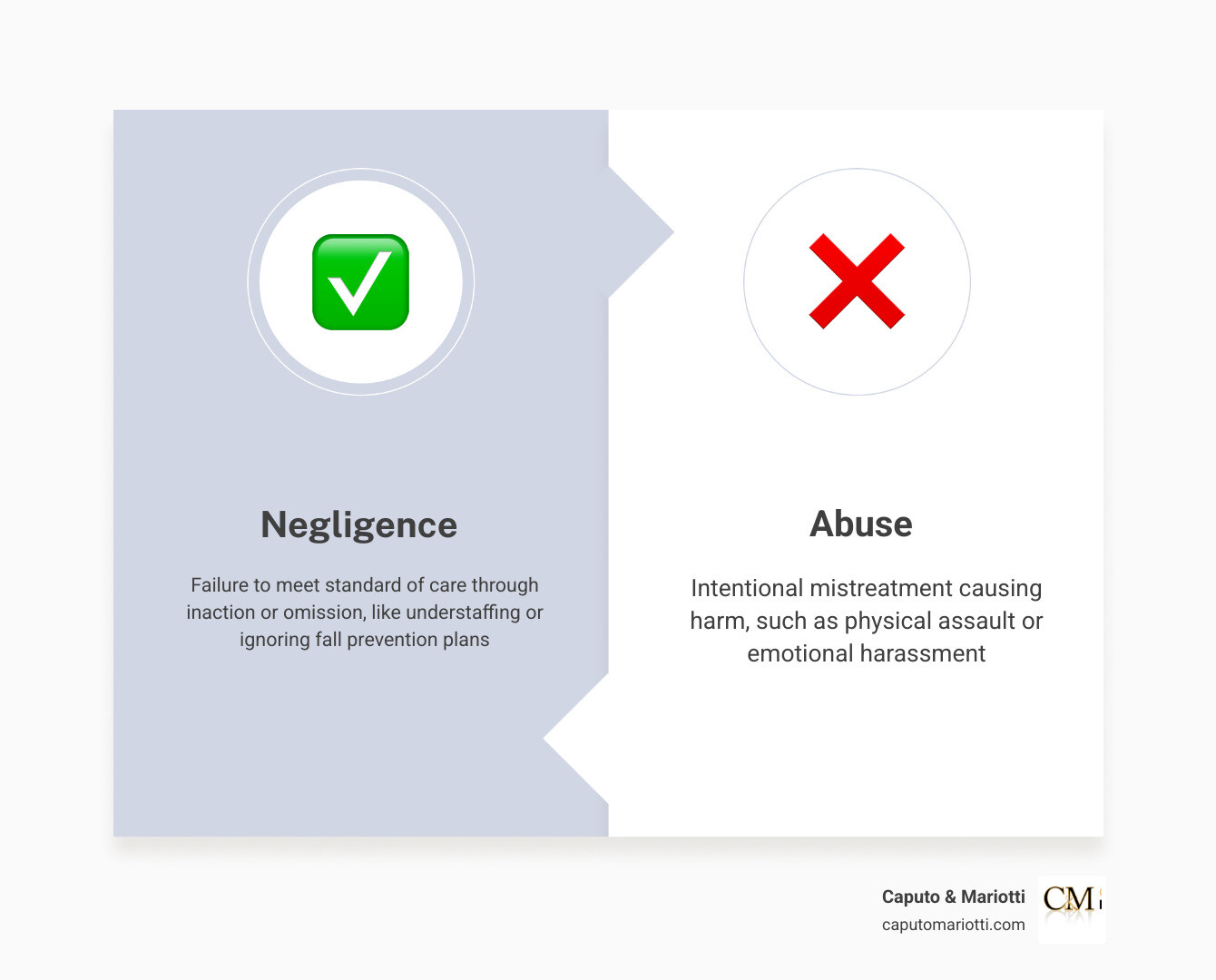
In the legal world, negligence isn’t just a “mistake.” It is a specific failure to act with the level of care that a reasonable person or facility would have exercised under similar circumstances. In Pennsylvania, nursing homes have a “high duty of care” because they accept payment to protect some of our most vulnerable citizens.
To establish what qualifies as nursing home negligence in Pennsylvania, we must look at the four pillars of a personal injury claim:
- Duty of Care: By admitting a resident, the facility enters a contract and a legal relationship. They are required by law to provide a safe environment and medical care that meets established standards.
- Breach of Duty: This occurs when the facility fails to do what it was supposed to do. For example, if a resident is a known fall risk but staff leaves them unmonitored while trying to use the restroom, that is a breach.
- Proximate Cause: We must prove that the breach directly led to the injury. If a resident falls because the floor was wet and there were no signs, the wet floor is the proximate cause of the broken hip.
- Compensable Damages: There must be a measurable loss. This includes medical bills, physical pain, emotional distress, or, in the most tragic cases, funeral expenses.
For a deeper dive into the specific hazards that lead to these claims, you can read more about Nursing Home Injury Risk.
Identifying What Qualifies as Nursing Home Negligence Pennsylvania in Daily Care
Negligence often hides in the “boring” details of daily life. It isn’t always a dramatic event; it is frequently the slow erosion of care.
- Physical Neglect: Failure to provide the physical assistance a resident needs. This includes failing to help with mobility, which leads to Nursing Home Injury Risk, or failing to turn a bedridden patient every two hours.
- Medical Neglect: This involves failing to administer medications correctly, failing to monitor a changing medical condition, or failing to report new symptoms to a physician.
- Basic Needs: Pennsylvania law requires facilities to provide adequate food, water, and a clean environment. If a resident is constantly thirsty or hungry, the facility is failing its most basic obligation.
- Hygiene Failures: Leaving residents in soiled clothing or bedding for extended periods is a form of neglect that leads to skin breakdowns and infections.
Recognizing these issues early can save lives. Our guide on Nursing Home Abuse in Pennsylvania Recognizing the Signs and Taking Action provides a roadmap for families who suspect something is wrong.
Federal and State Mandates for PA Facilities
Pennsylvania nursing homes do not get to “set their own rules.” They are governed by strict mandates:
- Nursing Home Reform Act (1987): A federal law ensuring residents have the right to be free from physical or mental abuse, corporal punishment, and involuntary seclusion.
- Older Adults Protective Services Act (OAPSA): This Pennsylvania law requires employees and administrators to report suspected abuse or neglect to the Department of Aging.
- Staffing Ratios: As of July 2024, Pennsylvania has implemented higher standards for direct care. Facilities are now required to provide a minimum of 3.2 hours of direct care per resident per day. This is a critical metric; when staffing drops below this, the risk of negligence skyrockets.
- Resident Bill of Rights: Every resident in a PA facility has the right to dignity, privacy, and the right to participate in their own care planning.
Common Examples of Neglect and Abuse in PA Facilities

When we investigate what qualifies as nursing home negligence in Pennsylvania, we often see the same patterns of failure. These are not “accidents”—they are the results of systemic issues like understaffing and poor training.
- Bedsores (Pressure Ulcers): These are almost always preventable. They occur when a resident is left in one position for too long. If a bedsore reaches Stage 3 or 4, it is a glaring red flag of neglect.
- Malnutrition and Dehydration: Statistics show that 2 out of 5 nursing home residents suffer from malnutrition. This often happens because there aren’t enough staff members to actually help residents eat their meals.
- Falls and Mobility Injuries: While seniors are more prone to falls, facilities are required to perform “fall risk assessments.” If they know a resident is likely to fall but fail to provide bedrails, walkers, or supervision, they may be liable.
- Medication Errors: Giving the wrong dose, the wrong drug, or skipping doses entirely can be fatal.
- Unsanitary Living Conditions: Pest infestations, mold, or uncleaned spills are signs of a facility that has given up on maintaining a standard of care.
If you notice these issues, do not wait. Check our list of Signs Red Flags of Nursing Home Abuse in PA You Shouldn’t Ignore to see if your loved one’s experience matches these common patterns.
Legal Responsibility and Vicarious Liability
One of the most important legal concepts in these cases is vicarious liability (also known as respondeat superior). This means that the nursing home as an entity is responsible for the actions of its employees.
If a nurse’s aide fails to properly secure a resident in a wheelchair and the resident falls, the nursing home cannot simply blame the aide and walk away. Because the aide was acting within the “scope of employment,” the facility itself is legally responsible.
- Corporate Negligence: This goes beyond individual staff errors. It looks at whether the corporation failed to hire enough people, failed to conduct background checks, or created policies that prioritized profit over patient safety.
- Systemic Understaffing: When a facility consistently operates below the 3.2-hour direct care mandate, they are creating an environment where negligence is inevitable.
- Inadequate Training: If staff aren’t trained on how to spot a developing infection or how to use a Hoyer lift safely, the facility is liable for the resulting injuries.
Understanding these layers of responsibility is key to securing fair Nursing Home Lawsuit Settlements that cover the full extent of the harm done.
Proving What Qualifies as Nursing Home Negligence Pennsylvania in Court
Proving negligence requires more than just a gut feeling. We build cases using a “preponderance of evidence.”
- Medical Records and Charts: We look for gaps in charting. If a resident was supposed to be turned every two hours but the chart shows no entries for eight hours, that is powerful evidence.
- Facility Staffing Logs: These logs tell us if the facility was dangerously understaffed on the day your loved one was injured.
- Witness Statements: We interview other residents, visiting family members, and even “whistleblower” employees.
- Expert Medical Testimony: We often bring in doctors or nursing experts to testify about what the “standard of care” should have been and how the facility failed to meet it.
If you are wondering, “Have You Suffered an Injury in a Nursing Home?“, the first step is always gathering this documentation before the facility has a chance to “lose” it.
Reporting Negligence and Filing a Claim in Pennsylvania
If you suspect neglect, you need to act quickly. Pennsylvania has specific channels for reporting and strict deadlines for filing lawsuits.
| Agency | Role | Contact Info |
|---|---|---|
| PA Dept. of Health | Regulates and licenses facilities; investigates complaints | 1-800-254-5164 |
| Adult Protective Services | Investigates abuse/neglect of adults with disabilities | 1-800-490-8505 |
| Long-Term Care Ombudsman | Advocates for resident rights and resolves disputes | Local Area Agency on Aging |
Statute of Limitations: In Pennsylvania, you generally have two years from the date of the injury (or the date the injury was discovered) to file a lawsuit. This applies to both personal injury and wrongful death claims. However, the “discovery rule” can sometimes extend this if the neglect was hidden, but you should never count on an extension.
Whether you need a Scranton Nursing Home Abuse Lawyer or a Wilkes-Barre Nursing Home Lawyer, our team at Caputo & Mariotti is ready to help you navigate these deadlines.
Frequently Asked Questions
What is the statute of limitations for nursing home negligence in PA?
In Pennsylvania, the statute of limitations is typically two years from the date the negligence occurred or was discovered. If a loved one passes away due to neglect, the family has two years from the date of death to file a wrongful death claim. Because evidence like staffing logs and video footage can disappear quickly, it is vital to contact an attorney as soon as you suspect a problem.
Who can be held legally responsible for nursing home neglect?
Liability can extend to multiple parties:
- The facility owners and the parent corporation.
- Management companies hired to run the day-to-day operations.
- Nursing staff and administrators.
- Third-party contractors, such as food service or physical therapy providers, if their specific actions caused the harm.
How do I report suspected neglect in a Pennsylvania facility?
For immediate danger, always call 911. For ongoing concerns, file a report with the Pennsylvania Department of Health at 1-800-254-5164. You should also contact the Long-Term Care Ombudsman, who acts as a free advocate for residents. Finally, documenting the evidence yourself—taking photos of injuries and keeping a log of dates and times—is essential for any future legal action.
Conclusion
At Caputo & Mariotti, we believe that our elders deserve to live their final years with dignity and respect. With over 55 years of combined experience, our team has seen the devastation that nursing home negligence causes families in Scranton, Wilkes-Barre, Hazleton, and throughout Northeastern Pennsylvania. We are committed to holding these facilities accountable when they prioritize their bottom line over human lives.
In addition to medical malpractice and nursing home litigation, our firm assists those injured on the job. Our workers’ compensation lawyer handles the no-fault system, reporting requirements, medical treatment coordination, evidence gathering (witnesses and records), documentation, filing procedures, and legal appeals.
If you suspect your loved one has been a victim of neglect, don’t wait for the facility to “explain it away.” Contact us for a free consultation today, and let us help you find the justice your family deserves.