
The dedicated legal team of Caputo & Mariotti
Zantac Litigation: A Comprehensive Guide to Recent Developments
February 15, 2026
Understanding the Zantac Litigation Landscape
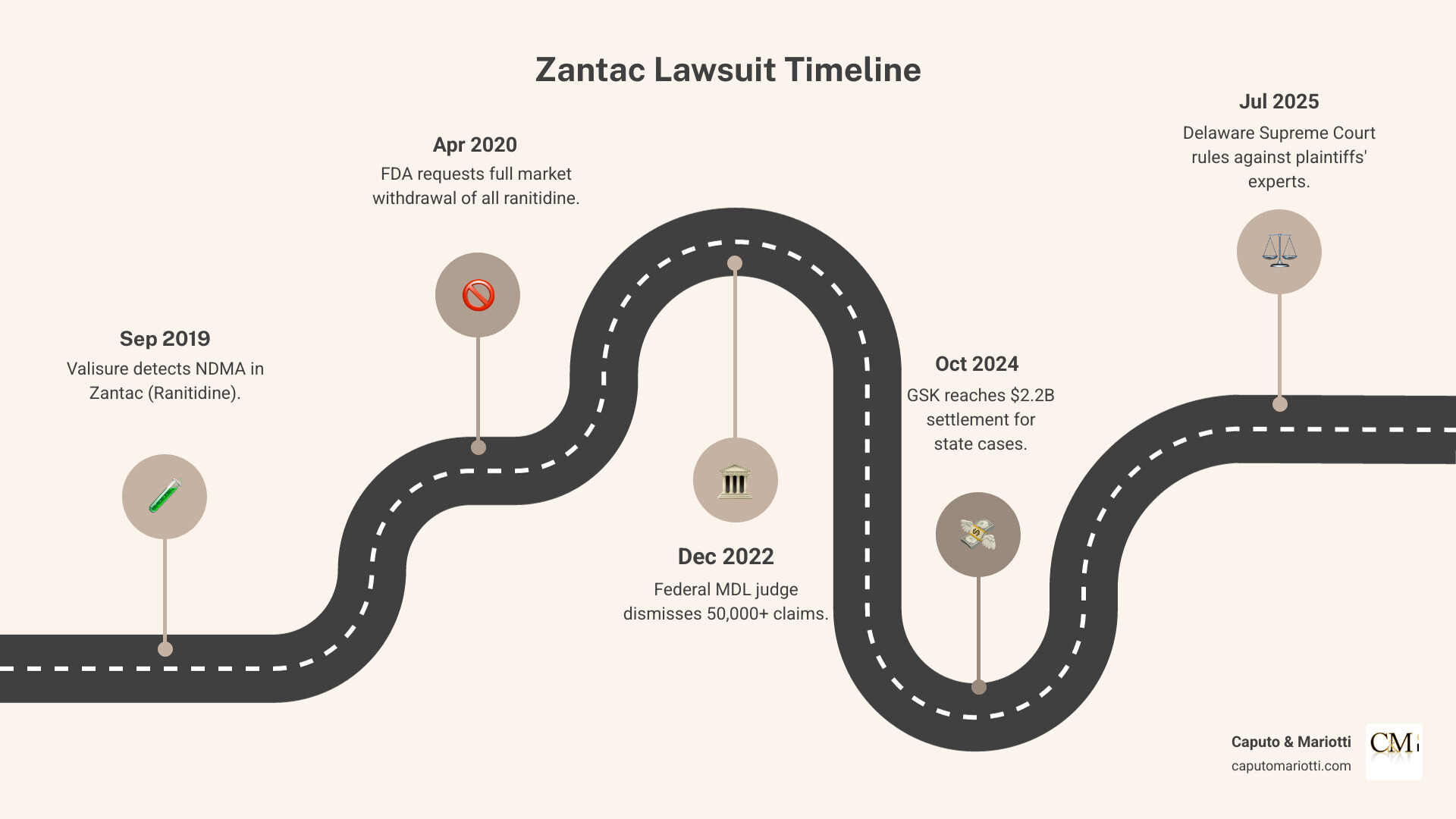
The latest update on zantac lawsuit developments shows a complex legal landscape where approximately 80,000 cases have been settled by major pharmaceutical companies for up to $2.2 billion, while ongoing litigation continues against remaining defendants. Here’s what you need to know right now:
Key Recent Developments:
- GSK Settlement: Agreed to pay up to $2.2 billion to resolve approximately 93% of state court cases (about 80,000 lawsuits)
- Pfizer & Sanofi: Settled most of their state court cases, with Sanofi resolving approximately 4,000 claims
- Delaware Supreme Court: Ruled in July 2025 against plaintiffs, excluding expert testimony in nearly 75,000 cases
- Illinois Trials: Multiple defense verdicts and mistrials, with no jury yet finding Zantac caused cancer
- Boehringer Ingelheim: Continues to fight cases and denies wrongdoing
- Federal Appeal: Oral arguments scheduled for October 6, 2025, before the U.S. Court of Appeals for the Eleventh Circuit
What This Means: While major settlements have resolved most claims against GSK, Pfizer, and Sanofi, litigation continues against other defendants. The legal battle now centers on state courts after federal cases were dismissed in 2022.
The Zantac litigation stems from allegations that ranitidine, the active ingredient in the once-popular heartburn medication, degrades into NDMA (N-nitrosodimethylamine), a probable human carcinogen. After the FDA requested the market withdrawal of all ranitidine products in April 2020, tens of thousands of individuals who developed cancer filed lawsuits against the drug’s manufacturers.
This legal battle has taken dramatic turns. A federal judge dismissed over 50,000 claims in the multidistrict litigation (MDL) in 2022, ruling that plaintiffs’ scientific experts used unreliable methodologies. However, state courts have shown more willingness to let cases proceed, particularly in Delaware, which saw over 70,000 cases filed—though recent rulings have now excluded key expert testimony there as well.
The pharmaceutical companies involved—GlaxoSmithKline (GSK), Pfizer, Sanofi, and Boehringer Ingelheim—have consistently maintained that scientific evidence does not support a link between Zantac and cancer. Despite this stance, the massive settlements suggest a strategic decision to resolve litigation risk rather than continue fighting in court.
Caputo & Mariotti is a Pennsylvania-based personal injury firm focused on helping people harmed by negligence, with a dedicated practice for dangerous drug cases like Zantac. Our team closely tracks every latest update on the Zantac lawsuit so we can clearly explain your rights, evaluate potential claims, and guide you through this evolving mass tort litigation.
The Scientific Heart of the Lawsuit: Ranitidine, NDMA, and Cancer Risk
At the core of the Zantac litigation is a critical scientific concern: the instability of its active ingredient, ranitidine. This compound, once a staple for treating heartburn and stomach acid issues, has been found to degrade into a dangerous substance.
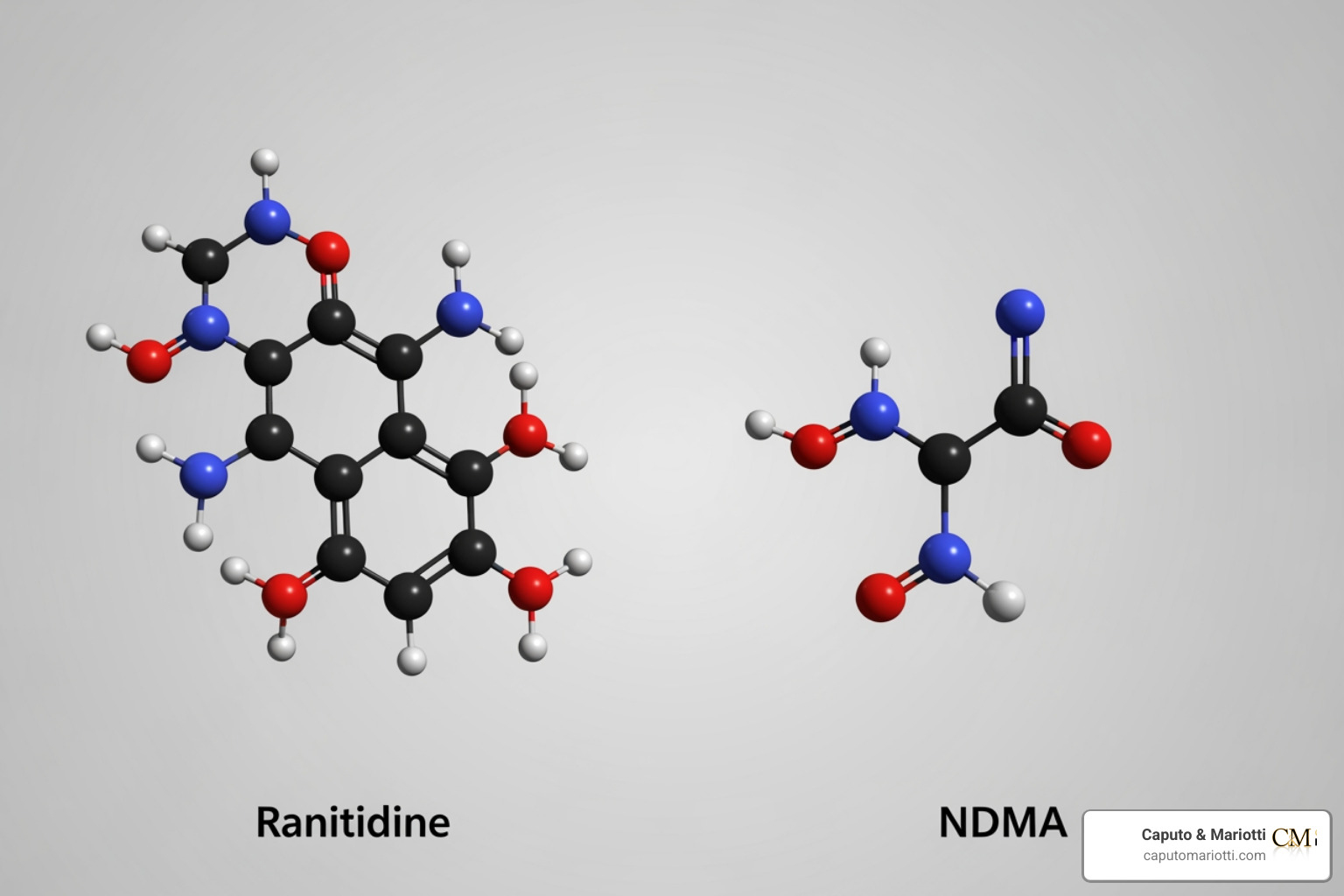
The substance in question is N-nitrosodimethylamine (NDMA), a chemical classified as a probable human carcinogen by leading health organizations, including the U.S. Environmental Protection Agency (EPA), the World Health Organization (WHO), and the International Agency for Cancer Research (IARC). This means there is strong evidence suggesting NDMA can cause cancer in humans.
The U.S. Food and Drug Administration (FDA) first raised alarms in 2019 after finding trace amounts of NDMA in Zantac. Their subsequent investigation, detailed in the FDA’s findings on NDMA in Zantac, revealed that the level of this impurity in ranitidine products could increase over time and when exposed to higher temperatures. This degradation meant that consumers could potentially be exposed to unacceptable levels of NDMA. Studies also indicated that degradation could occur not only during storage but also inside a patient’s stomach, especially when Zantac was taken with high-nitrate foods. This ultimately led the FDA to request the removal of all ranitidine products from the market in April 2020.
The dangers of NDMA are not theoretical. A CDC study on NDMA toxicity highlighted severe medical concerns, showing that test animals exposed to NDMA developed serious conditions, including lung cancer, liver cancer, liver damage/failure, and even internal bleeding. For context, the FDA’s acceptable daily intake limit for NDMA is approximately 0.096 micrograms. However, some Zantac tablets were found to contain significantly higher levels, with some tests reporting as much as 0.36 micrograms per tablet, and even drastically higher levels under simulated gastric conditions.
Understanding these scientific findings is paramount for anyone who has used Zantac and subsequently developed health issues. Our firm, Caputo & Mariotti, has digged deep into Zantac Ranitidine Side Effects: What You Need to Know to provide comprehensive legal representation to our clients across Pennsylvania, New York, and New Jersey.
Cancers Named in Zantac Lawsuits
Based on the scientific understanding of NDMA and the claims brought by plaintiffs, various types of cancer have been associated with Zantac (ranitidine) use. These include:
- Bladder cancer
- Stomach cancer
- Esophageal cancer
- Liver cancer
- Pancreatic cancer
- Colorectal cancer
- Prostate cancer
- Breast cancer
- Kidney cancer
These are the cancers most frequently alleged in Zantac lawsuits. While all are serious, bladder, liver, and stomach cancers are often considered to have stronger scientific links to NDMA exposure in the context of this litigation. If you or a loved one in Scranton, Wilkes-Barre, Hazleton, Dickson City, Pittston, or elsewhere in Northeastern Pennsylvania, New York, or New Jersey, developed any of these cancers after using Zantac, we encourage you to seek legal advice to understand your potential personal injury claim.
A Tale of Two Courts: Federal MDL Dismissal vs. State-Level Battles
The legal journey for Zantac victims has unfolded across two distinct arenas: the federal Multidistrict Litigation (MDL) and numerous state court systems. This division has led to vastly different approaches and outcomes, creating a complex and often contradictory legal landscape.

The Federal Zantac MDL: A Critical Ruling
The federal Zantac litigation, known as MDL 2924, was centralized in the U.S. District Court for the Southern District of Florida under Judge Robin L. Rosenberg. This consolidation was designed to streamline the pre-trial process for tens of thousands of similar cases filed across the country.
However, a pivotal moment arrived on December 6, 2022. Judge Rosenberg issued a comprehensive 341-page opinion granting summary judgment in favor of the drug manufacturers—including GlaxoSmithKline (GSK), Pfizer, Sanofi, and Boehringer Ingelheim. This decision effectively dismissed over 50,000 pending claims. The heart of this ruling hinged on the Daubert standard, which dictates the admissibility of expert scientific testimony in federal courts. Judge Rosenberg concluded that the scientific methodologies used by the plaintiffs’ experts to link ranitidine to cancer were unreliable, thus excluding their testimony. Without this crucial expert evidence, the plaintiffs could not establish causation, leading to the dismissal of their cases.
This federal dismissal was a significant setback for plaintiffs, but the battle continues. Plaintiffs have appealed this decision to the U.S. Court of Appeals for the Eleventh Circuit. Oral arguments for this appeal were scheduled for October 6, 2025, a date that could critically determine the future of these federal cases. We are watching this development, as the outcome will impact many individuals across the country, including those in our service areas of Pennsylvania, New York, and New Jersey.
State Court Progress: Delaware and Illinois in the Spotlight
In stark contrast to the federal MDL, state court litigations initially offered a more varied and, in some instances, more promising path for plaintiffs. State courts are not bound by federal rulings and apply their own evidentiary standards, which can differ from the strict Daubert standard.
Delaware Litigation: Delaware quickly emerged as a central battleground, consolidating nearly 75,000 Zantac cases. Initially, a Delaware Superior Court judge ruled to allow plaintiffs’ expert testimony, seemingly paving the way for trials. However, in a dramatic turn of events, the Delaware Supreme Court, on July 10, 2025, sided with the Zantac drugmakers. This ruling excluded the expert reports that claimed Zantac caused cancer, asserting that they were not supported by reliable scientific methodology. This decision effectively mirrored the federal MDL outcome, representing a significant challenge for plaintiffs in Delaware. The drugmakers had successfully appealed the lower court’s ruling, highlighting the ongoing legal problems. This ruling is a critical development that will influence strategies for mass tort cases in nearby states like Pennsylvania, New Jersey, and New York.
Illinois Bellwether Trials: Illinois has hosted several bellwether trials—test cases designed to gauge jury reactions and potential damages. These trials have generally resulted in defense victories or mistrials. For example, a Cook County, Illinois jury found in favor of GSK and Boehringer Ingelheim in one of the first Zantac jury trials in the U.S. Subsequent trials in Illinois, involving various cancer types, also led to defense verdicts or mistrials where juries could not agree on causation. As of September 2024, plaintiffs had not secured a clear victory in the initial bellwether trials. These outcomes are often cited by defendants as evidence that the scientific link between Zantac and cancer is not consistently provable in court.
Despite the recent challenges, the state court system remains a vital avenue for personal injury claims. Our firm understands the intricacies of these state-level battles and is equipped to steer Zantac cases for our clients. If you are pursuing a Zantac claim in the Wilkes-Barre area, our team can assist you with your lawsuit. We represent Zantac clients in Scranton, Hazleton, Dickson City, Pittston, and across Northeastern Pennsylvania, as well as New York, New Jersey, and Ohio.
Latest Update on Zantac Lawsuit Settlements and Company Positions
The Zantac litigation has seen significant movement towards resolution through settlement agreements, even as pharmaceutical companies maintain their stance on the drug’s safety.
Major Settlements Reshape the Litigation Landscape
Despite consistently denying any wrongdoing, several major pharmaceutical companies involved in the Zantac litigation have chosen to enter into substantial settlement agreements. These settlements are often a strategic business decision to manage vast litigation risks and avoid the prolonged costs and uncertainties of ongoing court battles.
- GSK Settlement: GlaxoSmithKline (GSK) announced a landmark agreement in October 2024, committing up to $2.2 billion to resolve approximately 93% of its U.S. state court Zantac product liability cases. This massive settlement encompasses around 80,000 lawsuits and is expected to be fully implemented by mid-2025. GSK also settled a related whistleblower (qui tam) complaint with Valisure for $70 million. While these settlements provide significant relief for many plaintiffs, GSK explicitly stated that they do not involve any admission of liability, reaffirming their belief that scientific evidence does not link ranitidine to cancer. You can find their official position in their Statement: Zantac (ranitidine) litigation – settlement agreements reached | GSK US.
- Pfizer Settlements: Pfizer has also moved to resolve a significant portion of its Zantac cases in state courts. Reports indicate that Pfizer has agreed to settle over 10,000 lawsuits, though the specific financial terms are often confidential.
- Sanofi Settlements: Similarly, Sanofi announced in April 2024 that it was settling approximately 4,000 cases related to Zantac.
- Confidential Agreements: Beyond these large-scale resolutions, numerous individual cases have been resolved through confidential settlements. For example, GSK confirmed confidential settlements in specific California state court cases, including those involving John Russell (bladder cancer) and Annette Hughes (colorectal cancer). Similar confidential agreements have been reached in Illinois and other states.
These major settlements represent a pivotal moment in the Zantac litigation, offering resolution for a vast number of plaintiffs, including potentially many of our clients across Pennsylvania, New York, and New Jersey. Navigating the complexities of these settlements and understanding your eligibility requires experienced legal guidance. Our team at Caputo & Mariotti is dedicated to assisting clients with their Zantac Lawsuit Claims Lawyers for Zantac Cancer Settlement.
Defendants’ Stance: A United Front on Scientific Evidence
Despite the considerable financial outlays in settlements, the pharmaceutical companies involved—GSK, Pfizer, Sanofi, and Boehringer Ingelheim—have maintained a consistent and unified defense: they vigorously deny that Zantac causes cancer.
- Corporate Defenses: The companies’ defense strategy centers on the argument that there is no consistent or reliable scientific evidence linking ranitidine to an increased risk of any cancer. GSK, for instance, has repeatedly cited 16 epidemiological studies that they claim support their position that scientific evidence does not support a link between Zantac and cancer. They contend that any NDMA found in Zantac was either below harmful levels or resulted from external factors.
- Denial of Causation: They argue that the drug’s molecular structure does not inherently lead to harmful NDMA formation in the body. This stance is crucial for their long-term corporate image and to limit future liability.
- Focus on Litigation Risk vs. Liability: The pharmaceutical giants often frame settlements as pragmatic business decisions to manage extensive litigation risk and avoid the substantial costs and distractions of protracted legal battles, rather than an admission of wrongdoing or liability. Boehringer Ingelheim, for example, continues to fight cases and explicitly denies any wrongdoing, indicating that the legal battle is not over for all defendants.
This unwavering position from the defendants underscores the challenging nature of mass tort litigation, where scientific evidence, expert testimony, and legal standards are continuously debated and scrutinized.
What the Zantac Lawsuit Updates Mean for You
The dynamic nature of the Zantac litigation, with its federal dismissals, varied state court outcomes, and massive settlements, can be daunting for individuals who believe they have been harmed. However, understanding your legal options and the path forward remains crucial.
What is the Latest Update on Zantac Lawsuit Eligibility?
For individuals who used Zantac or its generic versions and were subsequently diagnosed with cancer, determining eligibility for a lawsuit involves several critical steps and considerations:
- Client Advice: The first and most important step is always to consult with an experienced personal injury attorney. We can assess your unique situation, including your medical history, documented Zantac usage, and cancer diagnosis. Our team at Caputo & Mariotti provides dedicated advice to clients in Scranton, Wilkes-Barre, Hazleton, Dickson City, Pittston, Moosic, and throughout Northeastern Pennsylvania, as well as in Philadelphia, New York, New Jersey, and Ohio.
- Gathering Medical Records: Comprehensive medical records are indispensable. These should confirm your cancer diagnosis and provide details about the type and stage of cancer.
- Documenting Zantac Usage: It’s vital to gather evidence of your Zantac or generic ranitidine use. This includes prescription records, pharmacy receipts, and any other documentation that can establish the duration, frequency, and dosage of your medication. Long-term use is often a significant factor in these lawsuits.
- Choosing Legal Representation: Given the scientific complexity and high stakes of Zantac litigation, selecting a law firm with a proven track record in dangerous drug cases and mass torts is paramount. Our attorneys understand the intricate scientific arguments, the legal precedents set by various court rulings, and the strategies employed by powerful pharmaceutical companies. Our dedicated Zantac Lawsuit Lawyer team is committed to fighting for justice for our clients.
- Case Evaluation Process: We offer a free, no-obligation case evaluation. During this confidential consultation, we will carefully review your information, discuss the specifics of your situation, and determine if you have a viable claim. We will explain the potential avenues for compensation and guide you through what to expect during the legal process.
What is the Latest Update on the Zantac Lawsuit’s Future?
The Zantac litigation is an ongoing saga, and its future trajectory will be shaped by several upcoming legal processes and decisions:
- Next Steps: A major upcoming event is the appeal of the federal MDL dismissal to the U.S. Court of Appeals for the Eleventh Circuit, with oral arguments scheduled for October 6, 2025. The outcome of this appeal could potentially reopen federal cases or definitively uphold their dismissal.
- Ongoing Appeals: Beyond the federal level, drug manufacturers are likely to continue appealing any unfavorable rulings in state courts. The recent Delaware Supreme Court decision, for instance, is a testament to the lengthy appellate process that can significantly delay the resolution of cases.
- Future Trials Against Remaining Defendants: While GSK, Pfizer, and Sanofi have largely resolved their claims, Boehringer Ingelheim continues to vigorously defend against lawsuits. This means we anticipate more state court trials against Boehringer Ingelheim and potentially other generic ranitidine manufacturers. These trials, particularly in states within our service areas like Pennsylvania, New Jersey, and Ohio, will be crucial in determining the ongoing viability of claims.
- Potential for Further Settlements: The substantial settlements by GSK, Pfizer, and Sanofi may exert pressure on other defendants to consider similar resolutions, especially if they face adverse jury verdicts in upcoming trials.
- Monitoring Court Decisions: Our team at Caputo & Mariotti maintains vigilant oversight of all court decisions, including those in Philadelphia, Scranton, Harrisburg, Pittsburgh, and other key jurisdictions in Pennsylvania, as well as New York and New Jersey, to continuously adapt our legal strategies and provide the most current advice to our clients.
- The Future of Innovator Liability Claims: The Zantac litigation has also played a role in shaping the legal theory of “innovator liability.” This theory seeks to hold brand-name drug manufacturers accountable even for injuries caused by generic versions if the brand-name company failed to adequately warn about risks. The success and application of this theory vary by state, and its continued evolution could impact future dangerous drug cases.
The legal journey for Zantac victims has been long and often complex, but our commitment to securing justice remains unwavering.
Frequently Asked Questions about the Zantac Lawsuit
We understand you may have many questions about the Zantac lawsuit, especially given the rapid pace of developments. Here are some of the most common inquiries we receive:
Why were the federal Zantac lawsuits dismissed but state lawsuits are proceeding?
The federal cases were dismissed after a judge excluded the plaintiffs’ scientific expert testimony under the strict Daubert standard. This standard requires expert testimony to be based on reliable scientific methodology. The federal judge determined that the plaintiffs’ experts did not meet this high bar, leading to the dismissal of over 50,000 claims.
State courts, however, are not bound by this federal ruling and may apply different, sometimes more lenient, standards for evidence. This meant that, for a time, state courts, particularly in Delaware, were more willing to allow cases to move forward. However, as we’ve seen with the recent Delaware Supreme Court ruling in July 2025, even state courts can impose strict evidentiary standards, leading to dismissals mirroring the federal outcome. Despite this, state courts in some jurisdictions may still offer avenues for claims to proceed, applying their own specific rules of evidence.
Is it too late to file a Zantac cancer lawsuit?
While major settlements have occurred and deadlines have passed for some group actions, it may not be too late. The viability of a new claim depends on individual circumstances, such as the date of cancer diagnosis, the specific type of cancer, and state-specific laws, including statutes of limitations. For example, if you reside in Pennsylvania, New Jersey, or New York, the rules governing how long you have to file a claim can vary significantly.
It is crucial to consult with a qualified attorney as soon as possible to evaluate your options. Our team at Caputo & Mariotti is actively reviewing new cases and can advise you on the current landscape and whether a claim is still feasible for you or a loved one. We encourage anyone affected to contact us for a personalized assessment.
What does it cost to hire a Zantac lawyer?
Most personal injury law firms, including those handling Zantac Lawsuits, operate on a contingency fee basis. This means you pay no upfront fees. The law firm only receives payment as a percentage of the settlement or verdict if they successfully recover compensation for you. If we don’t win your case, you owe us nothing. This arrangement ensures that victims can pursue justice without the added burden of legal fees during what is often a financially and emotionally challenging time. Our commitment to our clients in Scranton, Wilkes-Barre, and beyond means we share the risk, focusing on achieving the best possible outcome without adding to your financial stress.
Navigating Your Legal Path Forward
The Zantac litigation remains a complex and evolving legal battle with significant developments in federal and state courts. While major settlements have provided resolution for many, the fight for justice continues for others. If you or a loved one used Zantac and were diagnosed with cancer, understanding your rights is the first step. The experienced team at Caputo & Mariotti is dedicated to helping victims steer these challenging cases. For a free and confidential consultation, contact our personal injury attorneys today.