

The dedicated legal team of Caputo & Mariotti
5 Smart Ways to Find a Workers’ Compensation Lawyer
February 1, 2026
Introduction: Your First Steps After a Work Injury
If you’ve been injured on the job, you are likely facing medical bills, lost wages, and uncertainty. Finding a qualified workers’ compensation lawyer is a critical first step. Here’s a quick guide:
How to Find a Workers’ Compensation Lawyer:
- Ask for referrals from trusted sources like friends, family, or union representatives.
- Check the Pennsylvania Bar Association for qualified attorneys.
- Read online reviews and client testimonials.
- Verify their experience in Pennsylvania workers’ compensation law.
- Schedule free consultations to discuss your case.
Workplace accidents in Pennsylvania can happen in any industry. The state’s no-fault workers’ compensation system entitles you to benefits regardless of who caused the accident, with few exceptions. These benefits cover medical bills, replace a portion of lost wages, and compensate for permanent disabilities.
However, securing these benefits can be challenging. Insurance companies may deny valid claims, or employers might dispute the injury’s connection to your work. The paperwork and deadlines alone can be overwhelming while you’re recovering.
This is where an experienced workers’ compensation lawyer makes a crucial difference. An attorney can steer Pennsylvania’s complex laws, fight unfair denials, and work to secure the maximum benefits you deserve.
At Caputo & Mariotti, we have been representing injured workers in Pennsylvania for decades, securing millions in compensation for our clients. Our practice is dedicated to helping individuals fight for fair treatment and the benefits they have earned.
Why You Should Consider a Workers’ Compensation Lawyer
Navigating the aftermath of a workplace injury is complex. The laws are intricate, and insurance companies often try to minimize payouts. A workers’ compensation lawyer is a crucial advocate to protect your rights and secure the compensation you deserve.
An experienced attorney understands Pennsylvania’s specific laws and can devise strategies you might not be aware of. They act as your representative when dealing with insurance companies, countering tactics designed to deny or reduce your claim. Insurers may attribute your injury to a pre-existing condition or dispute its validity, and a lawyer knows how to build a case to appeal these decisions effectively.
Furthermore, it is illegal for an employer to retaliate against you for filing a claim. If this occurs, an attorney can step in to protect your job and rights. A lawyer also works to maximize your compensation by accurately calculating damages and exploring all avenues for recovery, including potential third-party claims against a negligent party other than your employer. This can allow you to recover damages like pain and suffering, which are not typically covered by workers’ compensation.
Our goal is to manage the legal process so you can focus on your recovery. For more on this, explore our guide on Navigating Workers’ Compensation: The Importance of Legal Representation.
Common Reasons Claims Are Denied
Understanding why claims are denied can help you avoid common pitfalls. Frequent reasons for denial in Pennsylvania include:
- Missed Deadlines: You must report your injury to your employer within 120 days, but it’s best to do so immediately. Waiting too long can jeopardize your claim.
- Dispute Over Work-Relatedness: The insurer may argue the injury did not happen at work or is unrelated to your job duties.
- Pre-existing Conditions: Insurers often blame a new injury on a pre-existing condition. Proving the work incident aggravated the condition requires strong medical evidence.
- Insufficient Medical Evidence: Your claim may be denied if medical records do not clearly link your injury to your work.
- Employer Dispute: Your employer might contest the claim for various reasons, such as concerns about insurance premiums.
A denial is not the final word. Many denied claims can be successfully appealed with legal help. Learn more in our resource on Navigating Workers’ Compensation Challenges: Denied Claims and Benefit Disputes.
When Legal Representation is Crucial
While some minor claims may be straightforward, you should hire a workers’ compensation lawyer if:
- Your Injuries Are Severe or Permanent: If you won’t recover 100% or can’t return to your old job, a lawyer is essential to secure long-term benefits.
- Your Claim Is Denied or Disputed: A denial initiates a legal battle that requires an attorney’s expertise to steer the appeals process.
- Your Employer Retaliates: If you are fired, demoted, or otherwise penalized for filing a claim, you need immediate legal protection.
- You’re Offered a Low Settlement: An attorney can assess the true value of your claim and negotiate a fair settlement.
- Your Case Involves a Third Party: If someone other than your employer caused your injury (e.g., a negligent contractor or equipment manufacturer), a lawyer can pursue a separate personal injury claim for additional damages.
If you feel overwhelmed or treated unfairly, it’s time to consult an attorney. For immediate steps after an injury, see our article What to Do If You’re Hurt at Work.
5 Smart Ways to Find a Reputable Workers’ Compensation Lawyer
Finding the right workers’ compensation lawyer is a critical step toward securing your future after a work injury. It’s about finding an advocate with the right expertise for your situation in Pennsylvania.
Here are five smart ways to find a reputable attorney:

For additional guidance, our article How to Choose the Right Personal Injury Lawyer in Scranton offers valuable insights.
1. Seek Referrals from Trusted Sources
Word-of-mouth is one of the most reliable methods. Ask friends, family, or co-workers who have gone through the workers’ compensation process for recommendations. If you are a union member, your representative is an excellent resource. Other attorneys you trust can also provide referrals to specialists in this field.
2. Use Online Legal Directories and State Bar Resources
Broaden your search with official resources. The Pennsylvania Bar Association and local county bar associations (like Lackawanna or Luzerne) offer lawyer referral services and directories. Reputable online directories like Avvo or Nolo also allow you to search for attorneys by specialty and read client reviews.
3. Review Law Firm Websites and Client Testimonials
A law firm’s website and client reviews offer significant insight. Look for sites that clearly state a focus on workers’ compensation law and demonstrate a deep understanding of the Pennsylvania system. A track record of successful case results and positive client testimonials about communication and dedication are strong indicators of a reputable firm.
4. Research Attorney Credentials and Experience
You need a specialist. Investigate how long the attorney has been practicing workers’ compensation law. Our firm, for example, brings a combined 55+ years of experience. Specializations, certifications, or published works in the field indicate a high level of expertise and a commitment to staying current with legal developments.
5. Schedule Free Consultations
Most reputable firms offer free initial consultations. Use this opportunity to discuss your case without financial commitment. Assess the lawyer’s communication style, ask about their general approach to cases like yours, and gauge their interest in helping you. A good consultation should leave you feeling understood and informed.
We encourage you to use this opportunity to ask questions. You can easily schedule a free consultation with us to discuss your needs.
What to Look for in a Top Workers’ Compensation Lawyer
Choosing a workers’ compensation lawyer is a decision that can profoundly impact your future. A top attorney combines specific expertise in Pennsylvania law, a fair fee structure, and a proven ability to deliver results.
Experience and Specialization in Pennsylvania Law
Each state’s workers’ compensation system is unique. It is critical to choose a lawyer with deep experience in Pennsylvania law. They should understand the specific statutes, court precedents, and administrative rules, including the Workers’ Compensation Automation and Integration System (WCAIS). Local expertise with judges and boards in areas like Scranton or Wilkes-Barre is also a significant advantage.
At Caputo & Mariotti, our attorneys have decades of experience navigating Pennsylvania’s laws. We are familiar with the legal landscape, from our Scranton Workers’ Compensation Lawyers to those serving the surrounding region.
A Contingency Fee Structure
Most reputable workers’ compensation attorneys in Pennsylvania work on a contingency fee basis. This means you pay no upfront attorney fees. The lawyer is paid a percentage of the compensation they recover for you, and only if they win your case. This aligns your lawyer’s interests with yours and makes legal representation accessible when you are already facing financial strain.
This “no fee unless we win” model ensures everyone can afford to seek justice. Case-related expenses are also typically reimbursed from the settlement, so you have no out-of-pocket costs.
A Proven Track Record of Success
A proven track record demonstrates an attorney’s ability to deliver results. Look for firms that are transparent about their case results and settlement amounts. More importantly, read client testimonials and reviews. Widespread client satisfaction is a strong indicator of an attorney’s effectiveness, communication skills, and commitment. You need an advocate with a reputation for aggressively fighting insurance companies to secure the maximum benefits for their clients.
Our team, including our dedicated Wilkes-Barre Workers’ Compensation Lawyers, has consistently achieved favorable outcomes for injured workers across Northeastern Pennsylvania.
Preparing for Your Initial Consultation
To make the most of your initial consultation with a potential workers’ compensation lawyer, it’s best to come prepared. Gathering key documents beforehand helps the attorney understand your case and provide accurate advice.
Bring the following information to your meeting:
- Accident Report: Any official report filed about the incident.
- Medical Records: All records related to your injury, including doctor’s notes, diagnoses, and bills.
- Photos or Videos: Any visual evidence of the accident scene or your injuries.
- Witness Information: Names and contact details for anyone who saw the accident.
- Correspondence: Any communication with your employer or the insurance company about your claim.
- Employment Information: Pay stubs or other documents to verify your wages.
- Employer Details: Contact information for your employer and supervisor.
- Your Account of the Accident: A written description of how the injury occurred.
Don’t worry if you can’t find every item. Bring what you have to give the attorney a comprehensive overview. For more on this topic, read about The Role of Medical Evaluations in PA Workers’ Compensation Claims.
Navigating the Pennsylvania Workers’ Compensation Process
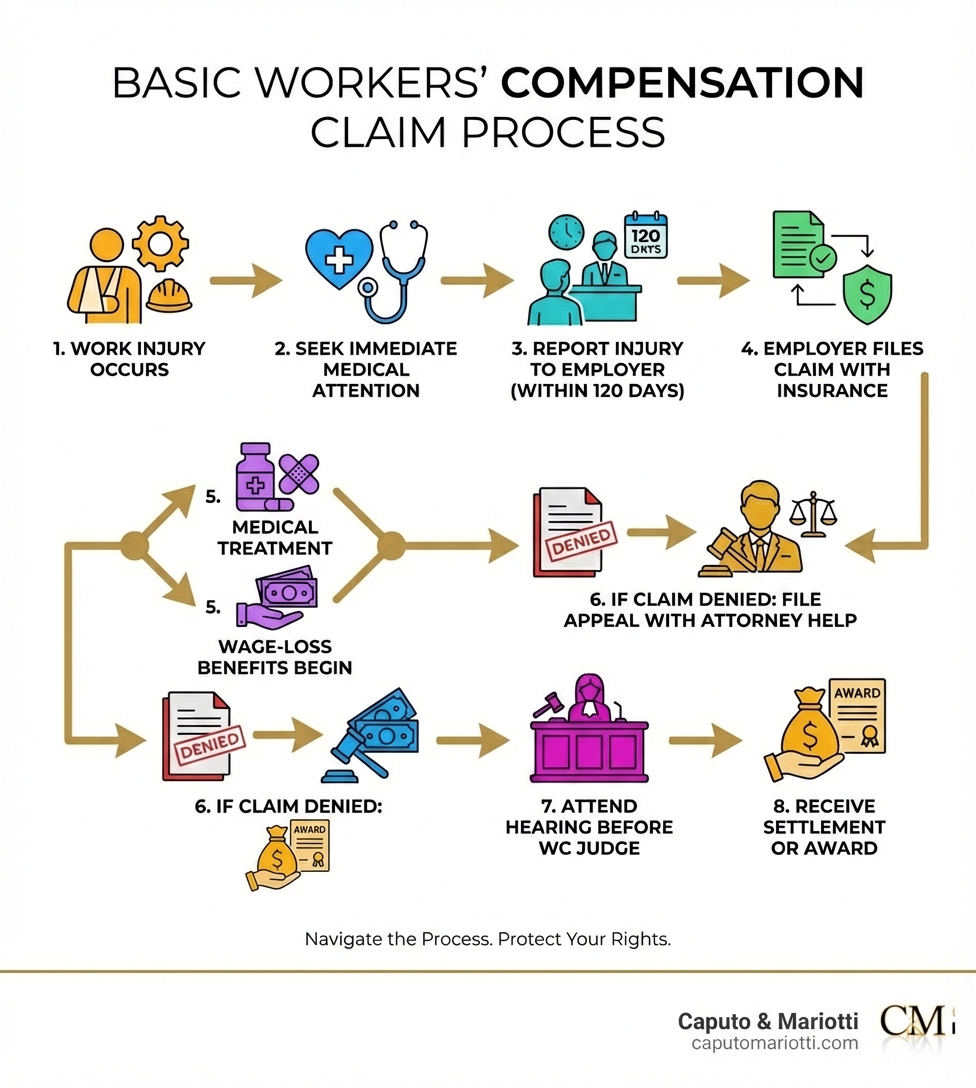
The Pennsylvania workers’ compensation system involves key stages and strict deadlines. Understanding this road map can make the process less daunting. For a complete walkthrough, see our Navigating Workers’ Compensation Claims: A Step-by-Step Guide.
Immediate Steps After a Work Injury
Your actions immediately after an injury can significantly impact your claim. Protect your health and legal rights by taking these steps:
- Seek Immediate Medical Attention: Your health is the priority. See a doctor, inform them the injury is work-related, and ensure it is documented.
- Report the Injury to Your Employer: Formally notify your employer in writing as soon as possible with the date, time, and details of the injury.
- Document Everything: Keep detailed records of your symptoms, medical appointments, and conversations with your employer or insurer. Collect contact information for any witnesses.
For more detailed advice, read our guide on How to Handle Work Injuries.
Understanding Filing Deadlines in PA
Missing deadlines can result in forfeiting your benefits. Key timeframes in Pennsylvania are:
- Reporting to Your Employer: You have a maximum of 120 days to report your injury. However, reporting within 21 days is strongly recommended to avoid disputes.
- Filing a Claim Petition: If your claim is denied, you have three years from the date of injury to file a formal claim petition with the state. It is best to act quickly.
Consulting a workers’ compensation lawyer soon after your injury helps ensure these deadlines are met.
Types of Injuries and Benefits Covered
Pennsylvania’s no-fault system covers a broad range of injuries and illnesses that occur on the job, from acute physical injuries like broken bones to repetitive stress injuries like carpal tunnel syndrome and occupational diseases.
If your claim is approved, you may be entitled to several types of benefits:
- Medical Benefits: Covers all reasonable and necessary medical treatment for your work injury.
- Wage-Loss Benefits: Replaces a portion of your lost wages if you are unable to work (Total Disability) or can only return to a lower-paying job (Partial Disability).
- Specific Loss Benefits: Compensation for the permanent loss or loss of use of a body part or for severe disfigurement.
- Death Benefits: Provides financial support to surviving dependents if a work injury results in death.
For more details, see A Comprehensive Guide to Navigating Workers’ Compensation Benefits and Challenges.
The Appeals Process for a Denied Claim
A claim denial is not the end of the road. You have the right to appeal, a process where a workers’ compensation lawyer is invaluable.
The appeals process generally involves:
- Filing a Claim Petition: This formally initiates the legal appeal of the denial.
- Hearings Before a Judge: Your attorney will present evidence and argue your case before a Workers’ Compensation Judge.
- Presenting Evidence: Your lawyer submits medical records, witness testimony, and other proof to support your claim.
- Judge’s Decision: The judge issues a ruling. If it is unfavorable, further appeals to the Workers’ Compensation Appeal Board and higher courts are possible.
An attorney manages this complex process, building a compelling case to fight for the benefits you deserve.
Conclusion: Securing the Justice and Compensation You Deserve
A work-related injury is a challenging experience, but Pennsylvania’s workers’ compensation system is there to provide a safety net. Successfully navigating this system, especially when facing a denial, often requires skilled legal representation.
By seeking referrals, researching credentials, and scheduling free consultations, you can find a reputable workers’ compensation lawyer. Look for an attorney with deep experience in Pennsylvania law, a contingency fee structure, and a proven track record of success. Acting quickly after an injury by seeking medical care and reporting the incident is also crucial to protecting your rights.
For injured workers in Northeastern Pennsylvania, the team at Caputo & Mariotti offers dedicated legal support. With a combined 55+ years of experience in personal injury and workers’ compensation law, our goal is to secure the maximum compensation you deserve so you can focus on your recovery.
Don’t face this complex system alone. Contact us today for a free consultation and let us fight for you.
Ready to discuss your case? Visit our main page at Caputo & Mariotti or schedule a free consultation directly to speak with one of our experienced attorneys.