

The dedicated legal team of Caputo & Mariotti
How to Handle a Slip and Fall Accident in Pennsylvania the Right Way
November 6, 2026
What to Do After a Slip and Fall Accident in Pennsylvania
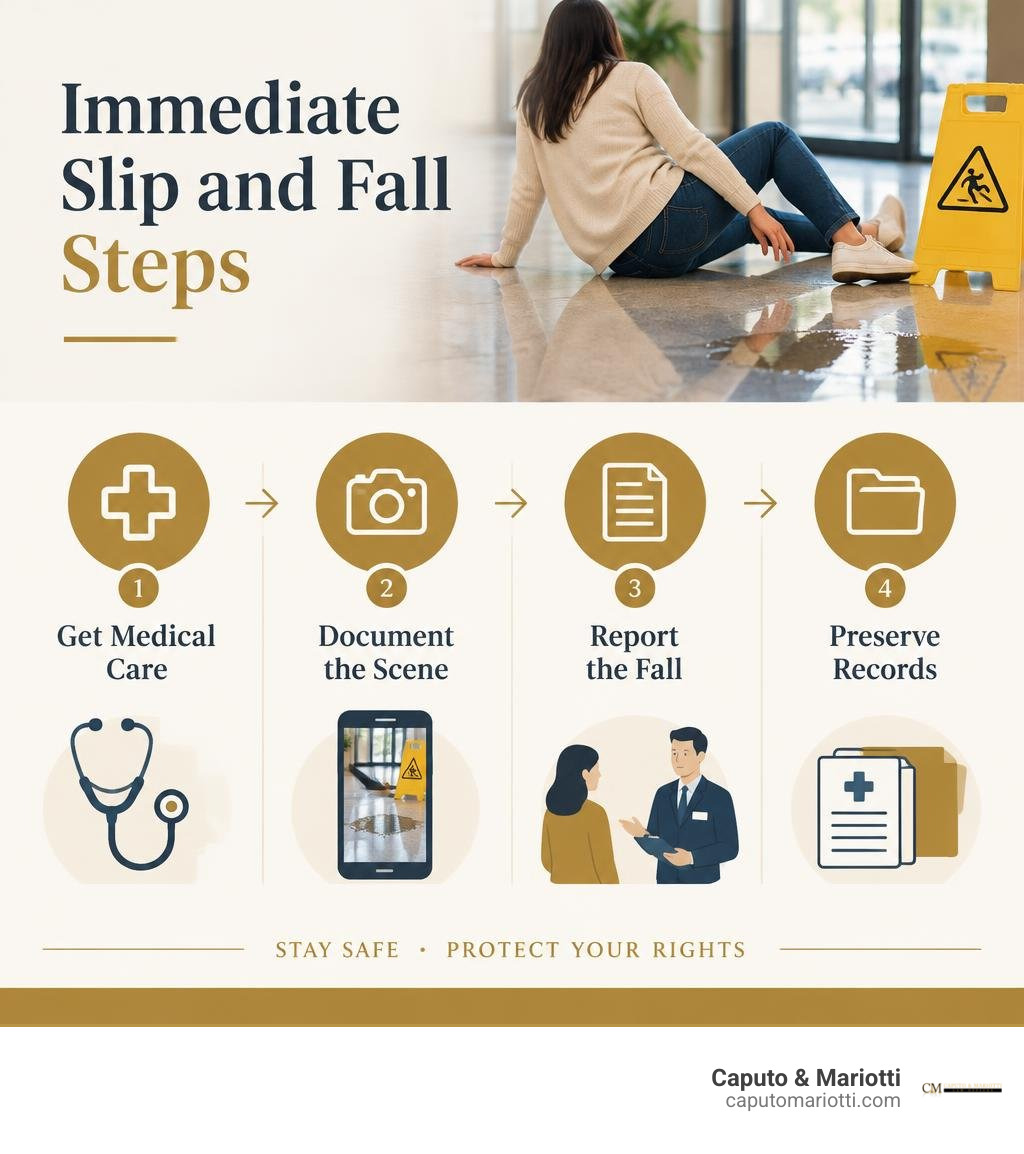
Move to safety and get medical help first. Call 911 if you may be seriously hurt, and see a doctor even if you feel fine. If you can, photograph what caused the fall, collect witness names, and report the accident to the property owner or manager. Ask for a copy of the incident report. Keep your shoes, clothing, photos, and medical records. Before giving an insurer a recorded statement or signing a release, make sure you understand your injuries and your options.
In Pennsylvania, you generally have two years to file a slip and fall injury lawsuit, but waiting can make evidence harder to find. According to the National Floor Safety Institute, falls account for over one million emergency room visits each year in the United States. Knowing what to do after a slip and fall accident in Pennsylvania can make the difference between a denied claim and fair compensation.
I’m Chris Caputo, a Pennsylvania personal injury attorney since 1994, with decades of experience litigating injury claims. The steps below will help you protect your health and document what happened.
Related content about what to do after a slip and fall accident pennsylvania:
- how insurance companies calculate injury settlements
- how to document injuries after an accident pennsylvania
- should i accept a settlement offer pennsylvania
Immediate Steps: What to Do After a Slip and Fall Accident in Pennsylvania
Slip and fall accidents account for over one million emergency room visits each year across the United States, with Pennsylvania consistently ranking among the top states for fall-related injuries. When an unexpected hazard sends you to the floor, shock and adrenaline can make it difficult to think clearly. However, following a structured step-by-step personal injury protocol protects both your physical recovery and your legal rights.

First, assess yourself for severe pain, dizziness, or broken bones before attempting to stand. If you are injured on the job in Northeastern Pennsylvania, your claim may involve workplace injury benefits alongside premises liability. In those situations, consulting a workers’ compensation lawyer ensures you navigate the state’s no-fault system, statutory employer reporting windows, authorized medical provider lists, and potential appeals while pursuing any third-party claims.
If you are able to move safely, identify anyone nearby who saw the incident occur. Ask for their names, phone numbers, and addresses. Independent witness testimony often provides decisive support if the property owner later disputes how the hazard formed or how long it existed.
Prioritizing Medical Evaluation and Treatment
Approximately 20% of falls cause severe trauma, including bone fractures, spinal damage, and concussions. Even if you believe your injuries are minor, seeking immediate evaluation at a regional emergency room or urgent care center is vital. Adrenaline often masks acute pain, and internal injuries or soft tissue tears may take hours or days to produce noticeable symptoms.
Prompt clinical care creates an unbroken medical record linking your physical condition directly to the fall. When insurers review claims, any unexplained gap between the accident and your first medical visit will be used to argue that your injuries happened elsewhere. Follow every diagnostic and therapeutic recommendation, and be thorough when documenting personal injuries properly by maintaining copies of discharge instructions, specialist referrals, diagnostic imaging scans, and pharmacy receipts.
Gathering Evidence: What to Do After a Slip and Fall Accident in Pennsylvania
Physical conditions change quickly after an accident. Spills get mopped, ice melts or gets salted, and broken floorboards get repaired within hours. Capturing evidence before the scene changes is critical when filing a slip and fall claim.
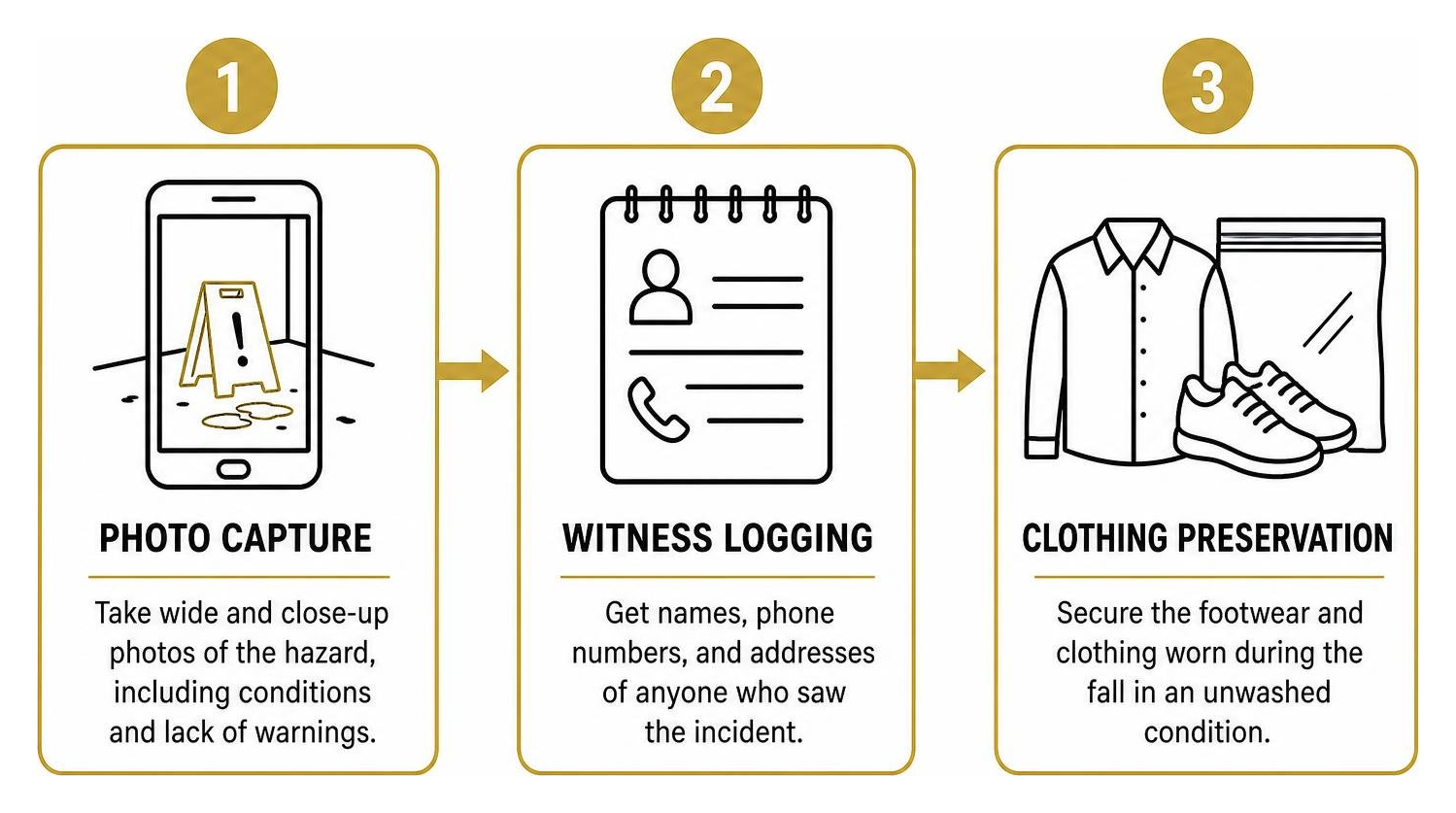
To preserve the strongest evidence:
- Take wide-angle and close-up photographs of the hazard, capturing lighting conditions, lack of warning signs, weather factors, and structural defects.
- Secure the footwear and clothing you wore during the fall in an unwashed condition to prove your shoes had proper tread and were not the cause of the slip.
- Request that the property owner immediately preserve all electronic surveillance footage covering the area before automated security systems overwrite the files.
Reporting the Incident to Property Management
Always report your fall to the property owner, landlord, store manager, or security office before leaving the premises. Request that management complete a formal, written incident report detailing the date, exact time, location, and nature of the hazard.
Ask for a physical copy of the report or note the incident report number alongside the manager’s full name and title. While completing this report, stick strictly to the observable facts of what happened. Never apologize, speculate about what caused your footing to give way, or provide a recorded statement without legal guidance.
Proving Negligence and Premises Liability in Pennsylvania
Property owners throughout Lackawanna County, Luzerne County, and surrounding communities have a clear legal duty to keep their properties reasonably safe for visitors. When they fail to fix dangerous conditions or fail to warn visitors about them, injured individuals can seek financial recovery under premises liability claim fundamentals.
Establishing Property Owner Negligence Under PA Law
Proving a premises liability case requires establishing four foundational elements under Pennsylvania law:
- Duty of Care: The property owner owed you a legal obligation of safety based on your visitor status (such as a business invitee or social guest).
- Breach of Duty: The owner created the hazard, knew it existed (actual notice), or should have discovered it through reasonable inspections (constructive notice).
- Causation: The dangerous condition was the direct, proximate cause of your fall.
- Damages: You sustained verifiable physical injuries, financial losses, or other harms as a result.
Under the state’s legal framework for understanding premises liability law, commercial establishments must perform regular inspections. For example, if a supermarket aisle remains wet from a leaking refrigeration unit for hours without cleanup or warning cones, the store has constructive notice of the danger and can be held liable for resulting harm.
Understanding Pennsylvania’s Comparative Negligence Rule
Under Pennsylvania’s modified comparative negligence statute (42 Pa.C.S. § 7102), you can recover damages as long as your own share of fault does not exceed 50%. This is known as the 51% bar rule. If a jury finds you partially responsible—for instance, if you were distracted by your phone while walking—your total compensation is reduced by your assigned percentage of fault. If you are found 51% or more at fault, you are barred from receiving any compensation.
| Assessed Total Damages | Claimant Fault % | Defense Fault % | Final Recovery Amount |
|---|---|---|---|
| $100,000 | 0% | 100% | $100,000 |
| $100,000 | 10% | 90% | $90,000 |
| $100,000 | 25% | 75% | $75,000 |
| $100,000 | 50% | 50% | $50,000 |
| $100,000 | 51% | 49% | $0 (Barred under PA Law) |
Calculating Damages and Legal Deadlines for PA Fall Claims
The financial aftermath of a serious fall can be overwhelming. The average cost of a slip and fall injury in Pennsylvania frequently exceeds $30,000 when accounting for hospital care, rehabilitation, missed work, and ongoing treatment. Reviewing how damages work is an important part of understanding Scranton injury claims and claims across Northeastern Pennsylvania.
Recoverable Economic and Non-Economic Damages
Victims of slip and fall accidents can seek recovery for both measurable financial losses and personal suffering:
- Economic Damages: Hospitalization expenses, surgical costs, physical therapy, diagnostic imaging, prescription medications, lost wages, and reduced future earning capacity.
- Non-Economic Damages: Physical pain, emotional trauma, loss of life enjoyment, disfigurement, and permanent physical impairment.
The Pennsylvania Statute of Limitations
Under Pennsylvania law (42 Pa.C.S. § 5524), the general statute of limitations for filing a personal injury lawsuit is two years from the date the accident occurred. Failing to file your claim within this legal window permanently terminates your right to pursue compensation in court.
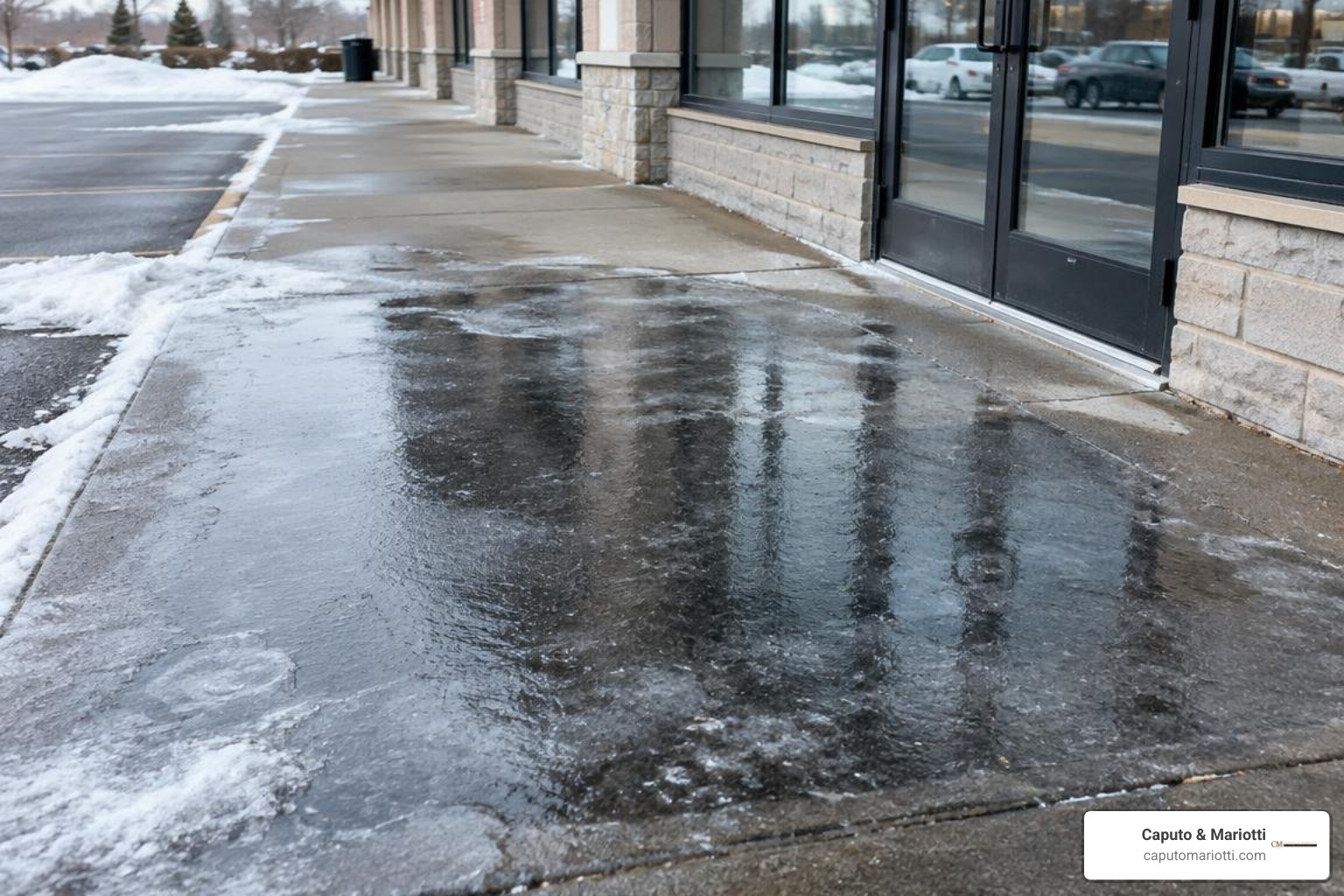
There are even stricter timelines when a government agency is involved. If your fall occurred on public property—such as an icy sidewalk outside a municipal building in Scranton or Wilkes-Barre—you must file a formal notice of intent to sue within six months of the injury. Adhering to the Pennsylvania injury statute of limitations is critical to protecting your case.
Dealing with Insurance Adjusters and Avoiding Costly Mistakes
Following an injury, the property owner’s commercial liability insurer will open a claim file. While adjusters may sound helpful, their primary goal is to minimize the insurer’s financial payout. Following proven injury claim dos and don’ts will help protect your recovery.
Managing Communications with Property Insurers
Insurance representatives frequently reach out shortly after an accident to request a recorded statement or offer an early settlement. These early offers are almost always far lower than the true value of your claim, calculated before you even know the full extent of your injuries and future medical needs. Politely decline to provide recorded statements or sign medical authorizations until you have consulted an attorney who can handle all insurer communications on your behalf.
Avoiding Critical Mistakes on What to Do After a Slip and Fall Accident in Pennsylvania
Avoid these common missteps after an accident:
- Posting on Social Media: Never discuss your fall, physical condition, or daily activities on public platforms, as defense adjusters routinely search social accounts for posts they can use to downplay your injuries.
- Skipping Follow-Up Appointments: Inconsistent medical visits allow insurers to argue that your injuries have resolved or were never serious.
- Discarding Crucial Physical Evidence: Keep the exact shoes and clothing you were wearing during the fall safe and untouched.
Frequently Asked Questions About Pennsylvania Slip and Fall Accidents
How long do I have to file a slip and fall lawsuit in Pennsylvania?
In most cases, you have two years from the date of the incident to file a lawsuit in a Pennsylvania civil court. If the claim involves a municipal, county, or state government entity, you must provide written notice of the claim within six months.
Can I still recover compensation if I was partially at fault for my fall in PA?
Yes. Under Pennsylvania’s comparative negligence rule, you can recover damages as long as you were 50% or less at fault. Your final payout is simply reduced by your percentage of fault.
Should I see a doctor if I feel fine immediately after a slip and fall?
Yes. Many serious conditions—such as concussions, hairline fractures, and herniated discs—do not cause immediate severe symptoms due to shock and adrenaline. Seeing a doctor protects your health and creates the medical documentation needed for any future claim.
Conclusion
A sudden slip and fall accident can instantly disrupt your physical health, your ability to work, and your financial stability. Taking immediate action—seeking medical care, documenting hazardous conditions, and securing experienced legal counsel—ensures you are treated fairly under Pennsylvania premises liability laws.
At Caputo & Mariotti, we bring more than 55 years of combined legal experience to fighting for injured individuals across Scranton, Wilkes-Barre, Lackawanna County, and Luzerne County. If you or a loved one was injured on dangerous property, schedule a free personal injury consultation with our dedicated team today to discuss your case and explore your legal options.
